
What Should a Business Reprint First After Changing Its Logo or Branding?
What Should a Business Reprint First After Changing Its Logo or Branding?
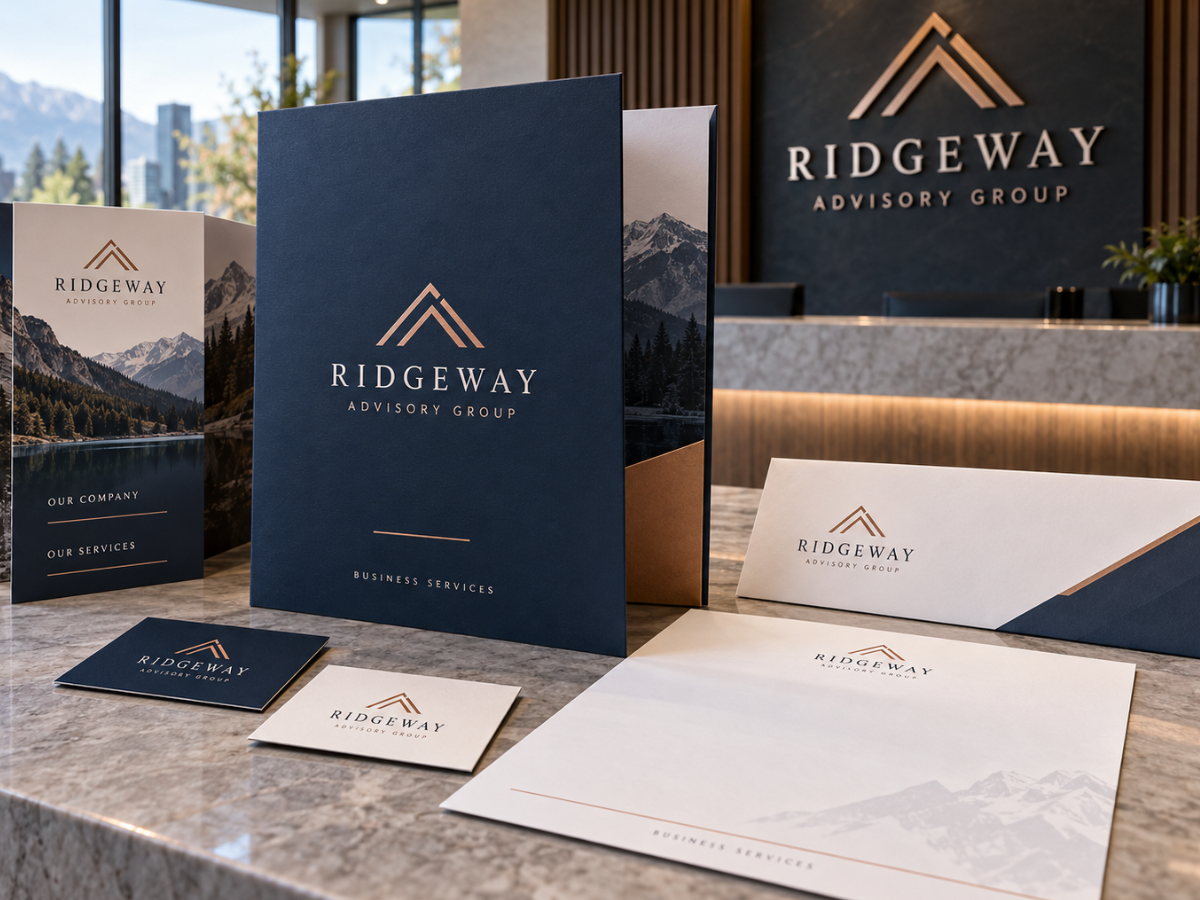
After a business rebrand, replace the printed materials customers see most often and rely on for accurate information. Storefront signage, business cards, customer-facing documents and frequently distributed marketing pieces usually deserve attention before lower-priority inventory. A phased print replacement plan helps businesses introduce the new identity consistently without automatically discarding everything carrying the previous logo.
A new logo may take months to develop, but the real work begins when the business starts putting it into use.
The website changes. Social media profiles are updated. Employees receive new email signatures. Meanwhile, the reception desk still has a stack of business cards with the old logo, a presentation folder uses a different colour palette, and the sign outside the building hasn't changed.
For customers, that creates an awkward question: is this still the same business?
Updating every printed item simultaneously is not always practical. Businesses may have substantial inventory, multiple locations, active advertising campaigns and operational documents that cannot simply be discarded overnight.
The better approach is to manage the rebrand as a controlled transition. Decide which materials affect customer recognition, which contain critical information and which can reasonably be replaced during normal replenishment.
1. Start by Auditing Everything That Carries the Old Identity
Before placing any print orders, identify where the existing brand appears.
This includes obvious materials such as business cards and signs, but the less noticeable items can be just as important.
Walk through the business as a customer would. Begin outside the building, enter the reception area, examine the materials available to visitors and follow the usual sales or service process.
Then review the materials employees use internally and send to customers.
The audit may identify:
- Exterior and interior signage.
- Window graphics.
- Business cards.
- Letterheads and envelopes.
- Presentation folders.
- Brochures, flyers and postcards.
- Product labels and packaging inserts.
- Forms and service documents.
- Staff uniforms.
- Trade show banners and table covers.
- Promotional merchandise.
Record the quantity remaining, current condition, replacement cost and how frequently each item is used.
An inventory spreadsheet is sufficient. The important part is creating one reliable list before different departments begin ordering replacements independently.
2. Separate Urgent Changes From Cosmetic Changes
Not every old logo creates the same problem.
A business card displaying an outdated telephone number may prevent a customer from making contact. An exterior sign showing a former company name may cause someone to doubt they have arrived at the correct location.
Those are operational concerns, not merely design preferences.
By comparison, an internal document pad with the former logo may remain usable during a planned transition, provided its information is accurate and continued use does not conflict with the organization's requirements.
Classify materials according to the consequence of leaving them unchanged.
| Priority | Typical Materials | Reason |
|---|---|---|
| Immediate review | Main signs, contact cards, customer documents | Customers need to recognize and contact the business |
| Next replacement phase | Brochures, folders, sales handouts | Important for consistent customer presentation |
| Planned replenishment | General stationery, evergreen promotional items | May remain usable temporarily if details are accurate |
| Review individually | Packaging, regulated documents, uniforms, large displays | Replacement depends on operational and contractual requirements |
This is a planning framework, not a rule that every business must follow. A manufacturer, retail store and professional services firm will have different priorities.
3. Does the Business Name Change or Only the Logo?
This distinction determines much of the replacement work.
If the company is retaining its name and merely updating its visual identity, some existing printed materials may remain understandable during a short transition.
A name change is more significant. Old signage, business cards and correspondence may no longer identify the company correctly.
Any legal names, business registrations, contractual details and required notices should be reviewed through the appropriate professional processes before the new materials are printed.
The designer should work from approved information rather than assuming that replacing the logo automatically resolves every administrative requirement.
4. Replace Customer-Facing Signage Before It Creates Confusion
Signs identify the business at the physical location where customers expect to find it.
If the website and online listings show one name while the storefront displays another, customers may hesitate to enter or call to confirm the address.
Begin with the main identification sign, followed by prominent window graphics and any internal directional signs carrying the old name.
For temporary communications or locations undergoing renovation, an appropriate interim sign may be useful while the permanent signage project is being finalized.
Pryntco offers Coroplast Signs and other rigid sign products that can support selected temporary business messages. Material choice and installation should reflect the actual location.
5. Don't Order New Signs Until the Brand Artwork Is Final
Large signage can expose mistakes that are easy to miss on a small digital mockup.
A revised logo may have different proportions from the original. A longer business name may no longer fit the existing sign structure. New brand colours may not provide enough contrast against the building.
Before preparing production artwork, confirm:
- Approved business name and logo.
- Current sign dimensions.
- Whether existing hardware can be reused.
- Required viewing distance.
- Installation location.
- Applicable property or sign permissions.
- Artwork and material requirements.
Do not stretch a new logo to match the shape of the old one. Redesign the composition around the approved mark.
6. Business Cards Are Usually an Early Replacement
Business cards are inexpensive compared with many permanent signs, but they play an important role in personal introductions and sales relationships.
A card carrying outdated branding can feel especially inconsistent when a customer has just visited the new website or spoken to a representative using the updated identity.
Review more than the logo. A rebrand is also an opportunity to check job titles, email addresses, telephone numbers and website details.
For companies with several employees, create one approved design template and maintain a controlled list of individual details.
Browse Pryntco's Standard Business Cards when preparing the updated card system.
7. Should Every Employee Receive New Cards Immediately?
Not necessarily.
Prioritize people who regularly meet customers, attend industry events or represent the company in sales conversations.
Employees who rarely distribute physical cards may need a smaller initial allocation.
A company with a large team can reduce waste by reviewing actual card usage before ordering.
Make sure employees stop distributing cards with inaccurate information, regardless of how many copies remain in storage.
8. Update Letterheads, Envelopes and Formal Correspondence
Professional correspondence often remains in circulation longer than an advertisement.
A letter may be filed, forwarded to another department or retained for future reference. That makes accurate business identification important.
When updating Letterheads, confirm the legal business information, address, contact details and approved layout.
Check that the new header does not consume excessive space or interfere with letters created from existing document templates.
Envelopes should follow the same identity system, but they do not need to reproduce every graphic detail from the letterhead.
For businesses using large quantities of stationery, plan the transition around expected consumption and any deadlines associated with the name change.
9. Presentation Folders Can Often Be Replaced Separately
A presentation folder is useful because it can hold current documents without requiring everything to be printed as one permanent piece.
During a rebrand, the folder can carry the new identity while its contents are updated individually.
For example, a property services company could introduce a new branded folder and replace service sheets as each one is approved.
That avoids redesigning a large multi-page brochure simply because one service description has changed.
Pryntco offers Presentation Folders for organizing business documents, proposals and sales materials.
10. What Should Happen to Existing Brochures?
Evaluate the content before deciding to discard the stock.
A brochure may contain more than the previous logo. Its photographs, company description, products, services and contact details may all require review.
If much of the content is outdated, the rebrand provides a natural opportunity for a proper revision.
If the information remains accurate and the change is primarily visual, consider whether the material can remain in controlled use during the transition.
Do not continue distributing pieces that misrepresent the current company name or make it difficult for customers to find the business.
11. Separate Evergreen Materials From Campaign Print
Some marketing materials are intended to last. Others expire quickly.
A general company brochure might remain in use for months, while a seasonal flyer may become obsolete after a short promotion.
When rebranding, avoid spending money replacing a promotional piece that is about to expire anyway.
Instead, build the next campaign using the new identity.
For recurring promotions, create updated templates for Flyers and related materials so future orders remain consistent.
12. What About Labels and Product Packaging?
Product packaging requires particular care because it may contain information beyond the brand identity.
Changing the logo does not automatically mean the product name, ingredients, net contents, barcode or other approved details should change.
Packaging teams need to determine which artwork elements are affected and whether any changes require additional review.
For products already distributed through retailers, coordinate the transition with inventory and sales teams so packaging versions are not confused during receiving or replenishment.
Businesses using Roll Labels should keep the old and new artwork revisions clearly separated and confirm the correct version for every product.
13. Don't Forget Staff Uniforms and Event Displays
A company may update its business cards and stationery while employees continue wearing branded clothing with the old logo.
That inconsistency is most noticeable at events, retail locations and customer-facing service appointments.
However, replacing every uniform immediately can be expensive, especially when garments are still in good condition.
Establish a realistic transition policy. Some organizations introduce the updated identity for new uniform orders while replacing existing garments on a planned schedule.
Trade show banners and table covers deserve a similar review. An evergreen display carrying the former company name may no longer serve its purpose, while a generic supporting display could remain usable.
14. What Should Happen to Old Printed Inventory?
Not all remaining stock should automatically be treated the same way.
Separate materials into three groups:
- Must be withdrawn: Information is inaccurate, misleading or otherwise unsuitable for continued use.
- May be used during transition: Information remains accurate and temporary use has been approved.
- Can be retained for another purpose: Materials have legitimate archival, internal or other approved value.
Avoid casually distributing old promotional material simply to use it up. If it confuses customers, the apparent savings may not justify the inconvenience.
At the same time, replacing usable internal supplies purely for cosmetic reasons may be unnecessary.
15. How Can a Rebrand Be Rolled Out Across Multiple Locations?
Multiple branches make version control especially important.
If the Toronto location receives new cards while Hamilton continues distributing the former identity, customers may encounter conflicting branding.
Create a shared rollout schedule that identifies:
- Each location and responsible manager.
- Required signage changes.
- Current print inventory.
- New artwork versions.
- Replacement quantities.
- Planned distribution dates.
- Items awaiting approval.
A coordinated launch does not necessarily mean every item must arrive on the same day. It means the transition is understood, controlled and consistent.
16. Build a Master Print Specification Sheet
One of the most useful steps is preserving a complete specification for each newly approved product.
For example, record the exact business card model, finished size, stock selection, artwork version and quantity allocation.
Do the same for folders, signs and other recurring materials.
This prevents a future reorder from being based on a screenshot or an employee's recollection of the previous purchase.
Store the approved production artwork separately from editable working files.
If colour consistency is important across several materials, preserve the approved brand references and document any product-specific adaptations.
17. How Much Should the Business Order During the Transition?
Consider ordering conservatively when details remain subject to change.
A business may have completed its visual identity but still be updating department titles, printed contact details or location information.
Those uncertain materials should not automatically be ordered in the same quantity as finalized evergreen pieces.
Estimate actual usage during the next replenishment period and compare that requirement with the available product quantities.
Larger initial orders may make sense once the identity and information are stable. Until then, avoiding obsolete stock may be more important than achieving the lowest possible unit cost.
18. Rebrand Print Approval Checklist
Before releasing orders, verify:
- The brand identity has final approval.
- The correct logo version is used.
- The current business name appears consistently.
- Contact information and addresses are accurate.
- All obsolete artwork versions have been identified.
- The required signs and dimensions are confirmed.
- Business card details have been reviewed by employees.
- Stationery and formal documents contain approved information.
- Product-specific specifications are documented.
- The correct quantities are assigned to each location.
- Existing inventory has a defined transition plan.
- All final artwork follows the current production templates.
19. The Right Way to Reprint After a Rebrand
A successful rebrand is not measured by how quickly a company throws away everything with its former logo.
It is measured by how clearly customers recognize the business and how consistently employees communicate its new identity.
Begin with the materials that identify the company and help customers contact it. Review major signage, business cards and important correspondence first.
Then address sales materials, packaging, uniforms and promotional products according to their use, current accuracy and remaining inventory.
Keep one approved artwork system, document the production specifications and coordinate replacements across departments and locations.
Pryntco can support a coordinated print refresh using business cards, stationery, marketing materials, signs and related business products.
For a rebrand involving several product types or locations, request a custom quote from Pryntco with the required materials, quantities and approved artwork.

