
T-Shirt or Tank Top? Choosing Branded Apparel for Fitness, Teams and Summer Events
T-Shirt or Tank Top? Choosing Branded Apparel for Fitness, Teams and Summer Events
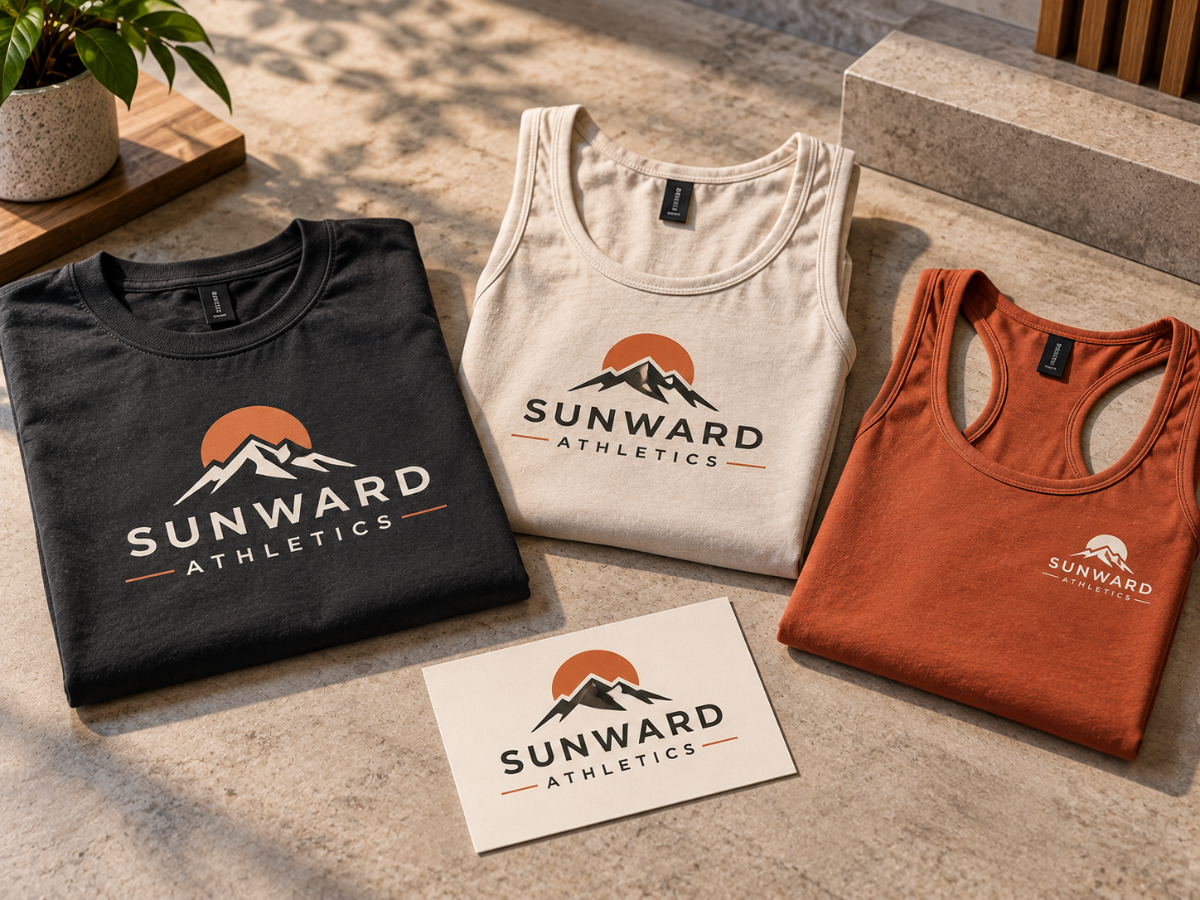
A T-shirt is the more universal branded garment. A tank top is more specialized, with less coverage and a stronger warm-weather or fitness feel. Choose the tank when the setting genuinely suits it rather than treating it as a sleeveless version of the same uniform.
T-shirts are one of the easiest branded garments to order because almost everyone understands how and where they can be worn.
Tank tops are more specific.
That can be a strength.
A fitness studio, summer event, athletic team or casual merchandise program may find that a tank top fits the environment better than another conventional T-shirt.
But a tank is not always an appropriate replacement for staff apparel.
The sleeveless cut changes coverage, fit, artwork space and the situations where people are likely to wear it.
Pryntco’s current Apparel catalogue includes men’s, women’s and unisex T-shirts as well as dedicated women’s and unisex tank-top categories, all with custom printed branding. The tank range includes classic tanks, racerback styles, flowy fits and muscle tanks.
1. What Is the Main Difference Between a T-Shirt and a Tank Top?
The most obvious difference is sleeve and shoulder coverage.
A conventional T-shirt covers more of the shoulder and upper arm.
A tank top uses a sleeveless profile.
That affects:
- Warm-weather comfort
- Uniform appropriateness
- Artwork area
- Fit
- Overall brand impression
2. When Is a T-Shirt the Better Choice?
A T-shirt is usually the safer all-purpose option.
It works naturally for:
- Staff uniforms
- Event crews
- Teams
- Community events
- Merchandise
It is also easier to layer under other garments.
3. When Is a Tank Top the Better Choice?
A tank makes sense when the sleeveless format supports the setting.
Pryntco currently positions tank tops for:
- Fitness groups
- Teams
- Summer events
- Clubs
- Casual merchandise
The garment should feel intentional rather than merely different.
4. Which Is Better for a Gym?
A tank top can be a natural option for fitness communities, particularly for workouts and warm training environments.
A T-shirt may still be better for:
- Front-desk staff
- General employees
- Orientation events
- Members who prefer more coverage
A gym can offer both without changing the brand.
5. Which Is Better for a Fitness Challenge or Team?
Either.
Consider:
- Type of activity
- Season
- Participant preference
- How the garment will be worn afterward
A shirt people continue wearing after the event provides more long-term value than one designed only for the event photo.
6. Which Is Better for a Summer Event?
A tank top may fit hot-weather casual events especially well.
Examples include:
- Outdoor fitness event
- Beach or waterfront event
- Summer club program
- Casual promotional team
A T-shirt still provides more universal coverage and may suit a broader group.
7. Which Is Better for Everyday Staff Apparel?
A T-shirt is generally easier to standardize across a mixed workplace.
A tank top may be too casual or provide too little coverage for some:
- Customer-facing roles
- Professional environments
- Workplace requirements
The employer should consider the actual role and dress standards.
8. Should Tanks Be Used as an Optional Staff Garment?
They can be when the workplace supports them.
A fitness facility, outdoor summer team or casual event business may approve both:
- T-shirt
- Tank top
Staff can then choose between approved garments while keeping the logo and colours consistent.
9. Which Is Better for Merchandise?
Both can work.
A T-shirt normally reaches a wider audience.
A tank can add variety to a merchandise collection for customers who prefer:
- Sleeveless fit
- Fitness apparel
- Summer clothing
10. Should a Merchandise Collection Offer Both?
It can when demand supports the extra inventory.
Adding another garment means managing:
- More sizes
- More colour combinations
- More stock
Do not create several styles simply to make the collection look bigger.
11. What Types of Tank Tops Does Pryntco Currently Carry?
Pryntco’s current apparel range includes:
- Classic unisex cotton tanks
- Unisex jersey tanks
- Unisex muscle tanks
- Women’s racerback tanks
- Women’s flowy racerback tanks
- Women’s jersey muscle tanks
Each has a different cut and should be treated as its own product.
12. What Is a Classic Tank Top?
A classic tank has a straightforward sleeveless profile.
Pryntco’s current Gildan G220 is a cotton tank positioned for fitness, summer events, clubs and merchandise.
13. What Is a Racerback Tank?
A racerback uses a narrower back and shoulder shape than a conventional tank.
Pryntco currently carries women’s racerback options including the Next Level 6733 Triblend Racerback.
The cut should be reviewed before artwork is prepared.
14. What Is a Flowy Tank?
A flowy tank uses a looser, draped silhouette rather than a straight conventional shirt profile.
Pryntco’s current Bella + Canvas B8800 is positioned as a relaxed flowy racerback.
This type of garment should not be sized or designed as though it were a standard T-shirt.
15. What Is a Muscle Tank?
A muscle tank uses a sleeveless casual cut with broader shoulder treatment than some narrow-strap tank styles.
Pryntco currently carries both women’s and unisex muscle-tank options.
The appearance works naturally for casual and fitness-oriented apparel.
16. Do T-Shirts Provide More Artwork Space?
Usually, yes.
A T-shirt generally provides a broader uninterrupted front area.
A tank top has:
- Smaller shoulder area
- Different neckline
- Different arm openings
Artwork needs to be scaled and positioned for that garment.
17. Can the Same Front Logo Be Used on Both?
Yes, but review it separately.
A logo that looks balanced on a T-shirt may feel too wide or too low on a tank.
Use the same identity while adjusting the scale and placement to fit the garment.
18. Should a Large Graphic Be Used on a Tank?
It can, but the artwork needs to respect the available print area.
A very wide design may approach:
- Arm openings
- Side seams
- Narrow shoulder areas
Use the exact product template or current decoration guidance.
19. Is a Small Chest Logo Better on a Tank?
It can work well when the garment is being used for staff or team identity.
Keep the logo proportionate and confirm that the chosen location works with the neckline and arm opening.
20. Should the Back Design Change?
Possibly.
Racerback and other tank cuts create a different upper-back shape from a T-shirt.
A design placed high on a standard T-shirt may need to move or shrink on a tank.
21. Should Sleeve Printing Be Considered?
A tank top has no conventional sleeve, so any design system relying on sleeve artwork will need another treatment.
This is one reason the T-shirt version and tank version should not be built from one identical decoration plan.
22. Which Is Better for Sponsor Logos?
A T-shirt generally offers more predictable space for several sponsor marks.
A tank can still support sponsor branding, but avoid squeezing several small logos into narrow areas.
If many sponsors must appear, choose the garment that provides enough readable space.
23. Which Is Better for a Large Team Order?
A T-shirt is generally easier because it is a familiar, broad-use garment.
A tank may work for a specific team, but collect fit preferences carefully.
The more specialized the garment, the more important it becomes to confirm what people actually want to wear.
24. Should Participants Be Allowed to Choose T-Shirt or Tank?
That can be useful for:
- Fitness events
- Running groups
- Summer clubs
- Team merchandise
Only offer the choice if the ordering system can manage the extra sizes and products accurately.
25. Do T-Shirt and Tank Sizes Translate Directly?
No.
Use the size information for the exact garment.
A medium in a unisex T-shirt does not guarantee the same physical fit as a medium racerback or flowy tank.
Do not convert casually.
26. How Should Mixed Fits Be Ordered?
Record the exact:
- Product
- Size
- Colour
- Quantity
rather than maintaining one generic “shirt size” column for every garment.
27. Does Fabric Matter as Much as the Garment Style?
Yes.
A cotton tank, jersey tank and triblend racerback can feel different even though all are sleeveless.
Similarly, T-shirts are available in several fabric constructions.
Compare the complete garment, not only whether it has sleeves.
28. Which Is Easier to Layer?
A T-shirt generally works more naturally under:
- Hoodie
- Jacket
- Crewneck
A tank can work as a light base layer but is usually chosen because the wearer expects to use it on its own in warmer or active conditions.
29. Which Is Better in Cooler Weather?
A T-shirt.
If the team needs more coverage beyond that, long sleeves, sweatshirts or hoodies may be more appropriate.
A tank should not be chosen as a year-round uniform simply because it worked well at a summer event.
30. Which Is Better for Hot Weather?
A tank provides less upper-body coverage and can feel more appropriate in hot-weather casual settings.
However, workplace requirements, sun exposure and the actual activity still matter.
An ordinary promotional tank should not be treated as protective apparel.
31. Which Is Better for Outdoor Staff?
That depends on the role.
A tank may suit some casual event or fitness teams.
A T-shirt may provide more appropriate coverage for other outdoor work.
Required protective clothing should be selected separately from branded casual apparel.
32. How Should Colour Be Chosen?
Choose a colour that works across the approved garments.
Exact shades can vary between T-shirt and tank models even when the colour names sound similar.
Review the actual selected products when close visual matching matters.
33. Should Tank Tops Use a Different Brand Colour?
Not necessarily.
A coordinated apparel program can use the same primary colour across T-shirts and tanks.
If different colours are introduced, make them part of a controlled brand system rather than random availability choices.
34. How Many Tank Tops Should You Order?
Order according to real demand.
Do not split half the inventory into tanks simply because you are offering two garment types.
Collect preferences first when possible.
If the tanks are merchandise, use sales history or a smaller initial run to learn demand.
35. Should Tank Tops Be Ordered Only for Summer?
Not always.
Fitness and indoor active environments may use them throughout the year.
For general businesses, however, demand may be more seasonal than standard T-shirts.
36. What Are the Most Common T-Shirt Selection Mistakes?
Common problems include:
- Choosing one T-shirt fit for everyone without checking preferences.
- Ignoring fabric.
- Using a large graphic without reviewing the actual garment.
- Ordering generic sizes instead of exact product sizes.
37. What Are the Most Common Tank-Top Mistakes?
Common problems include:
- Treating a tank as simply a T-shirt without sleeves.
- Using T-shirt artwork without adjusting it.
- Assuming racerback, flowy and muscle tanks fit the same.
- Using tanks in a workplace where the coverage is inappropriate.
- Ordering large quantities before confirming demand.
38. Should You Choose a T-Shirt or Tank Top?
Choose a T-shirt when you need a versatile garment that works across staff apparel, teams, events and merchandise.
It provides more coverage, a familiar fit and a broad printable area.
Choose a tank when the setting specifically benefits from a sleeveless garment.
That makes tanks especially relevant to fitness programs, summer events, athletic communities and casual merchandise.
Then choose the actual cut carefully.
A classic unisex tank, racerback, flowy tank and muscle tank are not interchangeable products.
Collect sizes for the exact garment, adjust artwork to the available print area and order according to real demand rather than assuming everyone wants the same style.
For many organizations, the strongest answer is to keep the T-shirt as the broad standard and offer a tank as an approved alternative for the people and situations where it genuinely fits.
Businesses can compare current options through Pryntco’s Apparel catalogue, including current Unisex Tank Tops and Women’s Racerback Tanks.
For a mixed apparel order, contact Pryntco or submit a custom quote request.

