
What Should Tourism and Visitor Businesses Print?
What Should Tourism and Visitor Businesses Print?
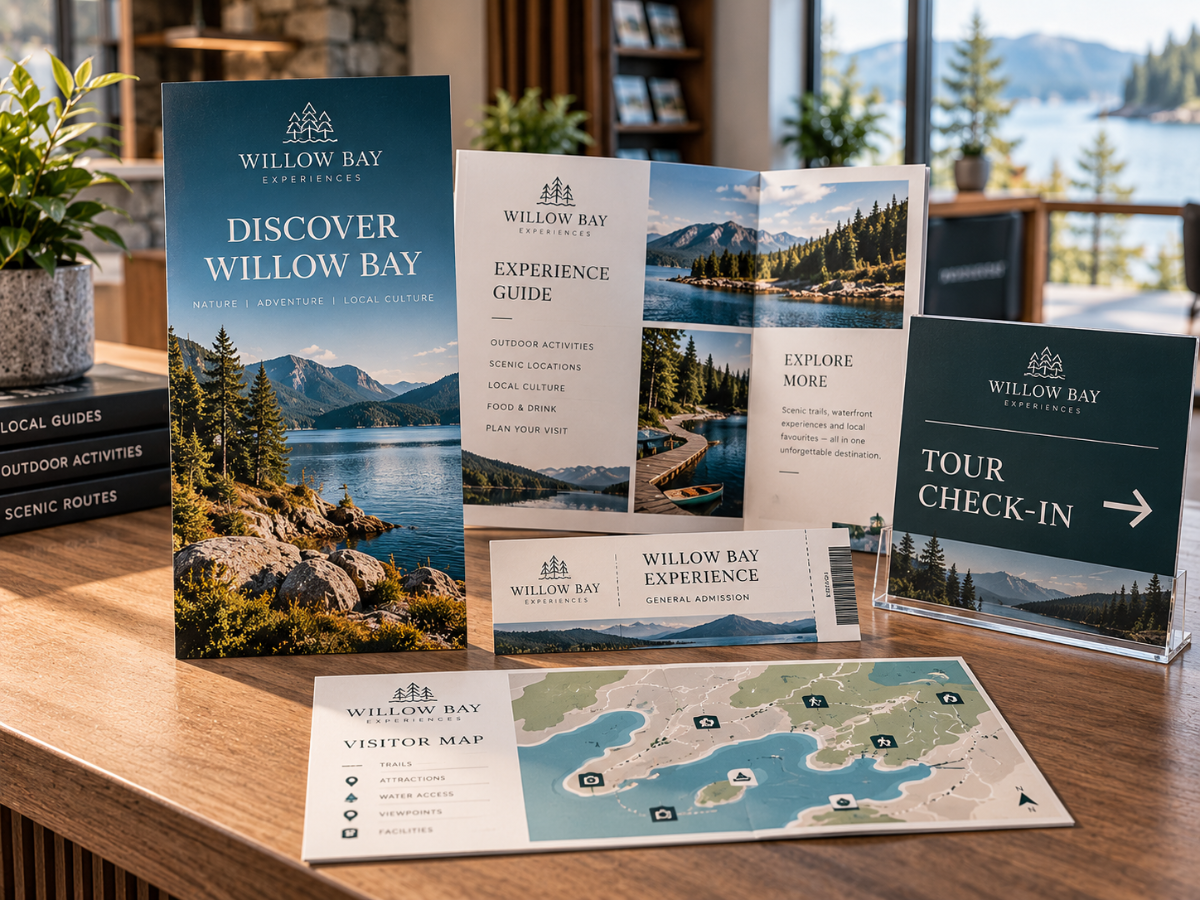
Tourism print should help visitors move from discovery to arrival with as little friction as possible. A rack card may create interest, a brochure can explain the experience, a ticket confirms admission, a map helps people navigate and a sign tells them where to go next. Each piece should solve one visitor question.
Tourism businesses have a unusual marketing challenge.
The customer may be unfamiliar with the area.
They may be choosing what to do while already travelling.
They may encounter the business in a hotel lobby, visitor centre, restaurant, airport-area display, event venue or another attraction.
Even after booking, they may still need help finding the meeting point, understanding where to park, knowing where to enter or recognizing the correct ticket desk.
That gives print several useful jobs.
A rack card can create the first moment of discovery.
A brochure can explain a more complex attraction or tour.
A ticket can support admission.
A directional sign can reduce confusion at arrival.
A printed map can help visitors move through a property or destination without depending entirely on their phone.
Pryntco already has dedicated resources for Rack Card Design and Tourism Rack Card Marketing. This guide looks at the wider visitor journey.
1. What Printed Materials Do Tourism Businesses Commonly Need?
Depending on the operation, useful materials may include:
- Rack cards
- Brochures
- Visitor maps
- Tickets
- Postcards
- Posters
- Directional signs
- Event materials
- Information cards
A small guided tour may only need a few of these. A large attraction may need separate print for discovery, admission and on-site navigation.
2. Why Should Tourism Print Follow the Visitor Journey?
Visitors ask different questions at different moments.
Before booking:
Why should I go?
After booking:
Where do I meet?
At arrival:
Where do I enter?
On site:
What should I see next?
One printed piece should not try to answer every question at once.
3. Why Are Rack Cards Useful for Tourism?
Rack cards are designed for compact vertical displays in locations where visitors are already looking for information.
They can promote:
- Attraction
- Tour
- Museum
- Gallery
- Experience
- Seasonal activity
The top portion needs to identify the experience quickly.
4. Where Should Tourism Rack Cards Be Displayed?
Possible locations include:
- Hotels
- Visitor centres
- Tourism offices
- Restaurants
- Partner attractions
- Reception desks
Placement should be agreed with the location rather than assumed.
5. When Is a Brochure Better Than a Rack Card?
A brochure is useful when the experience needs more explanation.
That may include:
- Several tours
- Multiple attractions
- Detailed visitor information
- Destination overview
- Several activity options
The fold gives the content a structured reading sequence.
6. Should a Tourism Business Use Both a Brochure and a Rack Card?
It can.
The rack card can create interest quickly.
The brochure can explain the experience more fully once someone is already interested.
The two should not simply duplicate every line of copy.
7. When Does a Printed Visitor Map Make Sense?
A map is useful when visitors need to navigate:
- Large property
- Museum
- Festival area
- Walking route
- Tour district
- Multi-building attraction
The map should prioritize usable navigation over decorative detail.
8. When Do Tourism Businesses Need Printed Tickets?
Printed tickets can support events, attractions or experiences where a physical admission piece fits the entry process.
Pryntco’s Event Ticket Guide covers admission types, numbering, stubs and entry information separately.
9. What Should a Tour Ticket Include?
Depending on the admission process, useful information may include:
- Tour or attraction name
- Date
- Time
- Meeting point
- Ticket type
- Entry or booking reference supplied by the operator
The operator should confirm the exact admission requirements.
10. When Are Posters Useful?
Posters can support:
- Seasonal attraction
- Special event
- Exhibition
- New tour
- Temporary program
A poster should attract attention from a distance rather than reproduce an entire brochure.
11. What Should Small Information Signs Explain?
Use them for immediate visitor questions such as:
- TICKETS
- TOUR CHECK-IN
- ENTRANCE
- MEETING POINT
- EXIT
Operational clarity is more important than promotional copy at that stage.
12. Why Is Wayfinding Important for Visitor Businesses?
Visitors may not know the property, neighbourhood or language conventions.
Clear directional signs can reduce repeated questions and help people find:
- Entrance
- Ticket desk
- Tour departure point
- Washrooms
- Exit
Permanent safety, accessibility or regulatory signage should follow the applicable requirements.
13. Can Storefront and Window Graphics Help Tourism Businesses?
Yes when the location needs to become easier to recognize from outside.
Window graphics can communicate:
- Business name
- Type of experience
- Booking direction
- Entrance information
Do not fill every window with small tour descriptions.
14. What Print Is Useful for Seasonal Events?
A seasonal event may need:
- Poster
- Ticket
- Directional sign
- Schedule
- Rack card
Keep the dated material separate from evergreen brand pieces when possible.
15. What Should Tourism Businesses Bring to Travel Shows or Community Events?
A simple event setup may include:
- Branded table cover
- One display
- Rack cards or brochures
- Business cards
Pryntco’s Table Cover Guide covers branded event-table planning.
16. Are Postcards Useful for Tourism Businesses?
They can be used as:
- Souvenir
- Promotional leave-behind
- Event announcement
- Direct-mail piece
A strong local photograph can do more work than a long paragraph of tourism copy.
17. Can Attractions Use Gift Certificates or Vouchers?
Yes when the business has a real gift or prepaid-experience program.
The operator should define:
- Value
- Redemption process
- Applicable terms
before the printed piece is produced.
18. When Are Small Visitor Information Cards Useful?
They can provide concise information guests want to keep.
Examples include:
- Meeting-point card
- Opening-hours card
- Transit note
- Return-visit information
Keep frequently changing details digital when they are likely to become outdated quickly.
19. Should Tourism Print Be Multilingual?
It can be when the visitor audience justifies it.
If several languages are used, consider:
- Separate versions
- Clearly divided sections
- QR code to translated information
Use qualified translation and proof each language independently.
20. How Should QR Codes Be Used?
They can connect visitors to current digital information such as:
- Booking
- Schedule
- Map
- Current prices
- Full translated information
Label each code so the visitor knows what will open.
21. Should Hours and Prices Be Printed?
Only when they are expected to remain accurate for the useful life of the piece.
Tourism information can change by:
- Season
- Day
- Event
- Availability
Frequently changing details may be better handled online.
22. How Should Seasonal Tourism Print Be Managed?
Separate stable branding from temporary information.
An evergreen rack card may introduce the attraction, while a smaller insert or digital page carries:
- Seasonal hours
- Temporary event dates
- Current pricing
This can reduce unnecessary reprints.
23. What Kind of Photography Works Best?
Show the experience visitors are actually considering.
Strong images may show:
- Location
- Landmark
- Exhibit
- Tour environment
- Signature view
Use original high-quality photography and avoid misleading imagery.
24. How Should Printed Maps Be Designed?
Prioritize:
- Clear route
- Readable labels
- Simple legend
- Obvious orientation
A visitor map is not improved by drawing every minor detail in the surrounding neighbourhood.
25. What Should Be Considered for Accessibility and Visitor Information?
Use readable type, strong contrast and clear information hierarchy.
Do not make unsupported accessibility claims about a venue or attraction.
Any accessibility information should come from the operator and reflect the actual visitor experience.
26. How Can Local Partnerships Extend Print Distribution?
Complementary businesses can sometimes share visitor material.
Potential partners may include:
- Hotels
- Restaurants
- Visitor centres
- Nearby attractions
- Event venues
Agree on the placement before printing a large quantity.
27. What Should Go in Hotel and Visitor-Centre Displays?
Use pieces designed to make sense without staff explanation.
A rack card should show:
- Experience name
- Strong image
- Short reason to visit
- Location or booking method
The visitor may make the decision while browsing several competing cards.
28. Why Does the Literature Holder Matter?
The holder can hide part of the printed piece.
Pryntco’s Brochure Stand Guide explains why the printed material and holder should be planned together.
Do not place the only important headline below the visible opening.
29. How Should Tour Pickup Information Be Printed?
Make the meeting point clear.
Useful information may include:
- Location name
- Street address
- Recognizable landmark
- Arrival time supplied by the operator
- Contact method
Use a current map link where digital directions would help.
30. Should Event Dates Be Printed on Evergreen Tourism Materials?
Usually only when the entire piece is intended for that event.
A date-specific exhibition poster can be temporary.
A rack card intended to remain in visitor centres for months should avoid information that will become obsolete quickly.
31. How Should Multi-Location Tourism Businesses Handle Print?
Each location should be checked separately for:
- Address
- Meeting point
- Phone
- Booking link
- Hours
Use a shared visual system while controlling local information.
32. How Should Sponsor and Partner Logos Be Handled?
Only include logos that have an approved reason to appear.
Follow the supplied brand files and any agreed recognition levels.
Do not shrink twenty partner logos into unreadable marks simply to fit them on one small rack card.
33. How Much Tourism Print Should Be Ordered?
Base quantity on real distribution.
Consider:
- Number of display locations
- Expected visitor traffic
- Season length
- How often information changes
Tourism material with seasonal dates should be ordered more cautiously than evergreen brand pieces.
34. How Should Distribution Be Tracked?
Keep a simple record of:
- Display location
- Quantity delivered
- Refill date
- Campaign version
This helps identify which locations actually move the printed material.
35. How Should Version Control Be Managed?
Use dates or version names on internal files.
For example:
HarbourTour_RackCard_Fall2026_FINAL.pdf
is safer than:
rackcard-new2-final.pdf
Remove outdated copies from partner displays when information changes.
36. What Should Be Proofed Before Printing?
Check:
- Business or attraction name
- Address
- Meeting point
- Dates and times
- Hours where printed
- Prices where printed
- QR codes
- Map labels
- Partner names
37. What Are the Most Common Tourism Print Mistakes?
Common problems include:
- Using old hours or seasonal dates.
- Putting too much text on a rack card.
- Using generic stock photography that does not represent the experience.
- Printing confusing meeting-point directions.
- Letting old brochures remain in partner displays.
- Using tiny maps and labels.
- Printing large quantities before distribution locations are confirmed.
38. What Should a Tourism or Visitor Business Print First?
Start with discovery.
If visitors commonly find the business through hotels, visitor centres or partner locations, create a strong rack card that explains one experience quickly.
If the attraction needs more explanation, add a brochure rather than forcing every detail onto the rack card.
Then look at arrival.
Make the entrance, ticket area and meeting point easy to recognize.
If visitors need to navigate a larger property or route, create a simple usable map.
Use printed tickets only when they genuinely support the admission process.
Keep hours, prices and seasonal schedules off long-lived pieces when those details change frequently.
Tourism print works best when every piece answers one practical visitor question instead of trying to sell the entire destination all at once.
For deeper planning, review Pryntco’s Rack Card Design Guide, Tourism Rack Card Ideas and Event Ticket Guide.
For a custom visitor, attraction or tourism print project, contact Pryntco or submit a custom quote request.

