
When Does a Tear-Off Card Make Sense? A Practical Guide to Tear Cards
When Does a Tear-Off Card Make Sense? A Practical Guide to Tear Cards
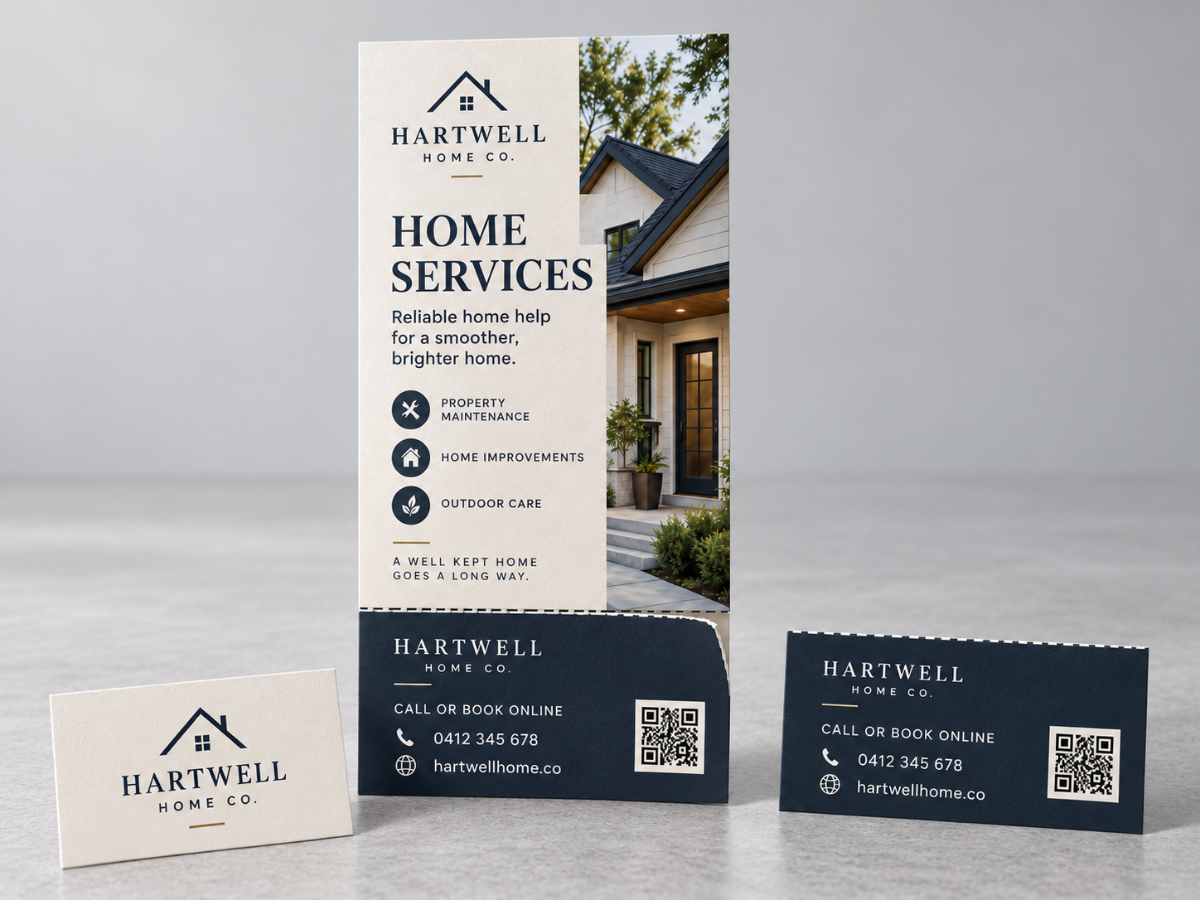
A tear card works when part of the message needs to stay behind while another part needs to leave with the customer. The main section can explain the service or promotion, while the detachable section becomes a reminder, contact card, offer or next-step piece the customer can keep.
Most printed marketing pieces stay in one piece.
A flyer is handed out as a flyer.
A business card stays a business card.
A postcard stays flat.
A tear card is different because it is intentionally designed to become two pieces.
The larger section carries the main message.
A perforated section can be removed and kept separately.
That makes the format useful when a business wants customers to take something specific with them without giving up the entire promotional piece.
Pryntco’s current Tear Cards use 14 pt matte stock, full-colour printing on one side and a perforated tear-away section, with three standard size options.
The product only works well when the detachable section has a clear reason to exist.
1. What Is a Tear Card?
A tear card is a printed marketing piece containing a perforated section designed to separate from the main card.
The two areas can perform different jobs.
For example:
- Main section → explains the service
- Tear-off section → carries contact information
or:
- Main section → promotes an event
- Tear-off section → becomes a reminder
2. How Is a Tear Card Different From a Flyer?
A flyer is intended to remain one complete printed piece.
A tear card intentionally creates a smaller detachable piece.
Use a tear card when separation adds genuine value.
If the customer needs the complete message later, a standard flyer may be the better choice.
3. How Is a Tear Card Different From a Business Card?
A business card is primarily a compact contact and identity piece.
A tear card provides more space for the initial marketing message while still creating a small section the customer can keep.
It can therefore combine:
- Promotion
- Explanation
- Takeaway reminder
4. How Is a Tear Card Different From an Appointment Card?
An appointment card is built primarily around a scheduled date and time.
A tear card can include a reminder section, but its larger main area can also promote the business, service or event.
For businesses where the appointment itself is the only message, Pryntco’s Appointment Card Guide may represent the simpler format.
5. When Does a Tear-Off Section Actually Add Value?
It adds value when the customer needs one small piece after they have already understood the main message.
Examples include:
- Phone number
- Appointment reminder
- Promotional code
- Event reminder
- Service contact
6. When Should You Not Use a Tear Card?
Do not use one simply because perforation looks interesting.
A tear card may be unnecessary when:
- The complete message is already short
- The customer needs the full card later
- There is nothing useful to detach
- A business card already solves the problem
7. What Should Go on the Main Section?
The main section should explain why the customer should care.
It may contain:
- Clear headline
- Short service description
- Main image
- Important campaign details
- Call to action
Do not make the customer tear anything off before understanding the offer.
8. What Should Go on the Tear-Off Section?
The detachable area should contain information that remains useful by itself.
Good candidates include:
- Business name
- Phone number
- Website
- Short reminder
- QR code where appropriate
Once removed, it should not require the main card to make sense.
9. Should the Tear-Off Section Repeat the Business Name?
Usually, yes.
Once the section is detached, it becomes an independent piece.
A phone number without a business name may become meaningless several days later.
Repeat the minimum identity information needed for context.
10. Should the Tear-Off Section Have a Phone Number?
It can when calling is a realistic next step.
Examples include:
- Home service
- Appointment-based business
- Local contractor
- Property service
Proofread the number carefully before production.
11. Should the Tear-Off Section Have a Website?
Yes when the website helps the customer:
- Book
- Learn more
- Request a quote
- Register
Use a short, understandable destination when possible.
12. Should a Tear Card Use a QR Code?
It can.
The code can lead to:
- Booking page
- Quote form
- Event registration
- Service page
The detachable section must provide enough physical space for the code to remain functional.
13. Should the QR Code Be on the Main Card or Tear-Off?
Choose according to what happens after separation.
If the customer should keep the digital action, put the code on the detachable section.
If the code simply supports the initial explanation, the main section may be more appropriate.
Avoid adding identical codes everywhere unnecessarily.
14. Can a Tear Card Be Used for a Promotion?
Yes.
The main card can explain the promotion while the detachable portion carries the essential redemption information.
Any terms, dates or conditions should be supplied and approved by the business.
Do not make the offer ambiguous after the section is detached.
15. Can the Tear-Off Section Be a Coupon?
It can function as a promotional coupon when the business has a genuine offer and a clear redemption process.
The detachable portion should identify:
- Business
- Offer
- Relevant expiry date where applicable
- Essential terms
Do not bury important conditions on the section left behind.
16. Can a Tear Card Be Used for Home Services?
Yes.
A home-service company can use the main portion to explain:
- Service category
- Service area
- Reason to call
The tear-off can carry the company name, phone number and quote link.
17. Can Contractors Use Tear Cards?
They can work for contractors promoting one focused service.
For example, the main section can explain the project type while the tear-away section becomes a compact contact reminder.
Keep trade credentials or claims limited to information the business can verify.
18. Can a Salon or Clinic Use a Tear Card?
Potentially.
The main card can introduce one service or promotion.
The detachable section can carry:
- Booking information
- Phone number
- Appointment reminder
Do not place sensitive client information on a general promotional tear card.
19. Can a Restaurant Use Tear Cards?
Yes when the detachable section has a specific purpose.
Examples might include:
- Takeout contact
- Catering inquiry
- Event reminder
- Approved promotional offer
A tear card should not become a miniature complete menu.
20. Can Real Estate Businesses Use Tear Cards?
Yes.
The main card can promote:
- Agent service
- Open house
- Property campaign
The detachable area can carry the agent’s contact information or the event details the visitor needs to keep.
21. Can Tear Cards Work for Events?
They can when attendees need a small reminder after seeing the larger event message.
The tear-off might include:
- Date
- Time
- Location
- Registration link
If the detachable portion needs to control admission, use an actual ticket system instead.
22. Is a Tear Card the Same as an Event Ticket With a Stub?
No.
An event ticket may use a tear-off stub as part of an admission or tracking workflow.
A marketing tear card is primarily promotional.
Pryntco’s Event Ticket Guide covers admission-focused ticket design separately.
23. Can Tear Cards Work for Community Boards?
They can when the placement permits it.
A tear-away contact section can give interested people something small to carry rather than requiring them to photograph the complete notice.
Check the rules of the physical display location before posting promotional material.
24. How Should the Headline Be Written?
The headline belongs on the main section and should explain the customer need or offer quickly.
Examples of useful structures include:
NEED HELP WITH YOUR NEXT HOME PROJECT?
or:
BOOK YOUR SPRING SERVICE
Use wording that fits the real campaign.
25. Should the Perforation Be Part of the Design?
Yes.
The perforation is not an accidental line added after the artwork is complete.
The layout needs to treat the main and detachable sections as two connected but independent areas.
Do not place important wording directly across the tear line.
26. How Much Space Should Be Left Around the Perforation?
Keep critical text, logos and QR codes comfortably away from the perforated area.
Use the correct Pryntco template for the selected size rather than estimating the position from a screenshot.
The safe area matters on both sides of the perforation.
27. Should the Main Image Cross the Tear Line?
A background may sometimes continue through the complete design, but important subjects should not depend on perfect alignment after the section is removed.
A face, logo or product should normally stay comfortably inside one logical area.
28. How Much Text Can Fit on a Tear Card?
Less than many businesses initially want.
The card needs:
- Clear hierarchy
- Readable type
- Enough room around the perforation
- Useful detachable content
If the main section requires several long paragraphs, consider whether a flyer or brochure is more suitable.
29. Should Both Sections Use the Same Branding?
Yes.
The tear-off should still look like it belongs to the business after separation.
Use consistent:
- Logo
- Colours
- Typography
without duplicating every design element.
30. Should the Tear-Off Section Be Designed Like a Business Card?
It can borrow the same principles:
- Clear identity
- Short contact information
- Simple hierarchy
But use the exact tear-card template instead of assuming the detachable area matches a standard business-card size.
31. Should Customers Write on the Tear-Off?
Only if the design and surface are appropriate.
Possible uses include:
- Appointment time
- Reference number
- Short note
Test handwriting on the actual selected product when writable performance is important.
32. How Should Tear Cards Be Distributed?
They may be:
- Handed out
- Placed on counters
- Included in customer packages
- Displayed in approved public locations
- Used at events
The distribution method should influence the headline and amount of information.
33. How Many Tear Cards Should You Print?
Base quantity on the real campaign.
Consider:
- Distribution locations
- Campaign duration
- Event attendance
- Likelihood the offer changes
A card with a temporary date or promotion should not be overproduced simply to reduce unit cost.
34. Should Tear Cards Use Evergreen Information?
Whenever practical.
A service-business tear card can remain useful longer when the main piece uses stable:
- Branding
- Service description
- Contact information
Temporary offers and dates shorten the useful life of the stock.
35. What Should Be Checked Before the Artwork Is Approved?
Confirm:
- Correct tear-card size
- Perforation position
- Main headline
- Business name on detachable section
- Phone number and website
- Working QR code
- Offer dates and conditions where applicable
36. How Should the Artwork Be Prepared for Printing?
Use the correct product template and prepare the design at the final size.
Keep important content away from:
- Trim
- Perforation
- Other production boundaries
Pryntco’s Artwork Preparation Guide covers bleed, safe areas, resolution, colour and final file setup in more detail.
37. What Are the Most Common Tear-Card Mistakes?
Common mistakes include:
- Using a tear card when nothing useful needs to detach.
- Leaving the business name off the tear-away section.
- Putting important text across the perforation.
- Making the QR code too small.
- Trying to explain too many services.
- Making the detachable section dependent on information left behind.
- Printing a large quantity with a short-lived offer.
38. When Should Your Business Use a Tear Card?
Use a tear card when your marketing message naturally has two stages.
The main portion should help the customer understand:
What is this?
Why should I care?
The detachable portion should answer:
What do I need to keep?
That may be a phone number, booking link, reminder, promotional code or event detail.
If both sections still make sense after they are separated, the format is doing its job.
If the tear-off does not have a clear purpose, choose a simpler flyer, business card or postcard instead.
Pryntco’s current Tear Cards combine a 14 pt matte printed piece with a perforated detachable section and are part of Pryntco’s broader Stationery collection.
For a tear-card campaign or custom print project, contact Pryntco or submit a custom quote request.

