
Short Sleeve or Long Sleeve? Choosing Branded Shirts for Staff Through the Seasons
Short Sleeve or Long Sleeve? Choosing Branded Shirts for Staff Through the Seasons
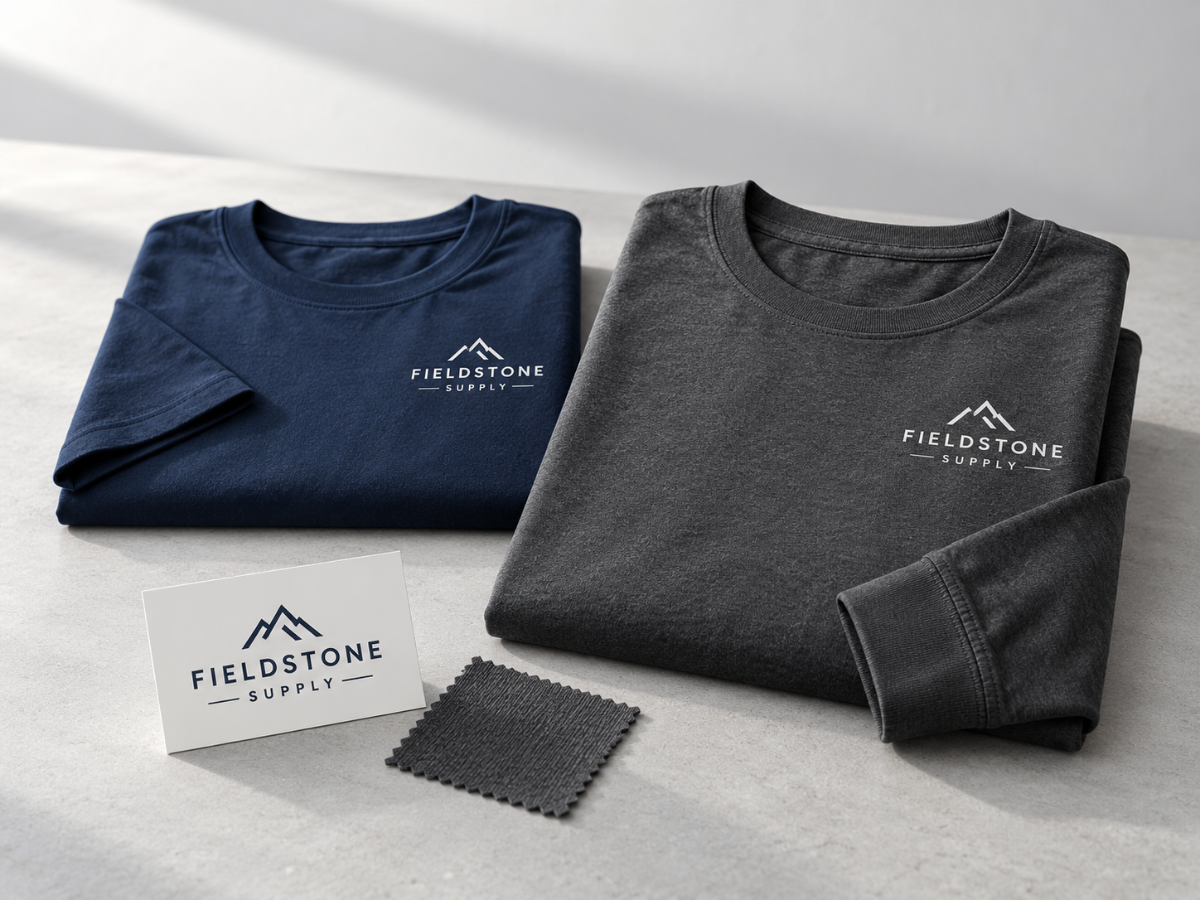
A good staff-apparel program should work beyond one season. Short sleeves give teams a straightforward everyday option, while long sleeves add coverage and make layering easier when temperatures change. The strongest uniform often uses both rather than asking one shirt to handle every situation.
Most businesses do not operate in one temperature all year.
Staff move between offices, vehicles, storefronts, warehouses, event spaces and outdoor environments. A shirt that feels right in July may be less practical several months later.
That makes sleeve length a more useful decision than it first appears.
A short-sleeve T-shirt is familiar, easy to layer and works naturally for events, everyday uniforms and promotional apparel.
A long-sleeve shirt adds coverage without immediately moving the team into heavier sweatshirts or hoodies.
Pryntco’s current custom apparel catalogue includes men’s, women’s and unisex short- and long-sleeve styles with custom printing, giving businesses room to build a uniform around actual working conditions instead of one garment for the entire year.
1. What Is the Main Difference Between Short- and Long-Sleeve Branded Shirts?
The obvious difference is arm coverage, but that changes how the shirt fits into the rest of the uniform.
Short sleeves are easy to wear alone or underneath another layer.
Long sleeves provide additional coverage while still keeping the familiar shape of a T-shirt.
The choice can affect:
- Season
- Layering
- Work environment
- Comfort
- Overall uniform appearance
2. When Is a Short-Sleeve Shirt the Better Choice?
Short sleeves make sense when staff spend most of their time in warmer or climate-controlled environments.
They are especially practical for:
- Retail teams
- Indoor events
- Promotional crews
- Casual offices
- Summer programs
They also layer easily under sweatshirts, hoodies and jackets.
3. When Is a Long-Sleeve Shirt the Better Choice?
Long sleeves can be useful when the team wants more coverage without moving immediately into fleece or outerwear.
They work naturally for:
- Cooler weather
- Transitional seasons
- Air-conditioned workplaces
- Outdoor events
- Layered uniforms
Pryntco’s current long-sleeve products are positioned for staff apparel, team orders, event crews and cooler-weather merchandise. :chatgpt-content-reference{index="1"}
4. Should a Staff Uniform Include Both?
Often, yes.
A practical program might use:
- Short sleeves as the everyday base shirt
- Long sleeves during cooler periods
- Hoodies or sweatshirts as an additional outer layer
The logo, colours and general visual identity can stay consistent across the collection.
5. Which Works Better Indoors?
Short sleeves are often the simplest indoor choice.
But temperature matters.
Warehouses, reception areas and strongly air-conditioned workplaces may make a long-sleeve shirt more comfortable for some employees.
The real environment should decide.
6. Which Works Better Outdoors?
There is no single outdoor answer.
Consider:
- Temperature
- Sun exposure
- Length of the shift
- Activity level
- Other required workwear
Ordinary branded shirts should not be treated as protective clothing unless the specific garment is designed and approved for that purpose.
7. Which Works Better in Warm Weather?
Short sleeves are the more obvious starting point.
Garment weight and fabric still matter, so do not choose by sleeve length alone.
A heavy short-sleeve shirt may feel very different from a lighter garment.
8. Which Works Better in Cooler Weather?
Long sleeves add coverage while keeping the garment lighter than many sweatshirts.
This makes them useful during:
- Spring
- Autumn
- Cool indoor environments
- Mild outdoor conditions
9. Which Shirt Is Easier to Layer?
Both can layer well.
A short sleeve sits easily under almost any branded outer layer.
A long sleeve can also work under a crewneck, hoodie or jacket when the fit leaves enough room.
Evaluate the complete uniform together instead of treating each garment separately.
10. Are Long Sleeves a Replacement for Hoodies?
No.
They solve different problems.
A long-sleeve shirt adds coverage.
A hoodie provides a heavier casual layer.
Pryntco’s hoodie category can complement long-sleeve apparel when the team needs another layer.
11. Which Works Better for Event Staff?
Choose according to the event.
Indoor summer conference:
Short sleeve may be enough.
Outdoor autumn activation:
Long sleeve may be more practical.
Multi-day event:
A combination can give the team flexibility.
12. Which Works Better at Trade Shows?
Short sleeves often work well inside exhibition halls.
Long sleeves can create a slightly more covered look while still remaining casual.
If the team needs a more structured presentation, a branded polo may be another option.
13. Which Works Better for Retail or Hospitality Staff?
Short sleeves are easy to wear throughout long indoor shifts.
Long sleeves may fit businesses where:
- The environment is cooler
- The visual style is more layered
- Staff move between indoor and outdoor areas
The garment should support the role rather than make the uniform unnecessarily complicated.
14. Which Works Better for Contractors and Home-Service Teams?
Field teams may benefit from having both.
A business can maintain the same logo and shirt colour while allowing staff to choose the sleeve length appropriate for the season.
Any required protective apparel should remain separate from ordinary branded promotional clothing.
15. Can Short- and Long-Sleeve Shirts Use the Same Logo?
Yes.
Use one approved logo system across both garments.
That helps the team look coordinated even when employees are wearing different sleeve lengths.
16. Should the Artwork Be Exactly the Same on Both?
It can be, but still review the design on each garment.
The shirt colour, cut and visible surface can affect how the artwork feels.
A design should never be transferred blindly from one product to another.
17. Where Should a Staff Logo Go?
Common approaches include:
- Small chest logo
- Centred front logo
- Larger promotional artwork
The right placement depends on whether the garment is a uniform, event shirt or merchandise piece.
18. Should Staff Shirts Have Large Back Printing?
Only when it serves a purpose.
A back print can help identify:
- Event staff
- Service crew
- Team
Do not fill the back with several lines of tiny contact information just because the space exists.
19. Should Businesses Assume Sleeve Printing Is Available?
No.
Decoration areas and available print configurations vary by product.
Confirm the exact garment and available customization options before designing artwork specifically for a sleeve.
20. Should the Shirt Colour Change With the Season?
It does not have to.
Keeping the same core garment colour throughout the year can make the uniform easier to recognize.
Some businesses may introduce a secondary approved colour for seasonal apparel, but the change should still feel intentional.
21. How Should Sizes Be Planned?
Collect sizes for the exact garment.
A person’s short-sleeve size should not automatically be copied into a different long-sleeve style without checking the relevant size information.
Different products can fit differently.
22. Should Staff Be Allowed to Choose Sleeve Length?
That can work well when both garments are approved parts of the uniform.
It allows staff to choose according to comfort while the company controls:
- Brand colour
- Logo
- Artwork placement
23. Can Men’s, Women’s and Unisex Long Sleeves Be Mixed?
Yes.
Pryntco currently carries long-sleeve options across men’s, women’s and unisex categories, including relaxed women’s styles and multiple unisex options. :chatgpt-content-reference{index="2"}
The goal should be one coordinated uniform with more than one approved fit.
24. Are Tall Sizes Worth Considering?
They can be when the team includes people who prefer additional body length.
Pryntco currently carries a tall T-shirt option with dedicated tall sizing in its unisex T-shirt range. :chatgpt-content-reference{index="3"}
Do not force employees into an unsuitable regular cut when another approved option better fits.
25. Does Fabric Weight Matter More Than Sleeve Length?
Sometimes.
Two long-sleeve shirts can feel very different if one is lightweight and the other more substantial.
Consider sleeve length together with:
- Fabric weight
- Blend
- Fit
- Intended season
26. Does Cotton vs Blended Fabric Still Matter?
Yes.
Sleeve length does not replace the fabric decision.
A business should still compare feel, fit and garment construction before choosing its final staff shirt.
Pryntco’s existing Cotton, CVC or Triblend T-Shirt Guide can support that decision.
27. How Should Staff Care for Branded Shirts?
Follow the care information supplied with the exact garment and decoration.
Do not create one generic washing rule for every staff shirt if the products differ.
28. How Many Short-Sleeve Shirts Should Staff Receive?
Base quantity on frequency of wear.
A team wearing branded shirts five days a week needs a different rotation from employees who only wear them at events.
Consider normal laundry and replacement needs.
29. How Many Long-Sleeve Shirts Should Staff Receive?
Again, follow actual use.
If long sleeves are only a seasonal option, the quantity may be lower than the everyday short-sleeve allocation.
If they are the normal winter uniform, staff may need several.
30. Should Businesses Hold Seasonal Inventory?
A small reserve can be useful.
Avoid purchasing a large seasonal surplus if:
- The team changes frequently
- The brand is being updated
- The garment may be discontinued
31. How Should New Hires Be Handled?
Keep records of the approved garments so a new employee receives the same uniform system.
Document:
- Product
- Colour
- Artwork
- Placement
32. How Should Seasonal Reorders Stay Consistent?
Do not rely on memory.
Record product names or codes and approved artwork.
This helps prevent one year’s long-sleeve shirt from looking unrelated to the next.
33. What Artwork File Should Be Used?
Use the cleanest original logo file available.
Vector artwork is especially useful because it can be resized without becoming pixelated.
Do not use a screenshot of the website logo as the production master.
34. Why Is Vector Artwork Useful for Staff Apparel?
The same logo may need to appear on:
- Short sleeves
- Long sleeves
- Polos
- Hoodies
A vector master makes those adaptations easier.
Pryntco’s Vector vs Raster Guide explains why.
35. What Should Be Checked Before Approving the Order?
Confirm:
- Short or long sleeve
- Exact product
- Colour
- Sizes
- Logo version
- Artwork placement
- Quantity
36. What Are the Most Common Seasonal Apparel Mistakes?
Common problems include:
- Ordering one shirt for the entire year without considering conditions.
- Guessing sizes.
- Changing garment colours between seasons without a plan.
- Assuming every long-sleeve product fits the same.
- Ordering too much seasonal inventory.
- Using different logo files on different garments.
37. When Should You Choose Short Sleeves?
Choose short sleeves when you want a versatile everyday base shirt for warmer conditions, indoor staff, events and easy layering.
They are the simplest starting point for many staff programs.
38. When Should You Choose Long Sleeves?
Choose long sleeves when employees need additional coverage without immediately moving into heavier fleece or outerwear.
For many teams, the strongest answer is not one or the other.
It is a coordinated seasonal system:
short sleeve for warmer days → long sleeve for cooler periods → sweatshirt or hoodie when another layer is needed.
Keep the colours, logo and artwork consistent so the uniform still feels like one brand.
Businesses can compare current options through Pryntco’s Apparel catalogue.
For a coordinated staff apparel order, contact Pryntco or submit a custom quote request.

