
What Should Law Firms, Accountants and Consultants Have Printed?
What Should Law Firms, Accountants and Consultants Have Printed?
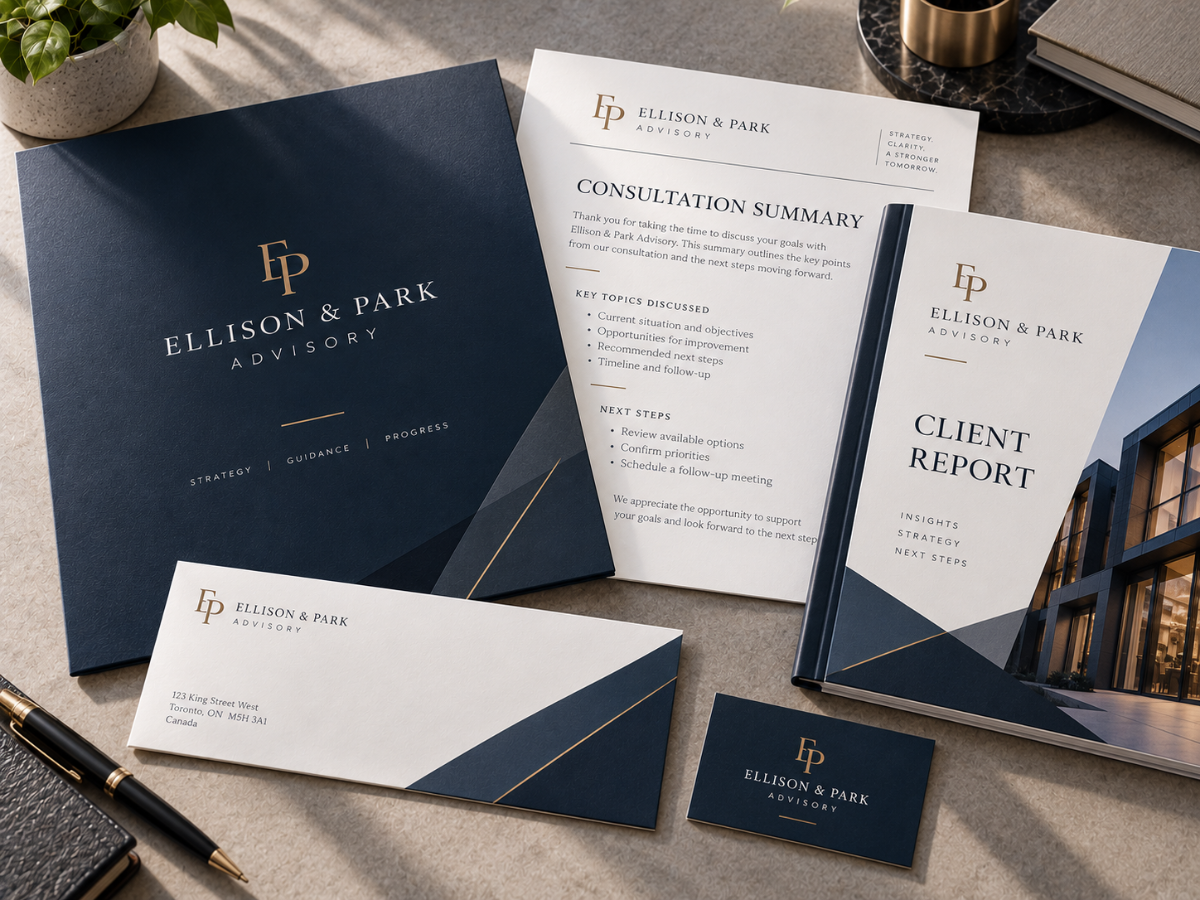
Professional-service firms rarely need flashy print. They need materials that make client communication easier to follow, keep documents organized and present the business consistently from the first meeting through the final report. The best print system is usually restrained, modular and easy to update.
Professional-service businesses sell expertise, judgement and trust rather than a physical product.
That changes the role of print.
A law firm does not need a counter covered with promotional flyers.
An accounting firm does not need every client document turned into an advertisement.
A consultant does not need to place a sales slogan across every page of a report.
The printed materials should support the work.
A business card helps a new contact remember who they met. Letterhead gives formal correspondence a consistent foundation. A presentation folder organizes a proposal or client package. A printed report makes detailed information easier to review during a meeting. A branded envelope connects mailed documents back to the firm before the recipient even opens them.
Pryntco’s existing Business Stationery Essentials Guide covers the general stationery system, while this guide focuses specifically on how professional-service firms can build a practical client-facing print setup.
1. What Printed Materials Do Professional-Service Firms Commonly Need?
The exact mix depends on the firm, but useful pieces may include:
- Business cards
- Letterhead
- Branded envelopes
- Presentation folders
- Proposals
- Reports
- Service sheets
- Client information packages
- Seminar or presentation handouts
The goal is not to own every printed product. It is to cover the moments where clients actually receive or review information.
2. Why Should Client-Facing Print Be Separated From Internal Documents?
The two have different jobs.
Internal documents may prioritize efficiency and function.
Client-facing materials need to be:
- Easy to identify
- Easy to navigate
- Consistent with the firm
- Appropriate for the situation
That does not mean every client page needs decorative branding.
3. Do Lawyers, Accountants and Consultants Still Need Business Cards?
They can be useful because professional-service work often begins with a person-to-person conversation.
Business cards can be exchanged during:
- Consultations
- Networking events
- Conferences
- Referral meetings
- Client visits
The card should make it easy to reconnect with the specific professional.
4. What Should Go on a Professional Business Card?
Keep the hierarchy simple.
Depending on the firm, information may include:
- Name
- Role or title
- Firm name
- Phone
- Website
- Office address where useful
Any professional designations, licence wording or regulatory information should be confirmed by the firm before printing.
5. Why Is Letterhead Still Useful?
Letterhead gives formal business documents a consistent identity without overwhelming the actual content.
It can support:
- Client letters
- Cover letters
- Proposals
- Notices
- Confirmations
- Formal correspondence
Pryntco’s Business Letterhead Design Guide specifically identifies legal, accounting and consulting firms among common users.
6. When Should Letterhead Be Kept Visually Simple?
Almost always when the document itself is information-heavy.
A restrained header and footer leave more room for:
- Body text
- Tables
- Signatures
- Detailed recommendations
The branding should identify the sender without fighting the message.
7. When Are Branded Envelopes Worth Using?
They are useful when the firm regularly sends physical correspondence and wants the mail piece to feel connected to the documents inside.
A branded envelope may carry:
- Firm logo
- Return address
- Restrained brand colour
Pryntco’s Custom Envelope Guide covers mailing-space, flap and addressing considerations separately.
8. When Does a Presentation Folder Make Sense?
Use a folder when the client receives several related documents at once.
Examples include:
- Proposal
- Engagement information
- Service sheets
- Report
- Business card
The folder gives the client one place to keep the complete package.
9. What Should Go Inside a Professional-Service Folder?
Only the materials relevant to that client or meeting.
A useful folder might include:
- Personalized cover letter
- Proposal
- One or two applicable service sheets
- Relevant case study
- Business card
A thick packet of unrelated marketing material can make the package harder to use.
10. Should a Firm Use a Brochure or Separate Service Sheets?
Use a brochure when the firm needs one general overview.
Use separate sheets when different clients need different practice areas or services.
A consultant offering strategy, operations and training, for example, may prefer three separate service sheets rather than forcing every prospect through the same long brochure.
11. What Should a Printed Proposal Look Like?
The proposal should be designed for decision-making.
Useful sections may include:
- Client objective
- Scope
- Approach
- Deliverables
- Timeline supplied by the firm
- Commercial information
- Next step
Do not bury the client-specific content under several pages of company history.
12. When Should a Report Be Professionally Printed?
Printing can be useful when the report will be:
- Reviewed in a meeting
- Presented to several decision-makers
- Kept for reference
- Used during a workshop
Pryntco’s Business Report, Proposal & Training Manual Guide covers multi-page planning, covers, binding and finishing in more detail.
13. What Should Go in a Consultation Packet?
A consultation packet should help the client understand what happens next.
Depending on the profession, it may include:
- Firm introduction
- Meeting agenda
- Required-document checklist
- Process overview
- Contact information
The firm should supply any industry-specific instructions or required wording.
14. Should New Clients Receive a Welcome Package?
It can be useful when onboarding involves several steps.
A simple package may clarify:
- Main contact
- Communication process
- What the client needs to provide
- How future documents will be delivered
Do not turn onboarding into another sales brochure once the client has already engaged the firm.
15. Are Printed Checklists Useful?
Yes when clients repeatedly need to gather information before a meeting.
A checklist can help organize:
- Documents to bring
- Questions to prepare
- Information required
- Next steps
The responsible professional should approve the contents.
16. What Print Helps With Referrals and Networking?
Usually, very little is required.
A clean business card or concise firm brochure can be enough.
The goal is to make follow-up easy rather than hand a referral partner a large sales package they did not request.
17. What Should Be Printed for a Seminar or Client Event?
A firm may need:
- Event invitation
- Agenda
- Presentation handout
- Speaker biography
- Note pages
- Feedback card
Print only the material participants need during or after the session.
18. Should Presentation Slides Be Printed?
Not automatically.
A useful handout may contain:
- Key charts
- Summary points
- Exercises
- Note space
Printing every slide can produce a thick packet without improving the meeting.
19. What Makes a Good Client Leave-Behind?
It should help the client remember the conversation.
Depending on the meeting, that may be:
- Business card
- Service sheet
- Proposal
- Short brochure
Choose the piece that matches what the client is deciding next.
20. Should Case Studies Be Printed?
They can be useful in sales situations where a relevant example supports the discussion.
Keep each case study focused on:
- Context
- Work performed
- Documented outcome supplied by the firm
Client permission and confidentiality should be handled by the firm before publication.
21. Should Testimonials Be Included?
Only when the firm is permitted to use them and the wording is genuine and approved.
Do not create or rewrite client claims in a way that changes their meaning.
Some professions may also have specific rules governing testimonials or promotional claims.
22. Should Pricing Be Printed Into Long-Lived Materials?
Only when it is stable.
If fees or packages change regularly, consider keeping them on:
- Separate sheet
- Proposal
- Current website page
This prevents an otherwise useful brochure from becoming outdated because one number changed.
23. How Should QR Codes Be Used?
Use them to connect a printed piece to one useful next step.
Examples include:
- Book a consultation
- View a service page
- Download a resource
- Complete an inquiry form
Label the destination clearly.
24. How Should Firms With Several Practice Areas Organize Print?
Keep one core visual system and separate the content where necessary.
For example:
- One general firm folder
- One corporate service sheet
- One tax service sheet
- One consulting service sheet
This avoids creating a different brand for every department.
25. How Should Firms With Several Professionals Handle Business Cards?
Use one controlled template.
Change only the appropriate personal fields such as:
- Name
- Title
- Direct phone
- Professional designations where approved
The firm identity should remain consistent.
26. How Should Multi-Office Firms Handle Print?
Each location-specific piece should be checked for:
- Correct office address
- Phone number
- Professional roster
- QR code
- Website destination
Do not assume one office file can be reused unchanged for another.
27. Why Is Version Control Important?
Professional firms often update:
- Staff
- Services
- Addresses
- Fees
- Regulatory wording
Use clear file names and retire outdated printed stock when the information changes.
28. How Should Confidential Information Be Handled?
Marketing print should generally avoid containing sensitive client information unless the firm’s approved workflow requires it.
Keep client-specific material separate from general promotional pieces.
The firm is responsible for determining the appropriate privacy, security and document-handling requirements for its work.
29. What About Legal, Regulatory or Professional Wording?
The printer should not invent it.
The firm should provide or approve any required:
- Licence wording
- Professional designation
- Registration information
- Disclaimer
- Regulatory statement
Requirements can vary by profession and jurisdiction.
30. Why Is Readability More Important Than Decorative Design?
Professional-service materials often contain detailed information.
Use:
- Clear headings
- Comfortable margins
- Readable text
- Consistent tables
- Simple page hierarchy
A report that looks impressive but is exhausting to read is not well designed.
31. How Should the Brand Stay Consistent Across Documents?
Use a controlled system for:
- Logo
- Colours
- Typography
- Contact information
- Page structure
The folder, letterhead, business card and report do not need identical layouts, but they should clearly belong to the same firm.
32. How Much Print Should a Firm Order at Once?
Order more cautiously when the piece contains information that changes frequently.
Short-lived information includes:
- Staff rosters
- Pricing
- Dated events
- Temporary services
Evergreen stationery may support larger quantities when the underlying information is stable.
33. What Professional-Service Print Should Stay Evergreen?
Good evergreen candidates include:
- Presentation folder
- General firm brochure
- Core business-card template
- Letterhead structure
Temporary pricing and dated statistics are often better kept on separate replaceable pieces.
34. When Should Printed Material Be Mailed?
Use mail when the physical document itself is useful to the recipient.
Examples may include:
- Formal correspondence
- Client package
- Event invitation
- Printed report
Plan the document, folder and envelope together so the finished package actually fits.
35. What Should Be Proofed Before Printing?
Confirm:
- Firm name
- Professional names and titles
- Addresses
- Phone and email
- Professional designations
- Required wording
- Page order
- QR codes
Pryntco’s PDF Proof Approval Checklist provides a broader final-review process.
36. What Are the Most Common Law-Firm Print Mistakes?
Common problems include:
- Using outdated lawyer information.
- Mixing confidential client documents with generic promotional material.
- Printing unapproved professional claims.
- Using dense legal text with poor readability.
- Ordering large quantities before contact information is stable.
37. What Are the Most Common Accounting and Consulting Print Mistakes?
Common problems include:
- Printing rapidly changing pricing into evergreen brochures.
- Turning every report into a sales document.
- Using too many unrelated service sheets.
- Presenting complex tables without enough space.
- Failing to update staff, service or office information.
38. What Should a Professional-Service Firm Print First?
Start with the materials used repeatedly in real client interactions.
Build a clean business card system for individual professionals.
Create restrained letterhead and envelopes if the firm still sends formal physical correspondence.
Use a presentation folder when clients regularly receive several documents together.
Keep proposals and reports readable, client-specific and separate from generic marketing copy.
If prospects need a reusable overview, add one concise brochure or a small set of service sheets.
Then stop.
A professional-service firm does not need to fill every meeting with paper.
The strongest print system helps clients understand what they received, who it came from and what happens next.
For broader planning, review Pryntco’s Business Stationery Essentials, Presentation Folder Guide and Business Report & Proposal Guide.
For a custom firm stationery, proposal or client-document project, contact Pryntco or submit a custom quote request.

