A Practical Print Guide for Retail Stores
A Practical Print Guide for Retail Stores
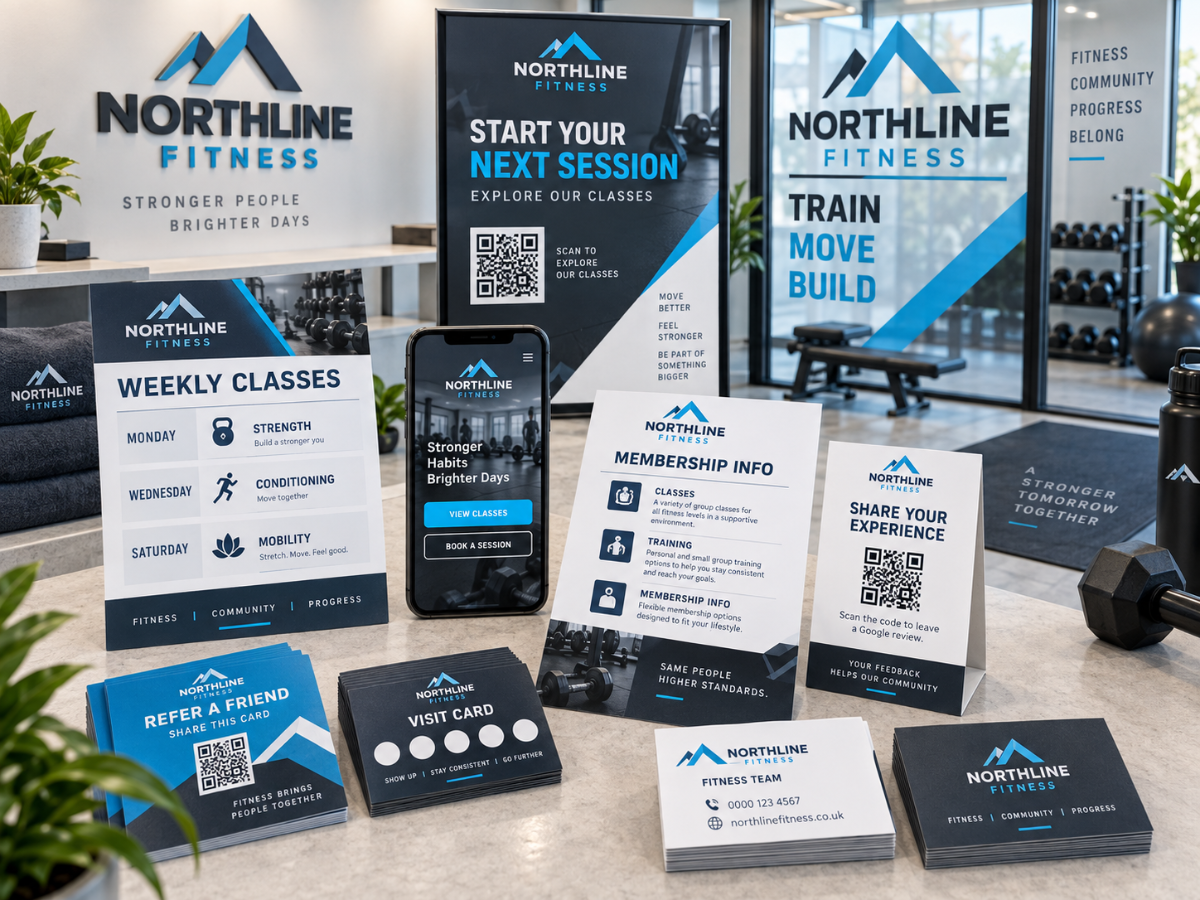
Retail print works at several distances. The storefront has to attract attention from outside, the poster needs to explain a promotion from a few steps away, the shelf or counter display supports the purchase decision and the hang tag or package insert communicates after the customer picks up the product. Design each piece for where it is actually seen.
Retail customers encounter print before, during and after a purchase.
A window graphic may be the first thing they notice from the sidewalk.
Inside the store, posters and counter displays help explain current promotions. Hang tags and product cards add information directly to merchandise. Loyalty cards encourage future visits. Thank-you cards or packaging inserts continue the experience after the sale.
This means retail print should be planned as a system rather than a collection of unrelated signs.
Pryntco currently identifies retailers among the businesses it works with, and its Print Resources already contain dedicated guidance for formats such as hang tags, loyalty cards, tent cards and window graphics.
This guide connects those pieces around the retail customer journey.
1. What Print Materials Does a Retail Store Need?
Common retail materials may include:
- Window graphics
- Posters
- Flyers
- Counter displays
- Tent cards
- Hang tags
- Labels
- Loyalty cards
- Review cards
- Thank-you cards
- Packaging inserts
The mix depends on what the store sells and how customers move through the space.
2. What Is the Difference Between Retail Marketing and Merchandising?
Marketing attracts and communicates with customers.
Merchandising helps present and organize what the store sells.
Print can support both.
A window poster may bring someone inside, while a product hang tag helps them understand the item once they are already shopping.
3. What Should Stay Consistent Across Retail Print?
Keep the core brand consistent across:
- Storefront
- Promotional signs
- Product tags
- Packaging
- Customer-retention materials
Campaign colours can change seasonally without changing the underlying brand identity.
4. How Important Is the Storefront?
The storefront often performs the first marketing job.
It can communicate:
- Business identity
- Main product category
- Current promotion
- Hours
Do not overcrowd the glass with every message used inside the store.
5. How Can Retail Stores Use Window Graphics?
Window graphics can support:
- Branding
- Seasonal promotions
- Product photography
- New arrivals
- Store openings
Pryntco’s Window Perforation Design Guide includes retail storefronts as a primary application.
6. Should Retail Stores Use Small Posters?
Yes when the message needs to remain visible in one place.
Small posters can support:
- New product launches
- Sale events
- Seasonal messages
- Store policies
- Loyalty-program awareness
7. Where Should Retail Posters Be Placed?
Place them where customers naturally stop or change direction.
Examples include:
- Entrance
- Feature display
- Checkout queue
- Changing area
- Service counter
Visibility is more important than printing a large number of signs.
8. When Should Retail Stores Use Tent Cards?
Tent cards can work on counters, shelves or product display tables where customers read from close range.
They can communicate:
- Featured product
- Bundle
- Loyalty program
- Product information
- QR code
9. What Is a Retail Hang Tag?
A hang tag is a printed card attached to merchandise rather than adhered directly to it.
It can include:
- Brand
- Product name
- Size
- Price
- SKU
- Care information
- QR code
Pryntco’s Custom Hang Tag Printing Guide covers retail-specific tag planning.
10. What Should Go on a Hang Tag?
Only information that belongs directly with the product.
Do not turn a small tag into a complete company brochure.
A simple structure may be:
- Brand front
- Product details back
- Optional QR code
11. Should Retail Products Use Labels or Stickers?
They can when information needs to remain physically attached to packaging or a product surface.
Labels may be used for:
- Product identity
- Variant
- Packaging branding
- Approved instructions
The material and adhesive should be selected for the actual surface and use.
12. How Should Price Signs Be Designed?
Price communication should be easy to understand.
Use:
- Clear product identity
- Clear price
- Clear promotion conditions where applicable
Remove outdated sale signs immediately when the promotion ends.
13. Should Retail Stores Use Flyers?
Flyers can work when customers need information they can carry away.
Possible uses include:
- Grand opening
- Seasonal sale
- New collection
- Store event
- Product education
Pryntco’s Small Posters vs Flyers Guide explains the difference between a fixed display and a take-away piece.
14. Should Retail Stores Use Postcards?
Postcards can support local customer outreach such as:
- New-store opening
- Seasonal promotion
- Customer reactivation
- Special event
The message should be specific enough that the customer immediately understands why the card was sent.
15. Are Loyalty Cards Useful for Retail Stores?
They can be when repeat purchases are common.
A loyalty program may suit:
- Specialty retail
- Beauty retail
- Gift shops
- Food retail
- Local boutiques
The reward structure should remain simple enough for both customers and staff.
16. Should Retail Stores Use Referral Cards?
They can when recommendations are a meaningful source of new customers.
The card should explain:
- What the existing customer should do
- What the new customer should do
- How the referral is identified
Do not invent an incentive if the business does not actually offer one.
17. Are Gift Certificates Useful for Retail Businesses?
Yes when the store has a genuine gift-certificate or voucher program.
Gift certificates can support:
- Holiday shopping
- Birthdays
- Customer gifting
- Corporate gifting
Terms, value and redemption procedures should be established before the print design is finalized.
18. Should Retail Orders Include Thank-You Cards?
They can create a useful post-purchase touchpoint.
Pryntco’s Thank-You Cards for Orders Guide recommends keeping appreciation as the primary message rather than turning the entire card into another sales flyer.
19. When Should Retail Stores Use Packaging Inserts?
Packaging inserts can work for in-store pickup, shipped orders or packaged products.
Possible purposes include:
- Thank-you message
- Product care
- Reorder information
- Referral program
- Review request
Pryntco’s Ecommerce Packaging Inserts Guide explains why each insert should ideally have one primary job.
20. Should Retail Stores Use Review Cards?
Yes when the request is neutral and connected to a genuine customer experience.
A card can provide:
- Short request
- QR code
- Correct location review destination
Do not attach incentives to a Google review request.
21. How Should Retail QR Codes Be Used?
QR codes can link to:
- Product details
- Online store
- Loyalty registration
- Review page
- Current campaign
Label the destination rather than placing an unexplained code beside the product.
22. How Should Retail Stores Promote New Products?
Use a coordinated launch across the areas where customers will encounter the item.
For example:
- Window poster
- In-store sign
- Tent card beside the product
- Flyer or insert
Each piece should support the same product story without duplicating the full copy.
23. How Should Sale and Clearance Print Be Managed?
Sale materials need especially careful version control.
Confirm:
- Dates
- Eligible products
- Discount terms
- Location
Remove the material as soon as the sale ends.
24. How Should Retail Stores Plan Seasonal Print?
Retail is often highly seasonal.
Potential campaigns include:
- New arrivals
- Holiday shopping
- End-of-season clearance
- Back-to-school
- Gift promotions
Prepare print before the selling period begins, not halfway through it.
25. What Print Is Useful for a Retail Grand Opening?
A launch campaign might combine:
- Window graphics
- Flyers
- Postcards
- Posters
- A-frame signage
Temporary grand-opening messages should be kept separate from permanent store branding.
26. How Should Multi-Location Retailers Manage Print?
Use one brand system with controlled local variables.
Check:
- Address
- Hours
- Local offers
- QR codes
- Inventory-specific promotions
Do not assume every location has the same products or campaign dates.
27. How Should Physical Stores and Ecommerce Work Together?
Retail print can connect the store to online shopping.
Examples include:
- QR code for unavailable sizes
- Online reorder link
- Package inserts
- Pickup information
The printed message should match the current online experience.
28. When Should Retail Stores Use Small Formats or Large Formats?
Use large formats when the message needs to be noticed from farther away.
Use smaller formats for close interaction.
For example:
- Window graphic → distance
- Poster → several steps away
- Tent card → close range
- Hang tag → product in hand
29. Do Retail Staff Need Business Cards?
Sometimes.
They can be useful for:
- Wholesale relationships
- Custom orders
- Corporate sales
- High-touch customer service
Not every retail employee requires an individual card.
30. Can Promotional Products Support Retail Marketing?
Yes when they fit the brand and customer.
They may be:
- Given with selected purchases
- Used in events
- Sold as merchandise
- Used for customer appreciation
Do not choose promotional products simply because they are available.
31. How Should Retail Displays Stay Visually Consistent?
Create a campaign kit containing approved:
- Headline
- Colours
- Product imagery
- Offer
- QR destination
Then adapt the system to different physical formats.
32. How Many Retail Marketing Pieces Should Be Printed?
Quantity should match:
- Number of displays
- Number of stores
- Campaign length
- Customer distribution
A poster quantity should not be calculated the same way as a flyer quantity.
33. How Should Retail Stores Manage Prices and Version Control?
Use clear campaign and date names.
For example:
Holiday_Sale_Poster_Nov2026_FINAL.pdf
is safer than:
sale-poster-new2.pdf
Archive outdated artwork after the campaign ends.
34. How Should Retail Print Marketing Be Tracked?
Campaign tracking can use:
- QR codes
- Promo codes
- Coupon redemption
- Loyalty registrations
- Landing-page visits
Define the desired customer action before printing.
35. How Can Retail Print Be Easier to Read?
Design for the actual viewing distance.
Use:
- Large headlines on posters
- Strong contrast
- Clear prices
- Simple offers
- Enough spacing
Do not shrink detailed digital-ad copy onto a physical sign.
36. How Should Retail Artwork Be Prepared?
Before production:
- Confirm campaign dates and prices.
- Use high-resolution product photography.
- Use original logo artwork.
- Build at the correct finished size.
- Follow bleed and safe-area requirements.
- Test QR codes.
- Check every location version.
Pryntco’s Artwork Preparation Guide covers general print-file setup.
37. What Are the Most Common Retail Print Marketing Mistakes?
Common problems include:
- Leaving expired sale signs on display.
- Using tiny product information.
- Putting too many promotions in one window.
- Printing the wrong price.
- Using weak product photography.
- Sending every QR code to the homepage.
- Using inconsistent branding between packaging and store signage.
- Printing large quantities of materials that will become outdated quickly.
38. What Print Marketing System Should a Retail Store Build?
Start from the outside and move inward.
The storefront should tell people what kind of business they are approaching. Window graphics and posters can introduce the current campaign.
Inside, use closer-range materials for product and promotional details. Tent cards can support display tables and counters. Hang tags can add useful information directly to merchandise.
At checkout, customer-retention pieces can take over. Loyalty cards, review requests and thank-you cards have a different job from acquisition signage.
After the purchase, a package insert can provide a useful next step such as care information, reorder instructions or appreciation.
Do not make every piece advertise everything.
The strongest retail print system moves from awareness to product understanding to purchase to retention.
Pryntco’s retail-supporting Print Resources include the Hang Tag Printing Guide, Tent Card Guide, Loyalty Card Guide and Thank-You Card Guide.
Retail businesses planning a coordinated print campaign can contact Pryntco or submit a custom quote request.