How Gyms and Fitness Studios Can Use Print to Grow Membership
How Gyms and Fitness Studios Can Use Print to Grow Membership
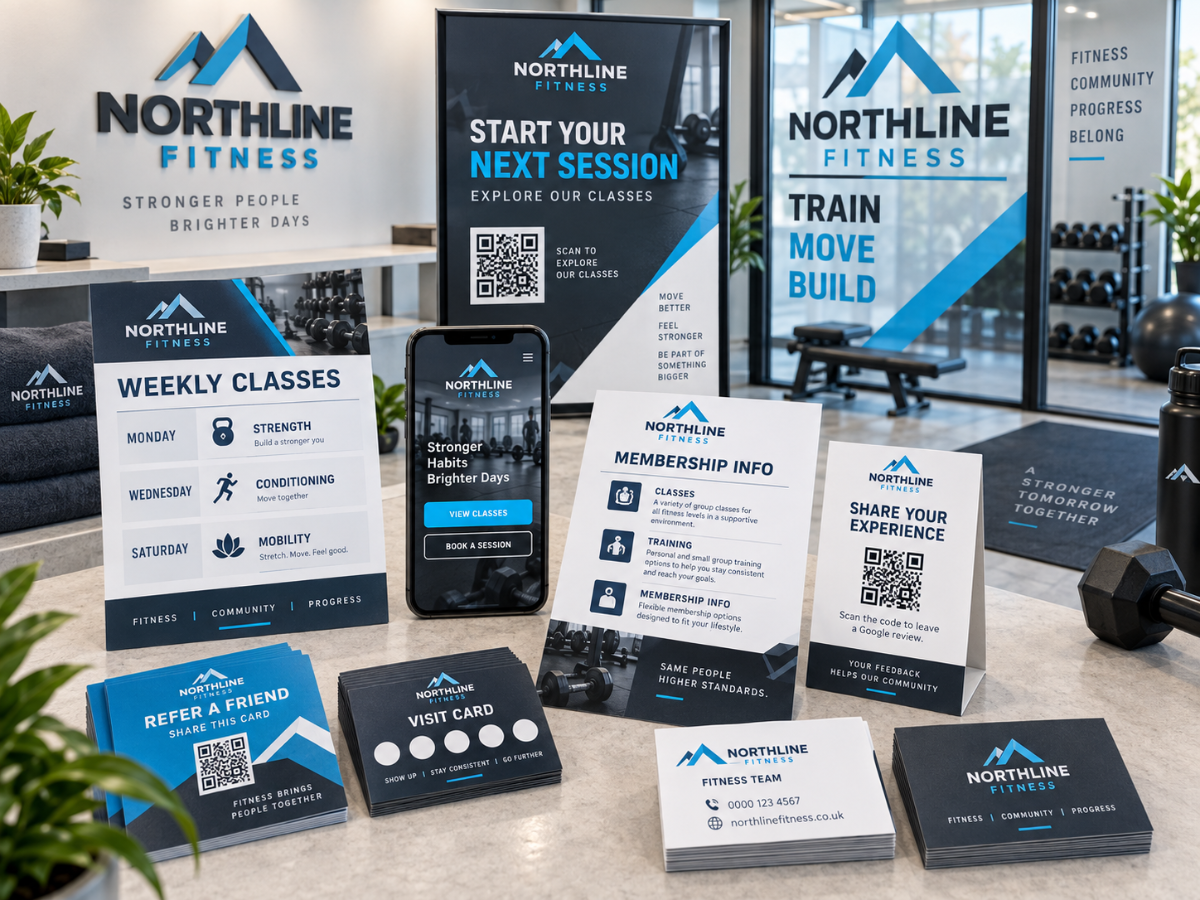
Fitness print marketing should make the next action easy. A passerby needs a clear reason to notice the studio, a prospect needs enough information to understand the offer, an existing member needs to know about classes or events and a satisfied customer needs an easy way to refer someone else. Use different printed pieces for those different stages.
Gyms, studios and fitness businesses operate both as local businesses and recurring-membership businesses.
They need to attract new customers, communicate with existing members and keep their physical space clear and organized.
That creates several roles for print.
A window graphic can establish the brand from outside. A flyer can explain an introductory campaign. A class poster can communicate a schedule or event. A referral card can help an existing member recommend the business. A review card can connect an in-person experience with online feedback.
Pryntco currently identifies fitness businesses among the industries supported through its marketing services, while existing Print Resources cover referral cards, loyalty cards, review cards, window graphics and promotional formats that naturally fit gym and studio marketing.
1. What Print Materials Do Gyms and Fitness Businesses Use?
Common materials may include:
- Flyers
- Posters
- Window graphics
- Referral cards
- Loyalty or visit cards
- Review cards
- Business cards
- Class information sheets
- Event signage
- Postcards
2. What Should a Fitness Print Campaign Accomplish?
Choose one primary objective.
Examples include:
- Generate trial inquiries
- Promote a new class
- Promote a membership offer
- Generate referrals
- Promote an event
- Increase local awareness
The print format should follow the objective.
3. What Should Stay Consistent Across Gym Print?
Keep consistent:
- Logo
- Brand colours
- Typography
- Photography style
- Primary message
A class flyer should still feel connected to the front-window branding and website.
4. Should Gyms Use Flyers?
Yes when prospects need information they can take away.
Flyers can promote:
- Introductory program
- Class launch
- Personal training
- Open house
- Community event
Keep the flyer focused on one campaign.
5. How Should a Class Schedule Be Printed?
A printed class schedule should prioritize clarity.
Use:
- Day
- Time
- Class name
- Location where needed
Avoid tiny grids containing more information than members can comfortably read.
If schedules change frequently, print smaller quantities or direct members to a current online schedule.
6. Should Gyms Use Posters?
Yes.
Posters can support:
- New classes
- Special events
- Membership campaigns
- Internal announcements
Use a short headline that can be understood from several steps away.
7. How Can Fitness Businesses Use Window Graphics?
Window graphics can communicate:
- Brand identity
- Main services
- Opening information
- Membership campaigns
- Class imagery
Pryntco’s Window Perforation Design Guide specifically identifies gyms and fitness studios as a storefront application.
8. What Should Gym Window Graphics Say?
Keep the outside message simple.
Possible structures include:
- Business name
- Main fitness category
- Short call to action
- Website or QR code
People walking or driving past do not have time to read a complete class catalogue.
9. Should Gyms Use Referral Cards?
Yes when member recommendations are part of the customer-acquisition strategy.
A referral card gives an existing member something physical to share with a friend, colleague or family member.
Pryntco’s Referral Card Guide specifically identifies fitness studios and personal trainers as suitable users.
10. How Should a Fitness Referral Card Work?
Keep the process easy.
The card can include:
- Referral headline
- Business name
- Booking or contact method
- Referral identification field or code
- QR code where useful
Any incentive should reflect the business’s actual referral program.
11. Should Fitness Businesses Use Loyalty Cards?
They can work for visit-based businesses where physical attendance is part of the program.
Examples may include:
- Small studios
- Class packs
- Wellness businesses
The printed card should only be used if it genuinely fits the business’s membership or visit-tracking system.
12. Should Gyms Use Review Cards?
A review card can provide a convenient path to a genuine public review after a customer has had real experience with the business.
Keep the wording neutral.
Pryntco’s Google Review Card Guide explains how to request feedback without trying to control the rating.
13. Do Personal Trainers Need Business Cards?
They can be useful for:
- Consultations
- Networking
- Referrals
- Community events
Keep the card focused on contact information and the trainer’s approved professional role.
14. How Should Gyms Promote Introductory Offers?
The print should make the offer understandable.
Clearly state:
- What the offer includes
- Who it applies to
- Required dates or conditions
- How to respond
Do not create artificial urgency or unsupported fitness claims.
15. Can Promo Codes Help Track Gym Print?
Yes.
A flyer or postcard can include a campaign code to help identify inquiries generated by that piece.
Keep codes short and easy to enter.
16. Should Gyms Use Direct Mail?
Direct mail may work when the business draws customers from a defined local area.
Possible campaigns include:
- New location
- Introductory program
- Seasonal membership campaign
- New class offering
The geographic target should reflect realistic travel behaviour.
17. Are New Movers a Useful Audience for Fitness Businesses?
They can be because people moving into a new area may be choosing a new gym or studio.
A new-mover campaign can introduce:
- Location
- General fitness offering
- Booking or trial information
Use appropriately sourced mailing data and a respectful welcome message.
18. How Should Fitness Businesses Use Seasonal Marketing?
Seasonal campaigns should reflect real customer behaviour rather than generic holidays.
Possible periods include:
- New-year planning
- Spring activity
- Back-to-routine periods
- New class seasons
Pryntco’s Seasonal Print Marketing Calendar specifically includes membership campaigns as a possible early-year use.
19. How Can Gyms Promote Events or Challenges?
Use a focused event system.
This may include:
- Poster
- Registration flyer
- Counter sign
- QR code
All pieces should show the same event name, dates and registration method.
20. How Should a New Class Be Promoted?
Lead with the class rather than a generic gym advertisement.
Clearly identify:
- Class name
- Who it is intended for where appropriate
- Schedule
- How to reserve or learn more
Avoid making health or performance guarantees.
21. How Should Personal Training Be Promoted?
Focus on the service and consultation process rather than unrealistic outcome promises.
A flyer might include:
- Personal-training availability
- General approach
- Trainer introduction
- Consultation call to action
Specific professional credentials should be included only when current and verified.
22. Should Gyms Use QR Codes?
Yes when they lead directly to a useful next step.
Possible destinations include:
- Trial registration
- Class booking
- Membership information
- Location page
- Event registration
23. Should Gym QR Codes Go to Dedicated Landing Pages?
Often, yes.
A poster promoting a specific class should link to that class or registration page rather than forcing the customer to navigate from the homepage.
Keep the printed headline and landing-page message consistent.
24. What Signs Are Useful at a Gym Reception Area?
Reception signage may communicate:
- Check-in direction
- Current promotion
- Class registration
- Member information
Do not overload the front desk with competing signs.
25. What Wayfinding Print Might Fitness Facilities Need?
Larger facilities may need directional information for:
- Reception
- Studios
- Changing areas
- Training zones
- Exits
Required safety and accessibility signage should follow applicable facility rules.
26. Should Gyms Print Membership Information Sheets?
They can be useful when prospects need to compare options or take information home.
Keep the sheet current.
If membership pricing or terms change regularly, avoid printing excessive quantities.
27. Should Gyms Print Trainer Profile Cards or Sheets?
They can help introduce staff where the business model depends on individual trainers.
A profile may include:
- Name
- Role
- Approved credentials
- Training focus
- Contact or booking method
Do not include credentials or claims that have not been verified.
28. Can Promotional Products Support Fitness Marketing?
They can when the item fits the member experience.
Potential applications include:
- Member gifts
- Event giveaways
- Employee items
- Branded merchandise
Drinkware may fit naturally in some fitness environments, but the item should still be selected according to the audience and campaign.
29. Poster or Flyer: Which Is Better for a Gym Campaign?
Use a poster when the message stays in one location.
Use a flyer when prospects need something they can carry away.
Pryntco’s Small Posters vs Flyers Guide explains the distinction.
30. How Should Multi-Location Fitness Businesses Manage Print?
Keep the core brand consistent while checking local:
- Address
- Phone
- Class schedule
- Offer
- QR code
Different locations may not have identical programs.
31. Should Printed Sign-Up Forms Contain Sensitive Information?
Only collect information the business genuinely needs and can handle appropriately.
Do not place completed customer information where other members can see it.
Fitness-related health or personal information requires particularly careful handling.
32. How Many Fitness Marketing Pieces Should Be Printed?
Match quantity to the real use.
For example:
- Posters based on display points
- Flyers based on distribution
- Referral cards based on member participation
- Schedules based on how quickly they change
33. How Should Gyms Manage Version Control?
Class schedules and promotions can change frequently.
Use filenames containing:
- Campaign
- Location
- Date
Remove old versions from reception and staff areas when the new version begins.
34. How Should Fitness Print Marketing Be Tracked?
Possible tracking methods include:
- Campaign QR code
- Promo code
- Referral code
- Dedicated landing page
- Lead-source question
Measure actual inquiries, trials or memberships rather than only scans.
35. How Should Print and Digital Fitness Marketing Work Together?
Print can direct customers to:
- Class booking
- Website
- Membership information
- Social content
- Event registration
The offer and schedule must match what customers see online.
36. How Should Fitness Artwork Be Prepared?
Before production:
- Confirm the correct class or campaign information.
- Use high-quality original photography.
- Use current approved logos.
- Prepare artwork at the correct size.
- Follow bleed and safe-area requirements.
- Keep headlines readable.
- Test QR codes.
- Check dates, schedules and contact information.
Pryntco’s Artwork Preparation Guide provides broader technical guidance.
37. What Are the Most Common Gym and Fitness Print Marketing Mistakes?
Common mistakes include:
- Using generic motivational headlines with no clear offer.
- Making unrealistic transformation claims.
- Printing large quantities of schedules that change frequently.
- Using old class times.
- Sending QR codes to a generic homepage.
- Using referral offers staff cannot explain.
- Putting too much information on posters.
- Using the wrong location information on multi-location campaigns.
38. What Print Marketing Should a Gym or Fitness Business Start With?
Begin with the customer journey.
A person outside the business needs a simple reason to understand what the gym or studio offers. Window graphics and exterior messaging can handle that job.
A prospect considering the business may need a flyer, membership information sheet or class schedule.
Inside the facility, posters and counter signs can communicate new classes, events and current programs.
Existing members create another opportunity. Referral cards can help them introduce friends, while review cards can make genuine public feedback easier.
Do not use every piece for acquisition.
Some print should support existing members, some should support local visibility and some should support conversion.
Keep changing information in smaller quantities. Class schedules, introductory promotions and events can become outdated quickly.
Use QR codes and campaign identifiers to connect print to online booking and measure real inquiries rather than simply distributing material without a response path.
Pryntco’s fitness-relevant resources include the Referral Card Guide, Google Review Card Guide, Window Perforation Design Guide and Small Posters vs Flyers Guide.
Gyms and fitness businesses planning a coordinated print campaign can contact Pryntco or submit a custom quote request.