Print Marketing for Dental Clinics and Medical Offices
Print Marketing for Dental Clinics and Medical Offices
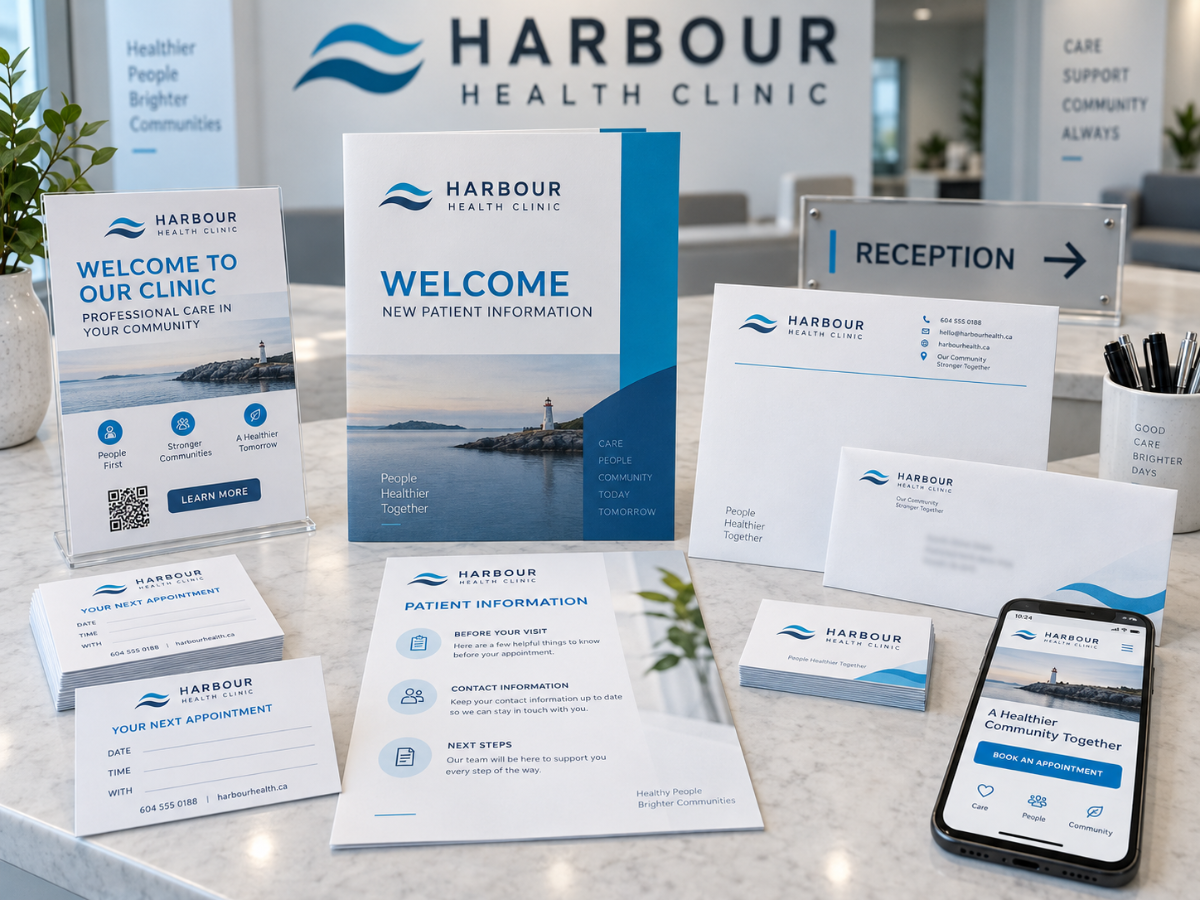
Print for a clinic has to do more than look professional. Appointment cards need to be easy to write on, patient information needs to be easy to read, signs need to help people navigate the space and marketing materials need to remain accurate, restrained and consistent with the clinic’s real services.
Dental clinics and medical offices use print differently from many other businesses.
Some materials support marketing.
Others support everyday operations.
An appointment card helps a patient remember a return visit. A patient handout explains administrative or service information. A reception sign helps someone find the correct desk. Letterhead and envelopes support professional correspondence. Flyers or postcards may introduce the clinic to nearby residents.
That means a clinic does not need one “marketing kit.”
It needs a coordinated set of materials that support different parts of the patient and customer experience.
Pryntco’s current Marketing Services page lists clinics among the business categories it works with, while the existing Print Resources library already includes dedicated appointment-card, business-stationery, referral-card, multi-location and artwork-preparation guidance.
This article brings those individual pieces together from the perspective of a dental clinic or medical office without replacing the detailed product guides.
1. What Print Materials Do Dental Clinics and Medical Offices Use?
Common materials may include:
- Appointment cards
- Business cards
- Patient information sheets
- Forms
- Letterhead
- Envelopes
- Referral materials
- Flyers
- Posters
- Signs
The exact mix depends on how the clinic operates.
2. Why Should Clinic Print Materials Be Consistent?
Patients may interact with the clinic through:
- Website
- Exterior sign
- Reception desk
- Appointment card
- Printed instructions
Using consistent branding makes the organization easier to recognize across those touchpoints.
3. What Should Stay Consistent Across Clinic Materials?
Core elements may include:
- Logo
- Clinic name
- Brand colours
- Typography
- Primary phone number
- Website
Operational information should still be updated when it changes.
4. Are Printed Appointment Cards Still Useful?
They can be, particularly when patients schedule another visit before leaving the clinic.
A printed card can complement:
- Text reminders
- Email confirmations
- Digital calendars
Pryntco’s Appointment Card Design Guide specifically covers clinics and dental practices.
5. What Should a Clinic Appointment Card Include?
A practical card may include:
- Clinic name
- Date
- Time
- Location
- Main contact number
- Provider field where appropriate
Keep the card focused on the information the patient actually needs.
6. Should Appointment Cards Be Easy to Write On?
Yes when staff enter appointment information by hand.
A writable surface is more important than a decorative finish if reception staff cannot write on the card reliably.
Pryntco’s current Uncoated Business Card product is described as suitable for appointment cards and notes because of its writable surface.
7. Should Appointment Cards Include Medical Information?
Generally, avoid placing unnecessary personal or health information on a portable card.
An appointment card is often carried in:
- Wallet
- Purse
- Vehicle
- Notebook
The clinic should determine what information is genuinely necessary and follow its privacy obligations.
8. What Is a Patient Information Handout?
A patient information handout is a printed sheet that provides clear information the clinic wants the patient to retain after a conversation or visit.
Depending on the clinic, this may include:
- Administrative information
- Service overview
- Preparation information approved by the clinic
- Contact instructions
- Follow-up resources
Clinical or medical content should come from the qualified clinic, not from the printer.
9. How Should Patient Handouts Be Designed?
Prioritize readability.
Use:
- Clear headings
- Comfortable type size
- Short paragraphs
- Bullets where appropriate
- Strong contrast
A patient should not need to decode a dense wall of text.
10. Should Patient Handouts Use Colour?
Colour can help organize information through:
- Section headings
- Icons
- Diagrams
- Branding
Colour should support understanding rather than decorate every part of the page.
11. What Is a New-Patient Packet?
A new-patient packet can organize several materials provided before or during a first visit.
Depending on the clinic, it may contain:
- Welcome information
- Administrative forms
- Contact details
- Office policies
- Directions
The clinic determines the required content.
12. Should New-Patient Packets Be One Large Document?
Not always.
Some materials need to be retained while others need to be completed and returned.
Separate:
- Information to keep
- Forms to complete
- Policies requiring acknowledgement
according to the clinic’s workflow.
13. Should Clinics Print Their Own Forms?
Professionally printed or copied forms can help maintain consistency when a clinic uses the same document repeatedly.
Before printing quantity, verify:
- Fields
- Phone numbers
- Addresses
- Version date
- Required wording
Do not continue reproducing outdated forms simply because copies remain in storage.
14. Should Forms Be Easy to Write On?
Yes when patients or staff complete them by hand.
Prioritize:
- Writable surface
- Enough space
- Readable labels
- Clear checkboxes
Function matters more than decorative finishing.
15. Why Is Letterhead Still Useful for Clinics?
Letterhead can support formal business correspondence where a physical printed document remains appropriate.
A professional letterhead normally includes:
- Clinic name
- Logo
- Contact information
Pryntco’s Business Stationery Essentials Guide explains how letterhead, envelopes and other stationery pieces can work together.
16. Should Clinic Envelopes Be Branded?
Branded envelopes can support professional correspondence and make the sender easy to identify.
Keep the design restrained so addressing and mailing information remain clear.
The clinic should also consider whether the exterior branding is appropriate for the type of correspondence being sent.
17. Are Business Cards Useful for Dentists and Clinic Staff?
Yes when patients, professional contacts or community partners need a direct way to identify the clinic or individual provider.
A card may include:
- Name
- Role or professional designation when appropriate
- Clinic
- Phone
- Website
Only use current and approved professional information.
18. Can Clinics Use Referral Cards?
Yes, but the purpose needs to be clear.
A clinic may use cards to:
- Provide another person with clinic contact information
- Support professional referral pathways
- Make a general recommendation easier to share
Any incentive or referral arrangement should be reviewed against applicable professional and regulatory requirements rather than copied from an ordinary retail referral program.
19. Should Clinics Use Patient Referral Incentives?
Do not assume an incentive program that works for a restaurant or retailer is appropriate for healthcare.
Professional advertising and referral rules can vary by profession and jurisdiction.
The clinic should confirm its requirements before printing any incentive-based referral material.
20. Can Clinics Use Flyers?
Yes for appropriate business communication or community marketing.
A flyer might introduce:
- Clinic location
- General services
- New office opening
- Administrative information
- Community event
Clinical claims and regulated advertising content should be supplied and approved by the clinic.
21. Should a Clinic Flyer Promote Every Service?
Usually not.
A focused flyer is easier to understand.
For example, one campaign can introduce a new location while another explains one service area.
Do not turn the flyer into a condensed website.
22. Can Clinics Use Postcards?
Postcards can support appropriate local campaigns such as:
- New-location announcements
- General community introductions
- Approved administrative reminders
Avoid placing confidential or unnecessary patient information on an exposed postcard.
23. What Posters Are Useful Inside a Clinic?
Posters may support:
- Reception information
- Office policies
- General clinic announcements
- Directional information
They should remain easy to read from the intended viewing distance.
24. What Signs Does a Clinic Need?
Depending on the physical space, signs may identify:
- Reception
- Entrance
- Waiting area
- Check-in
- Exit
- Departments or rooms
Required regulatory or accessibility signage should follow the applicable rules for the facility.
25. Why Is Wayfinding Important?
A patient arriving at an unfamiliar office should be able to understand where to go without repeatedly asking staff.
Good wayfinding uses:
- Clear wording
- Consistent arrows
- Readable typography
- Logical placement
26. Can Window Graphics Work for Clinics?
Yes when the clinic has suitable storefront or office glass.
Window graphics may display:
- Clinic name
- General services
- Hours
- Contact information
Keep visibility, building requirements and local rules in mind before installation.
27. Should Clinic Hours Be Printed on Permanent Materials?
Only when the hours are reasonably stable.
If hours change often, consider directing patients to a current website or contact page rather than placing detailed schedules on long-lived print.
28. Should a Clinic Use QR Codes?
A QR code can connect print to administrative actions such as:
- Booking page
- Location page
- General contact page
- Approved patient resource
Do not use a public QR code in a way that exposes private patient information.
29. Should Appointment Cards Link to Online Booking?
They can.
A booking or rescheduling QR code can complement the written date and time.
It should not replace the essential appointment information when that information is the main reason the card exists.
30. Can Clinics Use Google Review Cards?
A review-request card can direct patients to a legitimate public review page when that approach is consistent with the clinic’s policies and professional requirements.
Avoid:
- Buying reviews
- Pressuring for positive ratings
- Offering inappropriate incentives
Ask for genuine feedback rather than a predetermined rating.
31. How Should Clinic Print Be Designed for Readability?
Consider the widest realistic range of readers.
Use:
- Readable type sizes
- Strong colour contrast
- Clear headings
- Simple language where appropriate
- Generous spacing
A polished design should never make important information harder to understand.
32. Should Clinics Print Materials in More Than One Language?
They can when the patient population requires it and the clinic has approved translations.
Keep language versions clearly separated or deliberately designed as bilingual materials.
Qualified review is important for clinical or regulated terminology.
33. How Should Multi-Location Clinics Handle Print?
Each location needs accurate:
- Address
- Phone number
- Hours
- QR code
- Booking destination
Pryntco’s Multi-Location Print Marketing Guide explains how to maintain one brand while controlling local versions.
34. How Many Clinic Materials Should Be Printed?
Quantities should follow actual usage.
High-use evergreen materials may justify larger quantities than:
- Temporary announcements
- Staff-specific cards
- Dated campaigns
- Changing forms
Do not overproduce material that may become outdated.
35. How Should Clinics Manage Version Control?
Forms and patient-facing information should have a clear current version.
Use filenames such as:
New_Patient_Information_2026_FINAL.pdf
rather than keeping several files labelled “new” or “final.”
Remove outdated printed stock when the information changes.
36. How Should Clinic Artwork Be Prepared for Printing?
Before production:
- Use current approved logos.
- Confirm phone numbers and addresses.
- Use clear high-resolution graphics.
- Prepare artwork at the correct finished size.
- Follow bleed and safe-area requirements.
- Embed or outline fonts where required.
- Test QR codes.
- Check multilingual text carefully.
Pryntco’s Artwork Preparation Guide covers the broader technical workflow.
37. What Are the Most Common Clinic Print Marketing Mistakes?
Common mistakes include:
- Putting too much information on appointment cards.
- Using surfaces that are difficult to write on.
- Using outdated phone numbers or office hours.
- Putting unnecessary private information on portable print.
- Using tiny text on patient handouts.
- Making unsupported healthcare claims.
- Using the wrong location QR code.
- Reprinting old forms without reviewing their content.
38. What Print Materials Should a Dental Clinic or Medical Office Use?
Start by separating operational print from marketing print.
Appointment cards, patient handouts, forms, letterhead and envelopes support the everyday clinic experience. Flyers, postcards, exterior materials and selected signs may support awareness and local marketing.
Each format should solve a specific problem.
An appointment card should make the next visit easy to remember. A patient handout should make approved information easier to retain. A directional sign should help someone navigate the space. A flyer should communicate one clear campaign rather than every service the clinic provides.
Keep the visual system consistent across all of them.
Use the same approved logo, colours and typography while allowing the layout to adapt to the function of each piece.
Pay particular attention to privacy and professional requirements. Do not place unnecessary patient information on exposed or portable materials, and make sure clinical claims, referral programs and regulated advertising content are reviewed by the clinic before printing.
For appointment-based businesses, Pryntco’s Appointment Card Guide provides detailed guidance on writable layouts, date and time fields, QR codes and clinic use.
For broader stationery planning, review Pryntco’s Business Stationery Essentials.
Pryntco’s current Marketing Services also identifies clinics among the business categories it supports, allowing print, design and digital marketing to follow a more coordinated direction where appropriate.
Dental clinics and medical offices planning a custom print project can contact Pryntco or submit a custom quote request.