Print Marketing Ideas for Contractors and Home Service Businesses
Print Marketing Ideas for Contractors and Home Service Businesses
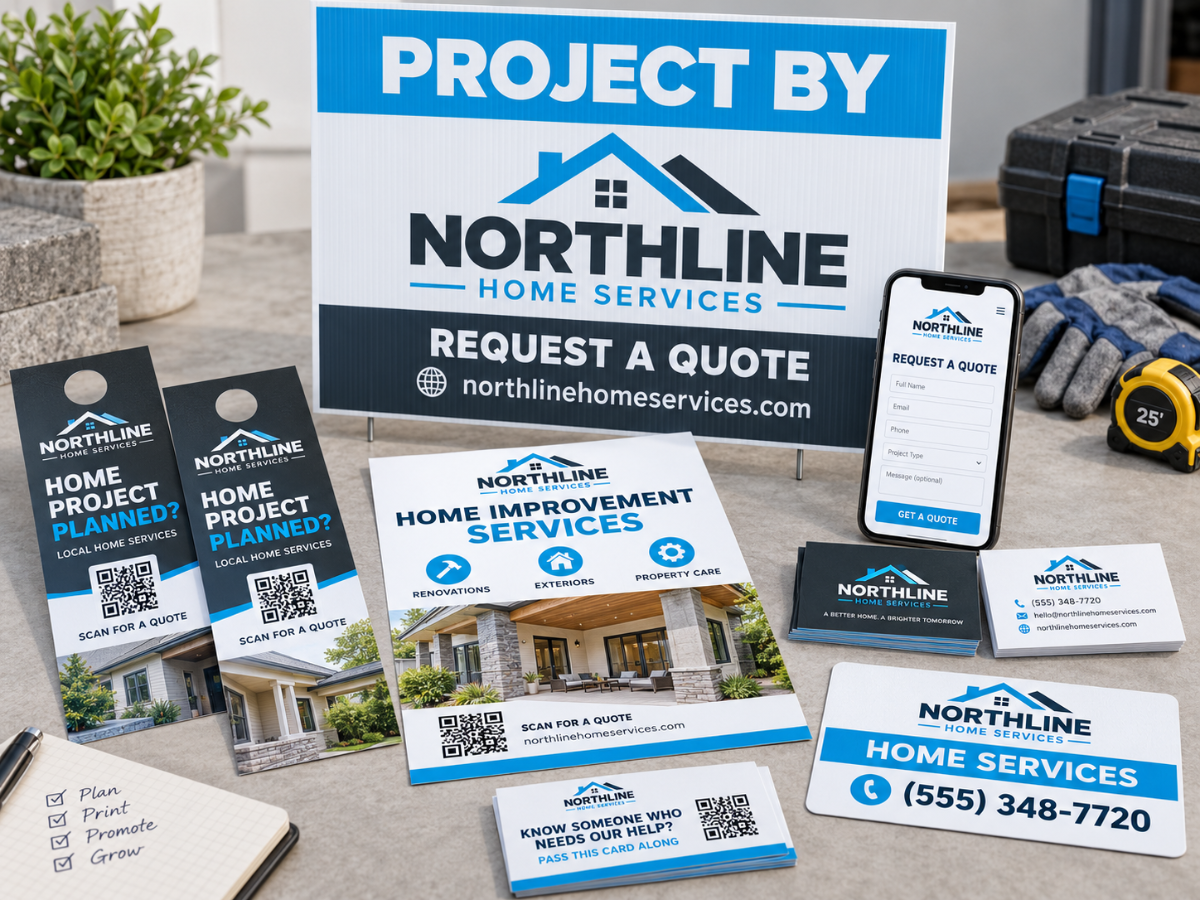
Contractor print marketing works best when it connects the business to the neighbourhoods where the work is actually happening. A lawn sign can identify a job site, a door hanger can reach nearby homeowners, a vehicle magnet can build recognition between appointments and a flyer or referral card can give interested customers a clear next step.
Contractors and home service businesses operate in a naturally local environment.
The work happens at homes, commercial properties and job sites where nearby residents can often see the crew, vehicle or finished project.
That creates opportunities for print marketing that are different from those of a purely online business.
A roofing company may place an approved lawn sign at a completed property. A landscaper can distribute door hangers in neighbourhoods where seasonal work is beginning. A painter may leave a flyer with a nearby homeowner. A service vehicle can carry removable business branding between appointments.
The strongest strategy is usually not to use every product at once.
It is to connect the right printed piece to the stage of the customer journey.
Pryntco’s Marketing Services page currently identifies contractors as one of the business categories it works with, while its existing product and resource library includes lawn signs, door hangers, flyers, car magnets, referral cards and other formats that naturally support home-service marketing.
1. What Is Contractor Print Marketing?
Contractor print marketing uses physical materials to promote a home service, identify a company or help prospective customers take the next step.
Common formats include:
- Lawn signs
- Door hangers
- Flyers
- Postcards
- Vehicle magnets
- Business cards
- Referral cards
2. Which Contractors Can Use Local Print Marketing?
The strategy can work for businesses such as:
- Roofers
- Painters
- Landscapers
- Renovation contractors
- Window and door installers
- Fence and deck builders
- Cleaning companies
- Heating and cooling businesses
- Property-maintenance companies
The marketing should be tailored to the specific service instead of using a generic contractor message.
3. What Should a Contractor Marketing Campaign Accomplish?
Choose one main objective.
Examples include:
- Generate quote requests
- Build local recognition
- Promote a seasonal service
- Advertise a completed job
- Generate referrals
Every printed piece should support that objective.
4. Why Are Lawn Signs Useful for Contractors?
A lawn sign can connect the contractor’s name directly with a property where work is taking place or has been completed, with the property owner’s permission.
Nearby homeowners can see:
- Who performed the work
- What type of service is offered
- How to contact the company
Pryntco’s Lawn Sign Advertising Guide covers contractor and home-service uses in more detail.
5. What Should a Contractor Lawn Sign Say?
Keep it short.
A practical hierarchy might be:
- Company name
- Main service
- Short call to action
- Phone number or website
A passing driver should not need to read an entire service list.
6. Should a Job-Site Sign Say “Project Completed By”?
It can.
This wording connects the business to visible work without making an exaggerated performance claim.
Other simple approaches include:
- ROOFING BY [COMPANY]
- LANDSCAPING BY [COMPANY]
- PROJECT BY [COMPANY]
Use the property only with appropriate permission.
7. Why Are Door Hangers Useful for Home Services?
Door hangers can reach households within a selected neighbourhood without requiring the homeowner to already know the company.
They work naturally for:
- Local service introductions
- Seasonal campaigns
- Nearby-project follow-up
- New-customer promotions
Pryntco’s Door Hanger Marketing Guide includes specific guidance for contractors and home-service businesses.
8. What Should Go on a Contractor Door Hanger?
Use one service as the primary message.
For example:
- Planning a roof replacement?
- Exterior painting available in your area
- Spring yard cleanup booking now
Then provide one clear call to action.
9. Should Contractors Use Flyers?
Yes when the campaign needs more room than a lawn sign or vehicle graphic.
A flyer can explain:
- Service
- Customer problem
- Selected benefits
- Contact method
- QR code
Pryntco’s current Flyers provide a direct product path for local service campaigns.
10. Should One Flyer List Every Service?
Usually not.
A contractor offering ten services may get a clearer response from separate campaigns focused on:
- Roofing
- Decks
- Painting
- Seasonal maintenance
Specific marketing usually gives the customer a clearer reason to respond.
11. When Are Vehicle Magnets Useful?
Vehicle magnets can help identify a contractor while travelling between appointments or parked at an approved work site.
A simple vehicle design can include:
- Logo
- Primary service
- Phone number
- Website
Pryntco’s Car Magnet Design Guide explains how to keep vehicle advertising readable.
12. Should a Vehicle Magnet List Every Service?
No.
Vehicle graphics are often seen briefly.
Use a short service category such as:
- ROOFING
- LANDSCAPING
- RENOVATIONS
- PAINTING
and make the business name and contact method easy to recognize.
13. When Should Contractors Use Direct Mail?
Direct mail can reach selected neighbourhoods even when the contractor does not currently have a job nearby.
Possible campaigns include:
- Seasonal maintenance
- New service
- Neighbourhood introduction
- Service-area expansion
The campaign should follow applicable mailing and marketing requirements.
14. Postcard or Flyer: Which Is Better for Contractors?
| Postcard | Flyer |
|---|---|
| Strong for concise direct-mail messages | Provides more room for service explanation |
| Message visible immediately | Flexible for hand distribution or leave-behind use |
15. Should Contractor Marketing Use Before-and-After Photos?
They can be effective when the contractor has permission to use the images.
Good applications include:
- Renovations
- Painting
- Landscaping
- Exterior work
Use clear original photographs and avoid misleading image edits.
16. Should Contractors Use Customer Testimonials?
Genuine testimonials can support trust when the customer has approved their use.
Keep them short and accurate.
Do not invent:
- Reviews
- Star ratings
- Customer names
- Performance claims
17. What Is the Best Call to Action for a Contractor?
The best call to action depends on the sales process.
Common choices include:
- REQUEST A QUOTE
- CALL TO DISCUSS YOUR PROJECT
- BOOK A CONSULTATION
- VIEW OUR WORK
Use the action the business can actually respond to reliably.
18. Should a Contractor Use a QR Code?
A QR code can connect printed marketing to:
- Quote form
- Service page
- Project gallery
- Booking page
Avoid sending every campaign to a generic homepage when a more relevant page exists.
19. What Should the QR Code Say?
Label the action.
Examples include:
- SCAN FOR A QUOTE
- SCAN TO VIEW PROJECTS
- SCAN TO SEE THIS SERVICE
The wording should match the page that opens.
20. Should Contractors Use Dedicated Landing Pages?
A dedicated page can make the print campaign more coherent.
If the flyer promotes deck construction, the QR code should ideally lead to information about deck construction rather than a general company homepage.
21. How Important Is the Phone Number?
For many home-service businesses, the phone number remains an important response path.
Make it:
- Large enough to read
- Accurate
- Easy to locate
Do not bury it in a footer full of unrelated information.
22. Should Contractor Print Focus on a Service Area?
Yes when geography matters.
A campaign can identify:
- City
- Neighbourhood
- General service area
Do not imply service coverage beyond what the company can actually provide.
23. How Should Seasonal Contractor Marketing Work?
Match campaigns to genuine customer needs.
Examples may include:
- Spring exterior work
- Summer landscaping
- Autumn maintenance
Specific seasonal timing will vary by service and market.
24. Should Contractors Use Business Cards?
Yes, especially for in-person estimates, site visits and customer referrals.
The card should identify:
- Company
- Representative
- Primary contact method
- Website
Do not turn it into a miniature service catalogue.
25. What Should Be Left Behind After an Estimate?
A simple leave-behind package might include:
- Business card
- Service flyer
- Proposal or estimate
- Relevant project information
Only include materials that help the customer make the next decision.
26. Should Proposals and Estimates Match the Marketing?
Yes.
The logo, typography and company information should remain consistent from:
door hanger → website → estimate → invoice or follow-up.
Consistency makes the business easier to recognize.
27. Can Referral Cards Work for Contractors?
Yes.
A satisfied customer may know neighbours, friends or family who need similar work.
A physical referral card can provide a simple next step.
Pryntco’s Referral Card Guide explains how to structure and track this type of card.
28. Should Referral Cards Include a Discount?
Only if the contractor has an actual referral program.
A referral card can work without an incentive by simply making it easy to share:
- Business name
- Phone number
- Website
- QR code
29. Can Print Marketing Help With Repeat Business?
Yes when the service naturally repeats.
A contractor can use:
- Maintenance reminders
- Seasonal postcards
- Customer thank-you cards
Do not contact customers more often than the service relationship reasonably supports.
30. Should Contractors Combine Print and Digital Marketing?
Yes.
A printed piece can lead to:
- Website
- Project gallery
- Google Business Profile
- Online quote form
- Social media
The branding and service message should remain consistent across channels.
31. How Should Contractor Print Campaigns Be Tracked?
Possible tracking methods include:
- Campaign QR codes
- Dedicated landing pages
- Promo codes
- Lead-source questions
Pryntco’s Print Marketing Tracking Guide explains how to connect print activity to leads and sales outcomes.
32. What Is a Good Neighbourhood Campaign?
A practical campaign could connect several pieces:
- Lawn sign at an approved job site
- Door hangers on nearby permitted properties
- Service-specific flyer
- QR code leading to the same service page
Every piece should use the same visual identity and message.
33. Should New Contractors Use Different Print From Established Contractors?
A newer business may need to emphasize:
- Service clarity
- Contact information
- Service area
- Professional brand presentation
An established contractor may already have recognition and can focus more heavily on specific services or campaigns.
34. Should Contractors Use Several Different Campaigns?
Yes when the services have different audiences.
A company offering roofing, decks and painting may benefit from separate materials because each service solves a different customer problem.
The brand stays consistent while the message changes.
35. What Should Contractors Check Before Distributing Print?
Verify:
- Service area
- Phone number
- Website
- Offer
- QR code
- Any permissions required for placement or distribution
Expired or incorrect material can damage a campaign quickly.
36. How Should Contractor Artwork Be Prepared?
Before production:
- Use original logos.
- Use high-quality project photography.
- Prepare the artwork at the correct product size.
- Follow bleed and safe-area requirements.
- Keep text large enough for the viewing situation.
- Test QR codes.
- Proof every contact detail.
Pryntco’s Artwork Preparation Guide covers broader print-file preparation.
37. What Are the Most Common Contractor Print Marketing Mistakes?
Common mistakes include:
- Listing every service on every piece.
- Using tiny contact information.
- Using low-quality project photos.
- Using vague headlines such as “Quality You Can Trust.”
- Failing to identify the service area.
- Using unverified testimonials.
- Sending QR codes to unrelated pages.
- Distributing or placing materials without considering applicable property or local rules.
38. What Print Marketing Should a Contractor or Home Service Business Use?
Start with where the customer will encounter the business.
If work is already happening in a neighbourhood, an approved lawn sign can connect the company to the visible project. Door hangers can introduce the service to nearby households. Flyers can provide more explanation. Vehicle magnets can create identification while the contractor travels between appointments.
Each format should do a different job.
Do not turn every piece into the same advertisement.
A lawn sign needs to be understood quickly. A door hanger can explain one service and a call to action. A flyer can provide more supporting information. A referral card can make it easier for an existing customer to recommend the business.
Build campaigns around individual services rather than enormous lists. A homeowner interested in roofing should immediately understand that the piece is about roofing.
Then connect print to the business’s digital presence. Use a relevant QR code or URL that leads to the service being advertised.
Track which neighbourhoods, offers and formats generate useful inquiries so future campaigns become more informed.
Pryntco currently supports contractor-oriented marketing through products and resources including lawn signs, door hangers, car magnets and custom flyers.
Contractors planning a coordinated local campaign can contact Pryntco or submit a custom quote request.