A Practical Print Guide for Salons and Beauty Businesses
A Practical Print Guide for Salons and Beauty Businesses
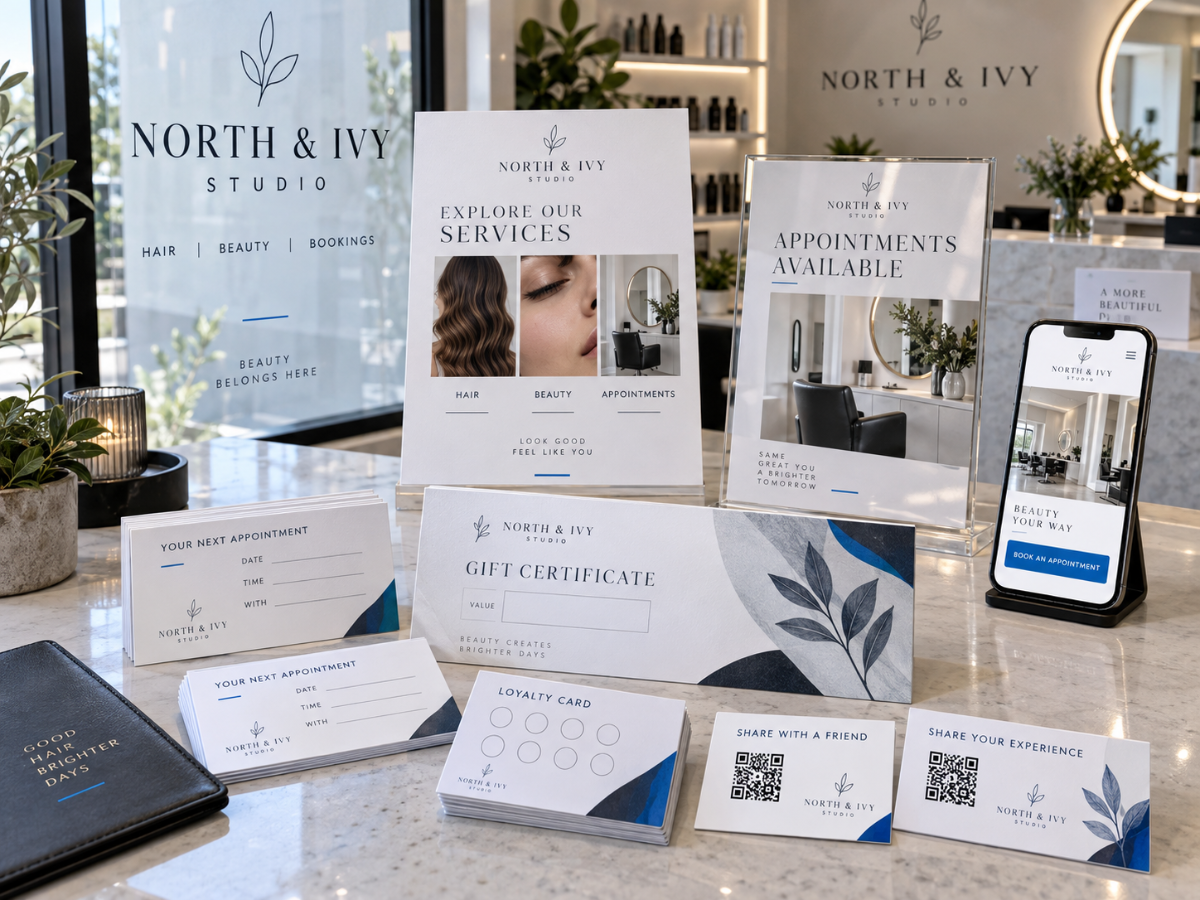
A salon does not need every printed product available. It needs a small, coordinated set of materials that make appointments easier, explain services clearly, help the storefront look professional and give satisfied customers a simple reason to return or recommend the business.
Salons and beauty businesses rely heavily on repeat visits, appointments and local visibility.
That creates several natural roles for print.
An appointment card gives the customer a physical reminder of the next visit. A loyalty card supports a repeat-visit program. A window graphic explains what the business offers before someone walks inside. A review card makes it easier for a satisfied client to find the correct feedback page. A small flyer can introduce a new service without forcing reception staff to explain every detail repeatedly.
The strongest salon print system is not the one with the most pieces.
It is the one where every piece performs a clear job.
Pryntco’s existing resources already identify salons, barbershops and appointment-based businesses as suitable users of appointment cards, loyalty cards, referral cards, A-frame signs and storefront graphics.
This guide brings those individual formats together into one practical system for salons and beauty businesses.
1. What Printed Materials Does a Salon Actually Need?
The exact mix depends on the business model.
Common salon and beauty materials may include:
- Appointment cards
- Business cards
- Service flyers
- Loyalty cards
- Referral cards
- Review cards
- Gift certificates
- Small posters
- A-frame signs
- Window graphics
A small appointment-only studio may need fewer pieces than a larger salon with walk-ins, multiple staff members and retail products.
2. Why Is Print Still Useful for an Appointment-Based Business?
Digital booking is useful, but physical materials still support moments that happen in person.
A customer may:
- Book the next visit at reception.
- Ask about another service.
- Take a referral card for a friend.
- Notice a promotion while waiting.
- Scan a review card after the appointment.
Print can complement the digital system rather than compete with it.
3. What Should Stay Consistent Across Salon Print?
Keep the core brand consistent across:
- Appointment cards
- Storefront
- Flyers
- Gift materials
- Review cards
Use the same approved logo, colours and typography so the business remains recognizable at every touchpoint.
4. Are Printed Appointment Cards Still Worth Using?
They can be particularly useful when customers book the next appointment before leaving.
The card can sit in a:
- Wallet
- Purse
- Vehicle
- Desk organizer
Pryntco’s Appointment Card Design Guide covers writable layouts, date and time fields and QR-code use in more detail.
5. What Should a Salon Appointment Card Include?
Keep it simple.
A useful card may include:
- Salon name
- Appointment date
- Appointment time
- Staff member
- Phone number
- Booking website
The appointment itself should remain the easiest information to find.
6. Should Appointment Cards Be Easy to Write On?
Yes when staff complete them by hand.
A highly coated decorative card may look attractive but become frustrating if ink smears or does not write cleanly.
The writing surface should match the way reception staff actually use the card.
7. Should a Salon Appointment Card Include a QR Code?
It can.
A QR code may lead to:
- Online booking
- Rescheduling
- Service information
- Salon website
The printed date and time should still remain visible when the card’s main purpose is appointment reminder.
8. Should Salons Use Loyalty Cards?
They can work very well when customers naturally return regularly.
A loyalty card may support:
- Repeat appointments
- Selected product purchases
- Visit-based programs
The reward system needs to be defined before the artwork is created.
9. What Makes a Salon Loyalty Card Easy to Use?
The card should show the progress system immediately.
Clearly define:
- What earns a stamp or punch
- How many are required
- What the genuine reward is
- Any essential conditions
Pryntco’s Loyalty Card Guide specifically identifies salons among the businesses that can use physical stamp or punch cards.
10. Should Every Salon Have a Loyalty Program?
No.
A loyalty card only makes sense when the business actually wants to operate the program consistently.
If staff forget to stamp cards, customers do not understand the rules or the reward changes frequently, the printed card can create more confusion than value.
11. Are Referral Cards Useful for Salons?
Yes when word-of-mouth recommendations already happen naturally.
A customer may be happy to recommend:
- Stylist
- Barber
- Nail technician
- Beauty service
A referral card simply makes the introduction easier.
12. What Should a Salon Referral Card Say?
Use a clear message such as:
KNOW SOMEONE WHO WOULD LOVE OUR SALON?
Then include:
- Business name
- Booking method
- QR code where useful
- Referral code or writable field if the program uses one
Only advertise a reward if the business genuinely offers it.
13. Should Salons Ask for Reviews With Printed Cards?
A review card can make genuine feedback easier.
Use neutral wording such as:
SHARE YOUR EXPERIENCE
rather than asking specifically for five stars or positive feedback.
14. Where Should a Review Card Be Given?
Possible moments include:
- Checkout
- Inside a retail-product bag
- After a completed appointment
Pryntco’s Google Review Card Guide explains QR-code setup and neutral review requests.
15. Should Salons Use Gift Certificates?
They can be useful when the salon has a genuine gift-certificate program.
Common gifting occasions include:
- Birthdays
- Holidays
- Thank-you gifts
- Celebrations
The value, terms and redemption process should be established before printing.
16. How Should Gift Certificates Look?
Keep them consistent with the salon’s brand while leaving the required information easy to find.
A certificate may include:
- Salon name
- Recipient
- Value or approved service
- Issue information
- Redemption terms
Do not place important terms in unreadably small text.
17. Should Salons Use Service Flyers?
Yes when one service needs more explanation than reception signage can provide.
A flyer can support:
- New service launch
- Bridal packages
- Hair colour consultation
- Seasonal service
- Retail product line
Focus the flyer on one topic rather than listing every service available.
18. Should a Salon Flyer Include Prices?
Only if the pricing is stable and accurate.
If prices change frequently, the flyer may become obsolete quickly.
A QR code or website can provide current detailed pricing when that approach better fits the business.
19. Should Salons Use Small Posters?
Yes for fixed in-store messages.
A poster may promote:
- New service
- Gift certificates
- Retail products
- Seasonal campaign
- Booking information
Keep the headline readable from several steps away.
20. Where Should Salon Posters Be Placed?
Useful areas may include:
- Reception
- Waiting area
- Retail display
- Mirror area where appropriate
A few well-placed posters are usually stronger than covering every wall with promotions.
21. Can an A-Frame Sign Help a Salon?
Yes when the property and local rules allow sidewalk signage.
An A-frame may communicate:
- Walk-ins welcome
- Appointments available
- Featured service
- Entrance direction
Pryntco’s A-Frame Sign Design Guide specifically includes salons and service businesses.
22. What Should a Salon A-Frame Say?
Use one short message.
Examples include:
APPOINTMENTS AVAILABLE
or:
WALK-INS WELCOME
A sidewalk sign does not need a complete price list.
23. How Can Window Graphics Help a Salon?
Window graphics can make the storefront easier to understand from outside.
They may show:
- Business name
- Primary services
- Hours
- Booking method
- Brand imagery
24. Should Salon Windows Show Every Service?
No.
Use the services most important for someone deciding whether the business is relevant.
A long list of tiny wording can make the window harder to understand from the sidewalk.
25. Can Window Graphics Also Support Privacy?
Depending on the selected product and installation, window coverage can help reduce direct views into some interior areas.
Pryntco’s Window Graphics & Wallpaper Installation Guide discusses salons and service businesses as storefront and interior applications.
26. Should Salon Hours Be Printed on Long-Term Graphics?
Only when the hours are reasonably stable.
If hours change seasonally or by appointment, a general booking message may age better than a detailed timetable printed onto long-lived graphics.
27. Do Individual Stylists Need Business Cards?
They can be useful when clients work with specific staff members.
A card may include:
- Name
- Role
- Salon
- Contact method
- Booking link
Use only current contact information.
28. Should Salon Business Cards Be Different From Appointment Cards?
They can be.
A business card introduces the professional.
An appointment card records the next visit.
Combining both functions is possible, but only when there is enough space for each to remain useful.
29. Can QR Codes Connect Salon Print to Booking?
Yes.
A QR code can connect:
- Window graphic
- Flyer
- Appointment card
- Referral card
to the salon’s booking system or relevant service page.
30. Where Should a Salon QR Code Lead?
Use the most relevant destination possible.
A flyer about hair colour should ideally lead to:
- Colour-service information
- Consultation booking
rather than forcing the customer to search through the entire website.
31. How Should Multi-Location Salons Manage Print?
Each branch needs accurate:
- Address
- Phone number
- Hours
- Booking link
- Review QR code
Use separate controlled files for each location.
32. How Should Salons Handle Seasonal Promotions?
Keep seasonal pieces separate from evergreen branding.
Temporary campaigns may include:
- Holiday gifting
- Wedding season
- Back-to-school appointments
- Seasonal treatment packages
Do not overprint material with short-lived dates or pricing.
33. How Many Printed Materials Should a Salon Order?
Base quantity on actual use.
Appointment cards may be used every day, while a promotional flyer may only run for a short campaign.
Consider:
- Appointments per month
- Number of locations
- Campaign length
- Likelihood information will change
34. How Should Salons Avoid Outdated Print?
Review printed stock whenever the business changes:
- Prices
- Staff
- Phone number
- Booking platform
- Hours
- Service list
Remove outdated materials rather than continuing to use them until the stack is gone.
35. How Can Salon Print Results Be Tracked?
Possible tracking methods include:
- Booking QR codes
- Referral codes
- Loyalty participation
- Gift-certificate redemption
- Lead-source questions
Use the method that fits the campaign.
36. How Should Salon Artwork Be Prepared?
Before production:
- Use current approved logos.
- Use high-quality original photography.
- Build artwork at the correct size.
- Follow required bleed and safe areas.
- Check prices and service names.
- Test QR codes.
- Confirm appointment-writing areas.
Pryntco’s Artwork Preparation Guide covers general technical file preparation.
37. What Are the Most Common Salon Print Mistakes?
Common mistakes include:
- Using glossy appointment cards without testing the writing surface.
- Printing outdated staff names.
- Making salon windows too crowded.
- Using several competing promotions at reception.
- Making referral programs difficult to understand.
- Using old booking QR codes.
- Printing too many seasonal flyers.
- Using low-resolution beauty photography.
38. What Printed Materials Should a Salon Start With?
Start with the customer journey.
Before the appointment, the storefront should make the business easy to identify. Window graphics or an approved A-frame can help communicate the salon name, primary service and how to book.
At the appointment, the customer may need a physical reminder of the next visit. A simple writable appointment card can support that moment without replacing digital booking or text reminders.
For repeat business, consider a loyalty card only when the program is clear and staff can manage it consistently.
For word-of-mouth growth, a referral card can make recommendations easier to share.
For reputation building, a review card can connect satisfied clients with the correct review page without pressuring them toward a specific rating.
Keep changing information in smaller quantities. Service prices, staff names and seasonal offers can become outdated quickly.
Keep evergreen branding more reusable.
Pryntco’s existing salon-relevant resources include the Appointment Card Guide, Loyalty Card Guide, Review Card Guide and Window Graphics Guide.
Salons and beauty businesses planning a coordinated custom print project can contact Pryntco or submit a custom quote request.