
Postcard or Letter? Choosing the Right Direct Mail Format
Postcard or Letter? Choosing the Right Direct Mail Format
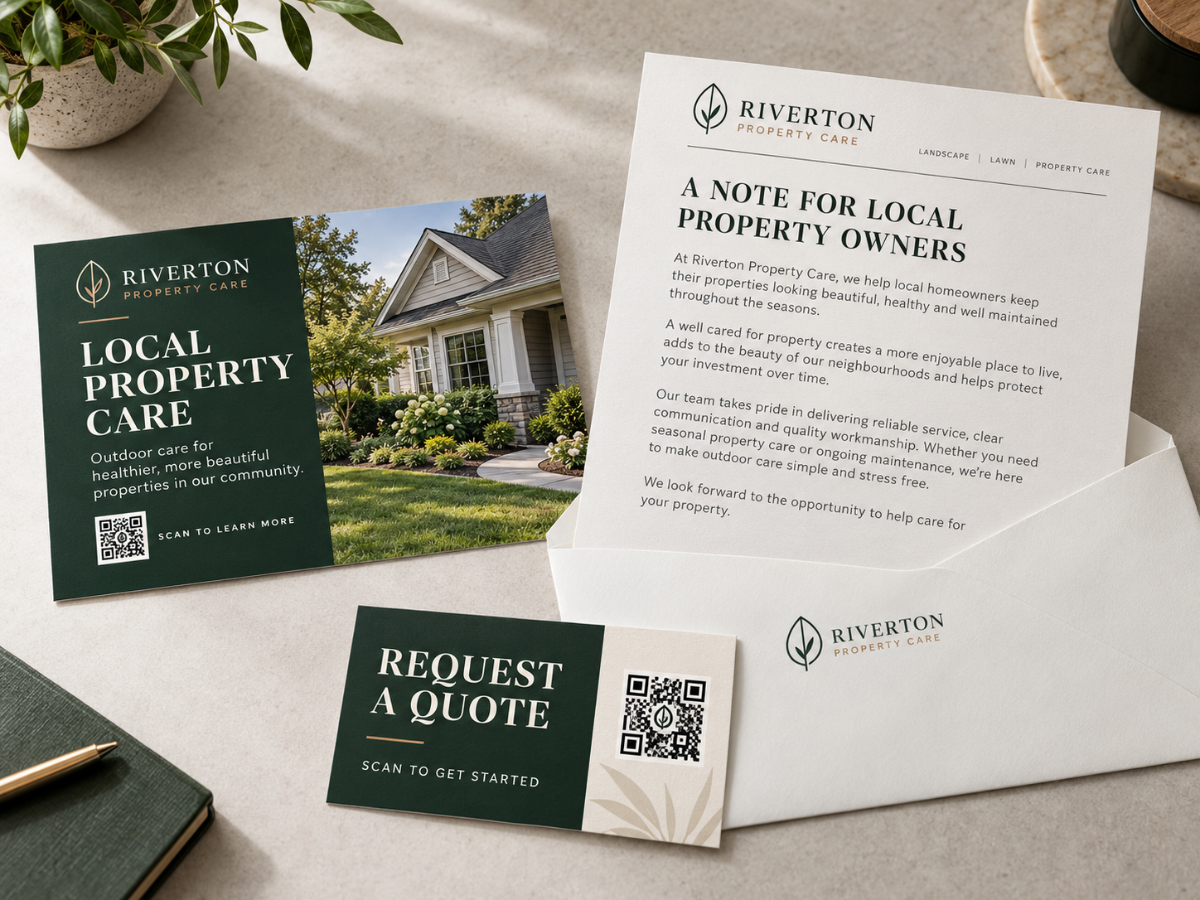
A postcard puts the message in front of the recipient immediately. A letter asks the recipient to open an envelope, but rewards that extra step with more room, privacy and a more personal reading experience. Choose the format according to the message and relationship rather than assuming one always performs better.
Postcards and letters are two of the most familiar direct-mail formats.
They can reach the same neighbourhood.
They can target the same customer list.
They can promote the same business.
But they do not create the same experience.
A postcard is exposed.
The headline, image and offer can be seen as soon as the recipient handles the mail.
A letter is enclosed.
The recipient must decide to open the envelope before seeing the full message, but the business gains substantially more room for explanation and personalization.
Pryntco’s Direct Mail Marketing Guide covers the broader campaign strategy across postcards, flyers, letters and envelopes.
This guide focuses on one narrower decision:
When should the campaign use a postcard, and when is a letter the better format?
1. What Is the Main Difference Between a Postcard and a Letter?
A postcard presents the message directly on an exposed printed card.
A letter normally sits inside an envelope.
That changes:
- How quickly the message is seen
- How much space is available
- How private the message can be
- How personalized the communication feels
- How the mailing package is assembled
2. When Is a Postcard the Better Choice?
A postcard works especially well when the campaign can be understood quickly.
Examples include:
- Grand opening
- Seasonal promotion
- Service reminder
- Local offer
- Event announcement
- New-location message
The format rewards concise communication.
3. When Is a Letter the Better Choice?
A letter is useful when the message needs more explanation or a more personal tone.
It can suit:
- B2B introductions
- High-value customer communication
- Professional services
- Fundraising
- Detailed offers
- Reactivation of important customers
4. Which Format Gets the Message Seen Faster?
A postcard.
The recipient does not have to open anything before seeing the:
- Headline
- Image
- Brand
- Main call to action
That makes the first visual impression especially important.
5. Does That Mean a Postcard Is Always Better?
No.
Immediate visibility is only one consideration.
If the campaign requires a thoughtful explanation, the limited postcard area can become a disadvantage.
The strongest format is the one that gives the message enough room without asking the recipient to work harder than necessary.
6. Why Would Someone Open a Direct-Mail Letter?
The envelope and sender give the recipient context.
A letter is more likely to earn attention when:
- The sender is recognizable
- The relationship already exists
- The exterior feels relevant
- The audience has been selected carefully
A generic envelope does not automatically create curiosity.
7. Which Format Gives You More Writing Space?
A letter.
A full letter can explain:
- Problem
- Offer
- Context
- Process
- Reason for contacting the recipient
- Next step
A postcard generally benefits from a much tighter message.
8. How Much Copy Should a Postcard Have?
Enough to communicate one clear idea.
A practical postcard might use:
- Headline
- One short explanation
- Three short benefits
- Call to action
Do not shrink the typography because the campaign has too many talking points.
9. How Long Should a Direct-Mail Letter Be?
As long as the message genuinely requires.
A short letter can be highly effective when the purpose is simple.
A more complex B2B or fundraising message may require additional explanation.
Length should come from the argument, not from a belief that direct mail must fill an entire page.
10. Which Format Is Better for a Strong Visual Offer?
A postcard often works well when the visual does much of the communication.
Examples include:
- Property image
- Restaurant item
- Home-service before-and-after concept
- Retail product
- Event image
Use one strong visual rather than several tiny images.
11. Which Format Is Better for a Complex Service?
A letter often provides more useful space.
Professional or technical services may need to explain:
- Who the service is for
- Why the recipient was contacted
- What problem is being addressed
- What happens next
A postcard can still introduce the service, but it may not be the complete communication.
12. Which Format Is Better for B2B Direct Mail?
Both can work.
Pryntco’s B2B Direct Mail Guide covers campaigns using postcards, letters and envelopes to reach selected business audiences.
A postcard can work for a concise commercial offer.
A letter may work better for a targeted decision-maker where the message needs more context.
13. Which Format Is Better for Consumer Direct Mail?
A postcard is often a strong fit for simple local consumer campaigns.
Examples include:
- Restaurant promotion
- Local service
- Retail opening
- Seasonal reminder
A letter can make sense when the consumer relationship is more established or personal.
14. Which Format Is Better for Customer Reactivation?
It depends on the relationship.
Pryntco’s Customer Reactivation Guide identifies postcards as useful for concise offers and letters as useful for more personal or higher-value communication.
The importance of the customer relationship should influence the format.
15. Which Format Is Better for New Movers?
A postcard can introduce one local business quickly.
A letter can provide a warmer welcome and more detailed introduction.
If the mailing includes several pieces, such as a business card or offer card, an envelope package becomes more practical.
16. Which Format Is Better for Real Estate?
A postcard is well suited to visual property and neighbourhood messages such as:
- Just Listed
- Just Sold
- Open House
- Market activity
A letter may be more useful for a personalized homeowner introduction or more detailed seller communication.
17. Which Format Is Better for Professional Services?
A letter can feel more natural when the business needs to speak directly to:
- Business owner
- Executive
- Property manager
- Professional referral partner
A postcard can still work when the service proposition is simple enough to communicate quickly.
18. Which Format Is Better for Fundraising?
A letter package can provide more space to explain:
- Need
- Campaign
- Impact
- Response method
A postcard may be better for an event reminder, campaign update or concise follow-up.
Organizations should use accurate, approved fundraising claims.
19. Which Format Provides More Privacy?
A letter inside an envelope.
An exposed postcard should not contain information the recipient would reasonably expect to remain private.
A mailing that references sensitive customer information may require another communication method entirely.
20. Should Previous Purchase Information Be Printed on a Postcard?
Use caution.
Even when the information is accurate, the exposed format means anyone handling the mail may see it.
Keep personalization appropriate to the medium.
21. Which Format Is Easier to Personalize?
Both can potentially be personalized when the mailing workflow supports variable data.
Possible personalization may include:
- Name
- Company
- Location
- Relevant segment
Only use data that adds useful relevance.
22. Does a Letter Feel More Personal?
It can.
A letter allows the sender to address the recipient directly and explain why they are writing.
The effect disappears if the message still reads like a generic flyer copied into letter format.
23. Should the Envelope Be Branded?
It can be.
Pryntco’s Custom Envelope Printing Guide recommends planning the logo and return address around addressing, postage, seams, windows and other mailing requirements.
The envelope should identify the sender without interfering with postal processing.
24. Should the Envelope Include a Promotional Headline?
Only when the message is truthful and appropriate.
A short exterior line may support the campaign, but avoid misleading wording designed solely to trick someone into opening the envelope.
25. Can a Letter Package Include Other Printed Pieces?
Yes.
An envelope package may contain:
- Letter
- Brochure
- Reply card
- Business card
- Promotional insert
Every extra piece should have a clear purpose.
26. When Is a Postcard Better Than a Multi-Piece Mailer?
When the message is simple enough that additional pieces create more friction than value.
A customer should not need to open four items to understand a straightforward local promotion.
27. Which Format Is Better for an Offer?
A postcard works especially well when the offer can be communicated quickly.
A letter may be stronger when the value requires explanation.
In either format, confirm:
- Offer
- Expiry where applicable
- Conditions
- Redemption method
28. Should a QR Code Be Used?
Yes when it creates a useful response path.
Possible destinations include:
- Booking page
- Quote form
- Campaign landing page
- Current offer
Label the code clearly.
29. Where Should the QR Code Go on a Postcard?
Place it where it remains easy to find without competing with the headline.
Keep enough clear space around the code and account for the mailing layout on the addressed side.
30. Where Should the QR Code Go in a Letter?
Place it near the relevant call to action.
For example:
Request a consultation
followed by the QR code and a readable web address can make the next step obvious.
31. How Should Postcard Campaigns Be Tracked?
Use a trackable response method such as:
- Dedicated landing page
- Campaign QR code
- Offer code
- Dedicated response number where appropriate
Pryntco’s Print Marketing Tracking Guide covers attribution more broadly.
32. How Should Letter Campaigns Be Tracked?
Use the same principle.
The fact that the message is longer does not make measurement less important.
A personalized campaign can even use different landing pages or response codes for defined segments when the business can manage the data properly.
33. Which Format Is Easier to Produce Operationally?
A postcard is usually a simpler physical piece because the message and mailing surface are combined.
A letter package may require:
- Letter printing
- Envelope printing
- Folding
- Insertion
- Additional pieces
Compare the entire mailing workflow rather than print cost alone.
34. Which Format Is Better for Large Campaigns?
Either can scale.
The practical choice depends on:
- Message complexity
- Audience value
- Assembly requirements
- Mailing method
A large list does not automatically mean postcard, and a small list does not automatically mean letter.
35. What Should Be Checked Before Either Campaign Is Printed?
Confirm:
- Mailing audience
- Campaign objective
- Offer
- Mailing dimensions
- Addressing space
- Postage requirements
- QR codes and links
- Current contact information
Postal requirements should be confirmed for the exact mailing before final production.
36. What Are the Most Common Postcard Mistakes?
Common problems include:
- Trying to fit a full sales letter onto the card.
- Using several competing offers.
- Forgetting mailing space.
- Using sensitive personalization on an exposed piece.
- Using no response tracking.
37. What Are the Most Common Letter-Mail Mistakes?
Common problems include:
- Writing a long letter when the message is actually simple.
- Using a generic opening that does not justify the envelope.
- Adding several inserts with no clear role.
- Ignoring envelope design and mailing requirements.
- Failing to give the reader one obvious next step.
38. Should Your Direct Mail Campaign Use a Postcard or a Letter?
Choose a postcard when the campaign can earn attention and explain itself quickly.
It is a strong format for local promotions, seasonal offers, events, new-location messages and other campaigns where one image, one headline and one call to action can carry most of the message.
Choose a letter when the relationship or offer needs more explanation.
A letter can be especially useful for B2B outreach, important existing customers, professional services, fundraising and other situations where context matters.
It also provides more privacy and gives the sender room to speak directly to the recipient.
Do not make the decision from printing price alone.
A postcard requires enough discipline to keep the message concise.
A letter requires the recipient to open the envelope and therefore needs a reason to justify that extra step.
In both cases, the audience, offer and response method matter more than the physical format by itself.
Pryntco currently offers custom Postcards and custom Envelopes that can support different direct-mail workflows.
For broader planning, review Pryntco’s Direct Mail Marketing Guide or contact Pryntco for a custom campaign project.

