
What Should a Pet Grooming Salon Print? Appointment Cards, Loyalty Cards, Signs and Customer Follow-Up
What Should a Pet Grooming Salon Print? Appointment Cards, Loyalty Cards, Signs and Customer Follow-Up
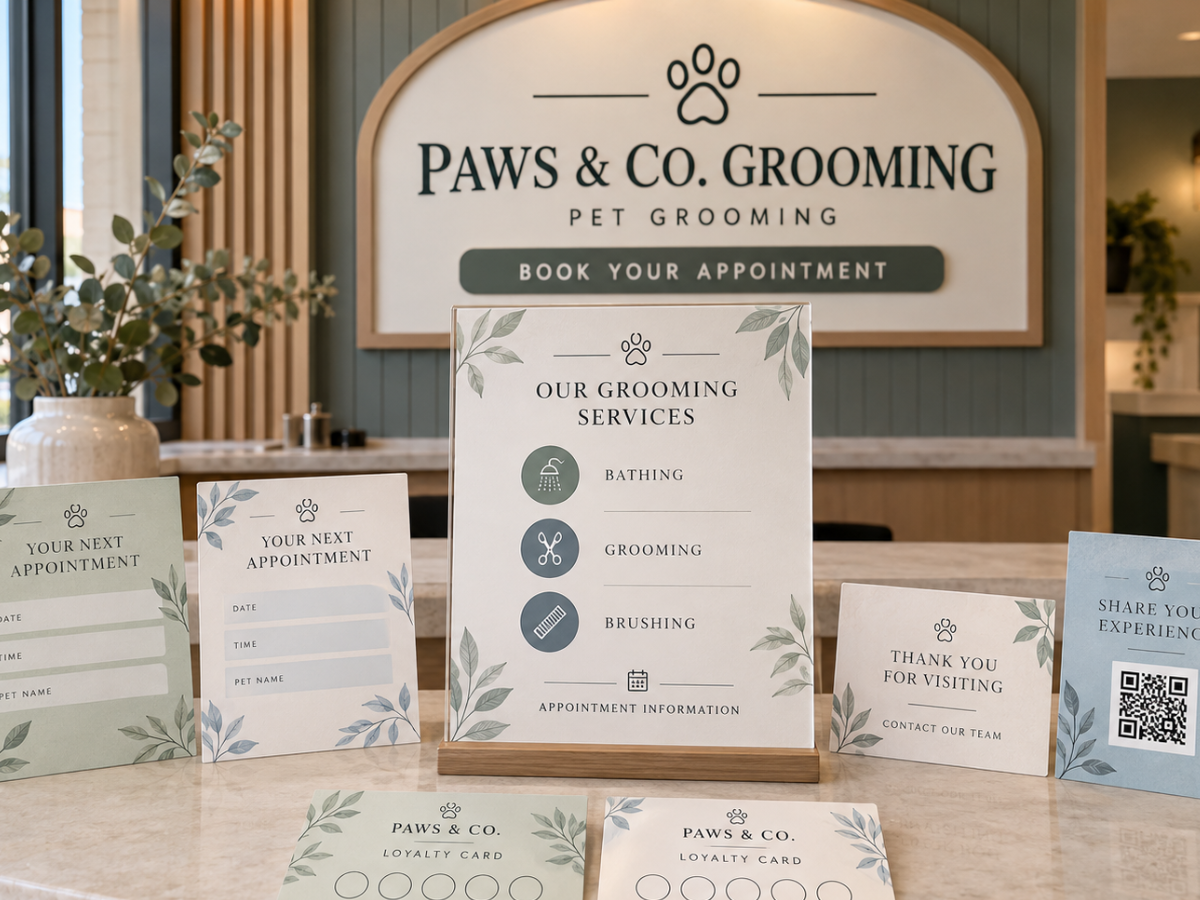
Pet grooming salons can use printed materials to help customers find the business, understand its services, remember appointments and return for future visits. Start with clear storefront branding and practical appointment communication, then add loyalty cards, after-visit instructions and review requests where they improve the customer experience.
A pet grooming salon has a different customer relationship from a typical retail store.
Customers are not simply choosing a product from a shelf. They are trusting a business to handle an animal, communicate clearly about the appointment and provide a consistent experience over repeated visits.
That creates several opportunities for useful print.
Someone walking past the salon needs to understand what the business offers. A new customer may want a simple explanation of available services. An existing customer may need to remember the next appointment, while another may benefit from written follow-up information supplied by the groomer.
The most effective pieces are rarely the most elaborate. They are the ones that remove confusion and make it easier for customers to book, return or recommend the salon.
This guide explains how to build a practical print system for independent pet groomers, grooming salons and businesses offering professional grooming services.
1. What Printed Materials Does a Pet Grooming Salon Need?
A useful starting collection might include:
- Business cards.
- Appointment reminder cards.
- Service menus.
- Window graphics or storefront signs.
- Reception posters.
- Loyalty cards.
- Customer follow-up cards.
- Review request cards.
- Seasonal promotional flyers.
Not every salon needs everything on this list.
Choose materials based on actual customer interactions and existing business processes.
2. Which Printed Materials Should a New Grooming Salon Order First?
Start with three essential customer needs: finding the salon, understanding what it offers and knowing how to book.
Clear storefront branding, a straightforward service overview and professional business cards can support those needs.
If the salon regularly books the next visit before customers leave, appointment cards may also deserve priority.
Loyalty programs and promotional giveaways can come later, once the core booking experience works properly.
3. Why Does Storefront Branding Matter for Grooming Businesses?
A grooming salon may serve customers from several nearby neighbourhoods, but people still need to recognize the business when they arrive.
Storefront branding can help communicate:
- Business name.
- Pet grooming services.
- Booking information.
- Opening hours, when appropriate.
- Entrance location.
A customer carrying a pet or managing an excited dog should not have to study a complicated window advertisement to find the correct entrance.
4. What Should Go on a Pet Grooming Window Graphic?
Use a short message that can be understood from the sidewalk.
A practical window graphic might show:
PAWS & CO. GROOMING
Professional Pet Grooming
Book Your Appointment
Website or approved contact information
Keep detailed price lists and lengthy service descriptions somewhere customers can read them comfortably.
5. Should a Grooming Salon Cover Its Entire Storefront Window?
Not automatically.
Large graphics can create strong visual branding, but complete window coverage may reduce natural light or affect visibility between the interior and exterior.
The correct approach depends on the property, desired privacy, lighting and required sightlines.
Pryntco offers multiple formats through its Window & Vinyl Graphics category.
Confirm the selected material, application method and property requirements before ordering.
6. Are Business Cards Still Useful for Pet Groomers?
Yes, particularly for businesses that gain customers through personal recommendations.
A happy customer may want to give the salon's information to a neighbour, friend or family member.
A business card provides that information without requiring someone to remember the business name or search through messages.
Keep it simple enough to read quickly.
7. What Should a Pet Grooming Business Card Include?
Useful information may include:
- Salon name and logo.
- Telephone number.
- Website or booking link.
- Business address when customers visit the location.
- Short description of the primary service.
- QR code when it leads to a useful booking destination.
A business card should not attempt to reproduce the salon's full price list.
8. Should Groomers Use Appointment Cards?
Appointment cards can be useful when customers schedule their next visit before leaving.
Unlike a generic promotional card, an appointment card gives the customer information they may actually keep.
It can help prevent confusion about the date, time and location of the next visit.
For salons that already use digital reminders, the printed card can act as an optional supporting reminder rather than replacing the booking system.
9. What Information Belongs on an Appointment Card?
Include enough information to identify the appointment without overcrowding the card.
A practical layout might include:
- Salon name.
- Appointment date.
- Appointment time.
- Pet name, if useful and appropriate.
- Salon phone number.
- Short rescheduling instruction.
Customers should be able to find the appointment details immediately.
10. Should Appointment Cards Have a Writable Surface?
Yes when staff will add dates, times or other information by hand.
A highly glossy surface may be less convenient for some pens, and decorative finishes can make everyday writing difficult.
Pryntco's Standard Business Cards category includes uncoated card options that can be suitable for writable appointment-style cards.
Test the writing instrument and intended stock before ordering a substantial quantity.
11. Should Appointments Be Printed Before They Are Confirmed?
No.
Appointment details should be confirmed before staff write them on a card or send a final reminder.
If the customer changes the booking, the business should update its booking system and provide corrected details.
The printed card is a reminder, not the authoritative appointment record.
12. Does a Grooming Salon Need a Printed Service Menu?
A service menu can help new customers understand what the salon offers before speaking to staff.
It can present broad categories such as grooming appointments, bathing services, brushing or other services the business genuinely provides.
It should also explain when services require individual assessment rather than implying every pet receives exactly the same service.
13. Should the Service Menu Include Prices?
Only when pricing is accurate, approved and appropriate for the services listed.
Some grooming businesses have straightforward published prices. Others calculate charges according to factors such as coat condition, size, service requirements and the time involved.
A printed menu should not promise a final price when the business needs to assess the pet first.
Explain the pricing process clearly instead.
14. How Can Groomers Avoid Printing Outdated Price Lists?
Separate stable service descriptions from frequently changing prices.
For example, a professionally designed service brochure could introduce the salon's grooming categories while a replaceable price sheet provides current information.
A QR code leading to the official pricing or booking page may also help.
This approach allows the salon to update commercial details without discarding every branded piece.
15. Is a Folded Brochure Better Than a One-Page Service Menu?
A one-page menu may be sufficient when the salon offers a relatively focused range of services.
A folded brochure becomes more useful when the business needs room to explain the booking process, service categories and what customers should know before arriving.
Pryntco offers both flyers and brochures through its Print Marketing catalogue.
Choose the format that allows the information to remain easy to understand.
16. Should Groomers Print New-Customer Information Cards?
A small information card can support customers booking their first appointment.
It might explain where to find the salon's current policies and how to contact the team before arrival.
Any instructions about pet condition, eligibility, handling, health or required documentation should come directly from the business and be reviewed by the appropriate personnel.
The print designer should organize approved information rather than invent operational or animal-care requirements.
17. Can Printed Check-In Forms Help a Salon?
Yes, when the business needs a documented intake process.
A salon may use a form to confirm contact information, service selections, relevant instructions and customer acknowledgements.
However, the content should be established by the business, not copied from a generic marketing template.
Personal information should be collected and stored appropriately. Do not place private customer details on materials displayed publicly.
18. Should Grooming Intake Forms Be Reusable?
Some information may remain consistent across appointments, while other details need updating.
A salon could maintain customer records digitally and use a short printed form only when fresh information or confirmation is necessary.
Avoid asking customers to complete several pages repeatedly when a smaller update would serve the same operational purpose.
19. Do Pet Grooming Salons Need Loyalty Cards?
Loyalty cards can make sense for grooming businesses with predictable repeat visits and an established reward program.
The card should communicate how qualifying visits are counted and what the customer receives.
A loyalty card should support a genuine program already approved by the business, not introduce a promise that staff cannot consistently honour.
20. What Should Go on a Grooming Loyalty Card?
A simple loyalty card may include:
- Business name.
- Program name.
- Clearly defined stamp or punch spaces.
- Qualifying service conditions.
- Reward description.
- Relevant terms and limitations.
Use sufficient spacing for staff to mark each qualifying visit without covering important wording.
Pryntco's Custom Loyalty Cards Guide explains the practical design decisions for stamp and punch cards.
21. Should Every Grooming Visit Count Toward a Reward?
That is a business decision.
A salon may have different services, appointment values and program conditions.
Management should determine what qualifies before the card is printed.
If a specific service is excluded, the wording should be clear enough that customers and employees interpret the conditions consistently.
22. Are Referral Cards Useful for Groomers?
Referral cards can help existing customers introduce the business to people they know.
The card may simply provide the salon's contact and booking details.
If the business operates a referral promotion, the offer should be genuine and its terms approved before printing.
Do not assume a referral reward is necessary. A useful card with a memorable salon name may be sufficient.
23. Should Referral Cards Be Different From Business Cards?
Only when they serve a distinct purpose.
A standard business card is appropriate for general contact sharing.
A referral card may be worth printing separately when the salon wants to track a specific referral program or communicate a defined first-visit promotion.
Using separate formats without separate functions adds cost and makes inventory harder to manage.
24. When Are Printed Review Cards Appropriate?
A review request can be useful after a genuine completed customer experience.
The card should make it easy to reach the salon's correct review profile and invite honest feedback.
It should not pressure customers to provide a particular rating or offer rewards for reviews.
Pryntco's Google Review Cards Guide explains how to prepare the QR code and review request appropriately.
25. What Should a Grooming Review Card Say?
Keep the request neutral and short.
For example:
THANK YOU FOR VISITING
We'd appreciate your feedback about your experience.
Scan to Leave a Review
Include the actual business name and a tested review link.
Avoid language that tells customers what rating to leave or suggests they will receive something in return.
26. Should a Salon Give Every Customer a Review Card?
A consistent, neutral process is preferable to distributing cards only when employees believe a customer will leave a positive review.
The card may be made available after appointments without making the request feel mandatory.
Staff should focus on completing the customer interaction properly rather than treating every appointment as an opportunity to demand feedback.
27. Can Groomers Print Aftercare Information Cards?
Yes, when the salon has useful, approved information to communicate after a service.
An aftercare card may direct customers to contact the salon with questions or provide specific instructions established by the business.
Any animal-health or medical advice should be reviewed by appropriately qualified professionals.
A generic print template should never invent treatment instructions or replace veterinary guidance.
28. Should Aftercare Cards Include the Pet's Name?
Personalization can make an after-visit card more useful when staff add a name or appointment-specific note.
However, individualized information should be written or recorded in a controlled manner.
Do not print customer names, telephone numbers or private notes on a publicly visible stack of cards.
Choose a writable stock when employees need to add approved information by hand.
29. Are Thank-You Cards Worth Printing?
A thank-you card can be appropriate when the salon wants a more personal customer experience.
For example, a small card may accompany a first appointment, welcome package or seasonal customer communication.
However, routine thank-you cards should not become an unnecessary expense if the same message is already communicated effectively through the booking process.
Choose the format because it serves a real relationship-building purpose.
30. Can Seasonal Flyers Help Bring in Grooming Appointments?
Flyers may support a genuine seasonal campaign, new location announcement or service introduction.
The message should identify one specific reason to book rather than listing every service the salon offers.
Any promotional price, eligibility condition or date should be confirmed by the business.
Keep campaign materials separate from evergreen service information so old promotions are not accidentally distributed later.
31. Should a Grooming Salon Use Posters Inside the Business?
Posters can help explain one important message to customers waiting at reception.
Possible subjects include:
- Booking instructions.
- Approved service information.
- Current seasonal announcements.
- Customer feedback information.
- Relevant salon policies.
A reception area rarely benefits from several posters competing for attention.
Use the available space selectively.
32. Should Flyers and Window Graphics Use the Same Design?
They should share the same brand identity but not necessarily the same layout.
A window graphic may be viewed from several metres away and needs large lettering.
A flyer can carry more details because customers can hold it and read it closely.
Reuse approved logos, colours and photography while adapting the information hierarchy to the physical format.
33. How Should Multi-Location Grooming Businesses Handle Print?
Each salon location should have accurate customer-facing information.
Check:
- Location name.
- Address.
- Phone number.
- Booking link.
- Business hours.
- Review profile destination.
A shared design template can keep branding consistent while preventing location-specific information from being mixed up.
34. How Can Pet Groomers Make Printed Materials Look Consistent?
Create a small visual system that works across different formats.
Use consistent:
- Logo versions.
- Brand colours.
- Typography.
- Photography or illustration style.
- Service terminology.
- Contact information.
The appointment card, storefront graphic and flyer should look like they belong to the same business even though they serve different purposes.
35. How Many Printed Cards Should a Grooming Salon Order?
Base quantities on real usage.
For appointment cards, estimate how many customers receive a physical card during a normal booking period.
For loyalty cards, estimate how many customers actually participate in the program.
For review cards, consider whether cards are handed out or displayed at reception.
Do not multiply total appointments by every available print format. Many customers will not need all of them.
36. What Should Be Checked Before Approving the Artwork?
Proof the details customers will rely on.
- Correct salon name and logo.
- Current contact information.
- Accurate booking link.
- Appointment writing space.
- Approved service descriptions.
- Actual loyalty program conditions.
- QR code destination.
- Storefront dimensions where applicable.
- Readable text and sufficient contrast.
- Correct spelling and punctuation.
- Required bleed and safe areas.
For window graphics, confirm the installation side and actual glass measurements before final production.
37. What Are the Most Common Pet Grooming Print Mistakes?
Common problems include:
- Printing detailed prices that quickly become outdated.
- Using appointment cards that are difficult to write on.
- Making storefront lettering too small.
- Printing a loyalty reward before the conditions are approved.
- Using QR codes that lead to the wrong booking or review page.
- Adding too many competing calls to action.
- Copying animal-care guidance without appropriate review.
- Failing to update information for multiple locations.
- Ordering large quantities of materials customers rarely use.
- Using inconsistent logos and branding.
38. What Should a Pet Grooming Salon Print First?
Begin by following a real customer through the salon experience.
Before an appointment, the customer needs to recognize the storefront, understand the available services and know how to book.
A readable window graphic, simple service menu and business card can support that stage.
During the visit, printed appointment cards or approved information forms may help staff communicate clearly and keep customers organized.
After the appointment, the salon may benefit from providing useful follow-up information, a neutral review request or an invitation to participate in a genuine loyalty program.
Each piece should have one clear job.
A new salon does not need to order every possible format at once. Start with the materials that solve recurring customer problems, observe how they are used and expand the collection when the need becomes clear.
Pryntco offers business cards, print marketing materials, window graphics and related custom print products that can support a coordinated pet grooming brand.
For unusual card layouts, custom signs, special sizes or other requirements, request a quote from Pryntco with the intended format, dimensions, quantity and artwork details.

