
One-Sided or Two-Sided Flyers and Postcards? When Is Printing the Back Worth It?
One-Sided or Two-Sided Flyers and Postcards? When Is Printing the Back Worth It?
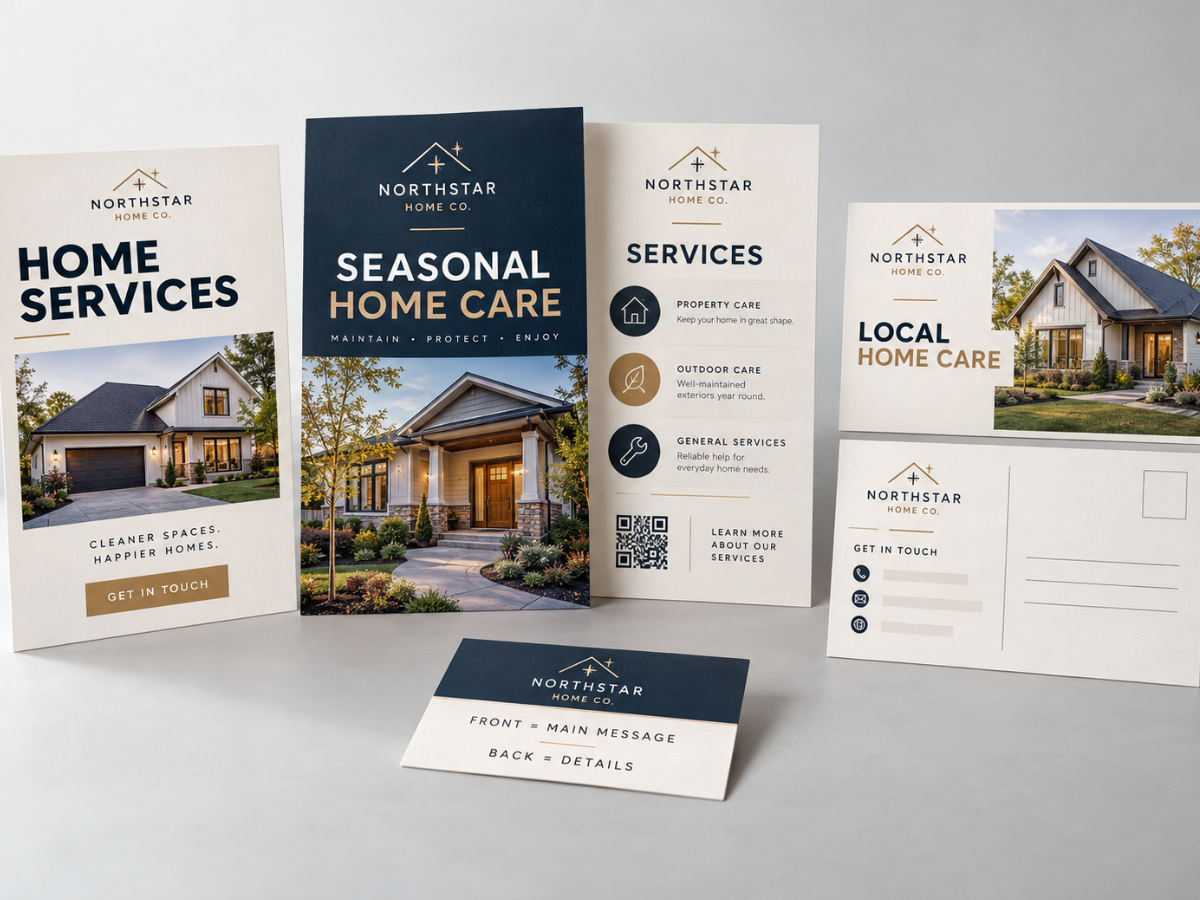
The back of a flyer or postcard is useful when it gives the reader a clear second layer of information. It is not useful when the designer simply repeats the logo, stretches the same message across two sides or fills empty space because double-sided printing was available.
One-sided or two-sided sounds like a simple printing option.
But it is actually a content decision.
The second side changes how the reader receives the message.
A one-sided flyer can communicate one offer immediately with nothing else to turn over.
A two-sided flyer can separate the main sales message from supporting details.
A one-sided postcard can act as a promotional card or handout.
A mailed postcard normally also needs to account for addressing and mailing information.
Pryntco’s current Flyers and Postcards both support single- and double-sided printing.
The question is whether the second side improves the communication.
1. What Is the Main Difference Between One-Sided and Two-Sided Printing?
One-sided printing places the intended message on one face.
Two-sided printing gives the piece a second face that can carry additional information.
The extra side should have a defined job.
2. When Is One-Sided Printing Enough?
One side may be enough when the campaign has:
- One offer
- One image
- One short explanation
- One call to action
Simple communication does not become stronger merely because the back is filled.
3. When Is Two-Sided Printing Better?
Use the back when it helps separate the primary message from useful supporting information.
For example:
- Front → promotion
- Back → details and contact information
4. Should the Front and Back Say the Same Thing?
Usually not.
Repeating every line wastes the opportunity to organize information.
The brand can repeat while the content progresses.
5. What Should the Front of a Flyer Do?
The front should earn attention quickly.
It may contain:
- Main headline
- Primary image
- Offer or service
- Short call to action
The reader should understand the basic purpose before turning the flyer over.
6. What Should the Back of a Flyer Do?
The back can answer the next questions.
It may include:
- Service details
- Offer conditions
- Map
- FAQ
- Contact information
- QR code
7. When Should a Flyer Stay One-Sided?
Keep it one-sided when the flyer is being used as:
- Simple announcement
- Counter handout
- Short event notice
- Insert with one action
A blank back is not automatically a design failure.
8. When Does a Two-Sided Flyer Help a Service Business?
A useful structure may be:
Front: what the business does and why it matters.
Back: service list, process, service area and contact information.
This keeps the front from becoming overcrowded.
9. When Does a Two-Sided Flyer Help a Retail Promotion?
The front can carry the primary promotion.
The back may explain:
- Eligible products
- Dates
- Location
- Conditions
Do not hide essential conditions in unreadably small text.
10. When Does a Two-Sided Flyer Help an Event?
A practical event flyer may use:
Front: event name, date and main image.
Back: schedule, venue information, registration details or map.
This creates a clear information sequence.
11. Should a Flyer Use the Back for a Map?
Yes when the physical location is difficult to explain with an address alone.
Keep the map simple and use only accurate location information.
12. Should a Flyer Use the Back for FAQs?
It can when several predictable questions influence the customer’s decision.
Use short answers rather than reproducing an entire website FAQ page.
13. Should a Flyer Use the Back for Testimonials?
Only when testimonials are genuine, approved and useful to the decision.
Do not fill the back with generic praise merely because there is space available.
14. Should a Flyer Use the Back for a Service List?
Yes when the list supports the primary offer.
Keep it organized into a small number of categories.
A list of thirty services in tiny type usually means the content needs another format.
15. Should the Back Carry a Different Promotion?
Usually only when the two offers are clearly connected.
Two unrelated promotions can create competition inside one piece.
One strong campaign is easier to understand.
16. What Should the Front of a Postcard Do?
The promotional face should communicate quickly.
A strong postcard front may use:
- Large image
- Headline
- Short offer
- Brand identity
Pryntco’s current Postcards support printing on the front or on both sides.
17. What Should the Back of a Promotional Postcard Do?
When the card is being handed out rather than mailed, the reverse can carry:
- More details
- Contact information
- QR code
- Offer conditions
The correct layout depends on how the piece will be distributed.
18. What Changes When the Postcard Will Be Mailed?
The mailing side needs enough space for the applicable addressing, postage and postal requirements.
Do not design the reverse like a full advertising panel before the mailing method is confirmed.
19. Should Mailing Requirements Be Confirmed Before Design?
Yes.
The final postcard format and mailing process may affect:
- Address area
- Postage area
- Barcode or postal clear zones
Confirm the requirements for the specific campaign.
20. Can a Mailed Postcard Still Use the Reverse for Marketing?
Yes, where the mailing layout allows it.
The promotional information should coexist with the postal information rather than interfere with it.
21. Which Side Should Contain the Main Offer?
Put the strongest campaign idea on the side most likely to function as the primary visual face.
Do not require the reader to turn the piece over before understanding why it matters.
22. Should the Call to Action Appear on Both Sides?
It can.
The wording does not need to be identical, but the action should remain consistent.
For example:
- Front → BOOK YOUR CONSULTATION
- Back → Scan or visit the website to choose a time
23. Should the Phone Number Appear on Both Sides?
Only when repeating it genuinely improves usability.
Do not repeat every contact method simply because the piece has two sides.
24. Where Should a QR Code Go?
Place it near the action it supports.
Keep clear space around it and test the finished code.
Pryntco’s broader Print Marketing Tracking Guide covers campaign-specific QR codes and response measurement.
25. Should the QR Code Be Repeated on Both Sides?
Usually one clearly placed code is enough.
Repeat it only when both sides may be viewed independently and the action genuinely needs to remain accessible.
26. Is Double-Sided Printing Better for Tracking?
Not by itself.
Tracking depends on the response method.
A one-sided flyer with a dedicated QR code can be measured just as intentionally as a two-sided flyer.
27. Does Two-Sided Printing Allow Smaller Text?
It should allow the opposite.
Use the additional space to improve:
- Readability
- Spacing
- Hierarchy
Do not add enough extra copy to make both sides crowded.
28. Should the Design Look Identical on Both Sides?
No.
The two faces should feel connected through:
- Colour
- Typography
- Logo treatment
- Graphic style
but each side can have a different information hierarchy.
29. How Should Background Colour Be Handled Across Both Sides?
The colours can remain consistent while still giving each side a distinct purpose.
For example, the front may be image-led while the reverse uses a cleaner background for detailed text.
30. Does Full-Bleed Artwork Change on the Back?
The same bleed and safe-area principles apply to each printed face.
Pryntco’s Bleed, Trim & Safe Area Guide explains that background artwork should extend where required while important content remains safely inside.
31. How Should Front and Back Files Be Prepared?
Keep the page order unambiguous.
Clearly identify:
- Front
- Back
and confirm orientation before approval.
32. What Happens if the Back Is Upside Down?
This usually comes from misunderstanding the intended orientation.
Review the proof as a physical object:
If I turn this piece over naturally, what should I see?
Do not judge the pages independently.
33. Should a Two-Sided Piece Use the Same Image Twice?
Usually not.
The reverse can use:
- Supporting image
- Map
- Text
- Simple brand background
Repeating the same hero photograph can waste valuable space.
34. When Does Double-Sided Printing Become Too Much?
When the business begins inventing content simply to fill the back.
If there is no useful second layer of information, keep the piece simple.
35. Should Cost Alone Decide Whether to Print the Back?
No.
Compare:
- Communication need
- Current product configuration
- Campaign quantity
- Distribution method
The cheapest side count is not automatically the best campaign.
36. What Are the Most Common One-Sided Print Mistakes?
Common problems include:
- Trying to squeeze too much information onto one face.
- Using tiny type instead of moving details to the back.
- Forgetting contact information.
- Using one side when mailing requirements actually need a designed reverse.
37. What Are the Most Common Two-Sided Print Mistakes?
Common problems include:
- Repeating the same content on both sides.
- Adding unrelated second offers.
- Making both sides equally crowded.
- Forgetting postcard mailing space.
- Submitting the back in the wrong orientation.
- Using a second side that has no real purpose.
38. When Is Printing the Back of a Flyer or Postcard Worth It?
Print the back when the customer genuinely needs a second layer of information.
Let the front do the fast work:
headline + image + main offer + reason to care.
Use the reverse for the details that help the customer act:
services + conditions + map + contact information + QR code.
For mailed postcards, plan the mailing side before finalizing the design so the advertising content does not interfere with address and postal requirements.
Use two sides to improve organization, not to double the amount of marketing copy.
If the campaign is genuinely simple, one strong side may be better than two weak ones.
If the front is becoming crowded because the customer needs important supporting details, the back has a clear purpose.
Pryntco currently offers Flyers in multiple sizes with single- or double-sided printing and Postcards with front-only or two-sided configurations.
Businesses planning a mailed campaign can also review Pryntco’s Direct Mail Marketing Guide.
For a custom marketing piece or campaign, contact Pryntco or submit a custom quote request.

