
Mugs, Tumblers or Bottles? Picking Branded Drinkware People Will Actually Use
Mugs, Tumblers or Bottles? Picking Branded Drinkware People Will Actually Use
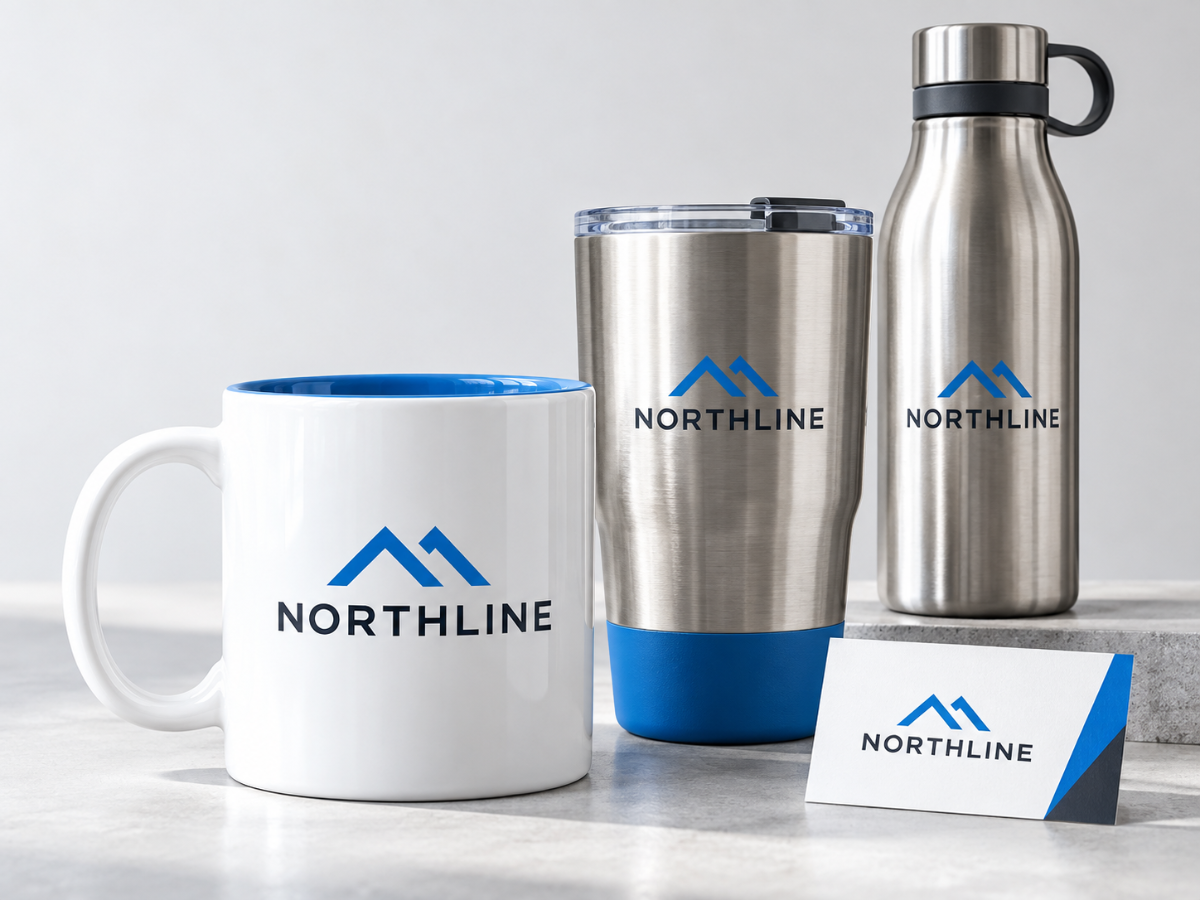
Good branded drinkware should fit naturally into someone’s routine. A desk mug, travel tumbler and reusable bottle may all carry the same logo, but the best choice depends on where the recipient works, travels and actually reaches for a drink.
Drinkware is one of the easiest promotional-product categories to understand and one of the easiest to choose poorly.
A business sees a mug, tumbler or bottle and thinks:
“Everyone drinks something, so any of these will work.”
But the use cases are different.
A ceramic mug fits naturally into an office or home workspace.
A tumbler makes more sense for someone who carries a beverage between locations.
A bottle may suit an active, mobile or event-oriented audience.
Pryntco currently offers custom ceramic mugs, a custom tumbler and a stainless-steel bottle as branded promotional drinkware options.
The goal of this guide is not to declare one category best.
It is to match the product to the person receiving it.
1. Why Is the Use Case More Important Than the Product?
A promotional product only creates ongoing visibility if the recipient keeps and uses it.
Before choosing drinkware, ask:
- Where will the item be used?
- Will the recipient carry it?
- Is this a gift or broad giveaway?
- Does the audience work mainly at a desk?
- Is portability important?
2. What Is the Basic Difference Between a Mug, Tumbler and Bottle?
| Product | Natural Environment | Good Starting Use |
|---|---|---|
| Mug | Desk, kitchen, break room | Office gifts, staff use, clients |
| Tumbler | Commute, desk, travel between locations | Employee gifts, client gifts, merchandise |
| Bottle | Mobile, active, events | Teams, events, staff, branded merchandise |
3. When Is a Ceramic Mug the Best Choice?
A mug is a strong choice when the recipient spends time in one location.
Typical environments include:
- Office
- Home workspace
- Staff room
- Reception area
- Client meeting space
It can provide repeated brand visibility without needing to travel anywhere.
4. When Is a Tumbler Better?
A tumbler is useful when portability matters more.
It can suit:
- Commuters
- Sales teams
- Staff moving between sites
- Client gifts
- Branded merchandise
Pryntco’s current tumbler is positioned around branding, gifts and promotional use.
5. When Is a Bottle the Better Option?
A bottle can feel natural for audiences that are active or mobile.
Examples include:
- Fitness businesses
- Outdoor events
- Teams
- Field staff
- Community programs
Pryntco’s current stainless-steel bottle is offered for logos, artwork and promotional branding.
6. Which Is Best for an Office?
A ceramic mug is often the most natural fit because it can remain at a desk or in a shared kitchen.
A tumbler may be better for employees who arrive with a drink from home or move frequently between locations.
7. Which Is Best for Commuters?
A tumbler generally fits the commuting use case more naturally than an open mug.
The recipient can carry it between:
- Home
- Vehicle
- Office
- Meetings
8. Which Is Best for Active Audiences?
A bottle can feel more natural for active environments.
This includes:
- Gyms
- Sports
- Outdoor work
- Community events
Choose based on the actual audience rather than assuming all fitness-related campaigns need the same item.
9. Which Is Best for Employee Gifts?
All three can work.
Use the employee’s normal routine as the guide.
An office-based team may appreciate mugs.
A mobile team may get more use from tumblers or bottles.
10. Which Is Best for Client Gifts?
A tumbler or mug may work especially well because both can feel substantial enough for a direct business gift.
Keep the branding tasteful.
The gift should feel useful first and promotional second.
11. Which Is Best for a Large Event Giveaway?
Think about distribution logistics.
Ask:
- How many people will receive one?
- How will attendees carry it?
- Will it fit comfortably into the event experience?
A larger product can be valuable, but it may not suit every high-volume event.
12. Which Drinkware Works Best for Merchandise?
Merchandise needs appeal beyond the logo.
The product should feel like something the customer would choose even if they had to pay for it.
Consider:
- Shape
- Finish
- Design
- Audience
13. Is a Mug Too Traditional for Promotional Branding?
No.
Traditional can be useful.
A mug remains visible in an office or kitchen and gives the brand a large familiar surface for artwork.
The question is whether the recipient uses mugs, not whether the category is new.
14. Are Tumblers More Premium Than Mugs?
They can feel different, but “premium” depends on the campaign and recipient.
A beautifully designed mug can be the more appropriate gift for an office client.
A tumbler may feel more useful for someone constantly moving between locations.
15. Are Bottles Only for Fitness Brands?
No.
Bottles can work for:
- Employee programs
- Outdoor events
- Schools
- Teams
- Community organizations
- Corporate gifts
The product does not need to match the business category literally.
16. How Much Branding Should Go on Drinkware?
Usually less than businesses initially want.
A drinkware item rarely needs:
- Logo
- Phone number
- Address
- Full service list
all printed together.
Simple branding is more likely to look intentional.
17. Is a Logo Enough?
Often, yes.
A strong logo can give the product a clean professional appearance without turning it into a miniature advertisement.
This is especially useful for gifts and merchandise.
18. When Should Artwork or Photography Be Used?
Pryntco’s current ceramic mug product supports custom full-colour printing for logos, artwork and photos.
That can make mugs suitable for:
- Creative artwork
- Photography
- Event designs
- Commemorative pieces
Use high-quality source images.
19. Should Every Drinkware Product Use the Same Design?
No.
The brand can remain consistent while the layout changes to fit each product.
A mug may support a wider design while a bottle may look stronger with a simple vertical or centred mark.
20. How Should Logo Placement Be Planned?
Consider how the item is normally held and viewed.
The logo should be:
- Easy to recognize
- Balanced with the product shape
- Clear at normal viewing distance
Use the specific product template or design area rather than guessing.
21. Should You Put a QR Code on Drinkware?
Usually only when there is a very clear reason.
A QR code may be awkward on:
- Curved surfaces
- Small branding areas
- Designs already carrying a logo
Test any functional code at final size before relying on it.
22. Should a Website Be Printed on the Product?
Only if it remains readable and improves the design.
A clean logo may provide stronger branding than a logo plus a long web address.
Short recognizable domains are easier to integrate.
23. How Should Brand Colours Be Used?
Use a product and design combination that provides enough contrast.
Do not assume a screen colour will appear identical on every physical surface.
Pryntco’s CMYK vs RGB Guide explains why printed colour and screen colour can differ.
24. Should Different Departments Get Different Drinkware?
They can, but avoid unnecessary fragmentation.
A business might use:
- Mugs for office staff
- Tumblers for sales teams
- Bottles for field teams
while keeping the same core brand identity.
25. Should Drinkware Be Added to New-Employee Kits?
It can work well when the item fits the workplace.
A simple onboarding kit might include:
- Branded drinkware
- Notebook or printed information
- Staff apparel
Do not add products solely to make the kit look larger.
26. How Should Drinkware Quantities Be Planned?
Start from the number of recipients.
Then consider:
- New employees
- Late event registrations
- Replacement gifts
- Future client meetings
Avoid ordering a large surplus if the artwork contains dates or temporary campaign information.
27. Should Businesses Mix Mugs, Tumblers and Bottles in One Order?
They can when different recipient groups have different needs.
For example:
- Mugs for office clients
- Tumblers for sales staff
- Bottles for an outdoor event
The products can still share one visual identity.
28. How Should Drinkware Be Distributed?
Plan distribution before ordering.
Possible channels include:
- Employee onboarding
- Client meetings
- Events
- Customer gifts
- Retail merchandise
Inventory sitting in storage does not create brand visibility.
29. Should Drinkware Be Given to Every Customer?
Not necessarily.
A more substantial promotional product may be better reserved for:
- Key customers
- Large orders
- Events
- Milestones
A smaller printed piece may be more appropriate for routine transactions.
30. Can Drinkware Support Customer Retention?
Yes.
A useful gift can acknowledge an existing relationship after:
- A completed project
- A milestone
- A long-term partnership
The product should feel like appreciation rather than an aggressive sales message.
31. Can Drinkware Support Brand Awareness?
Yes, especially when the item remains in regular use.
A mug may stay on a desk.
A tumbler may travel to meetings.
A bottle may move through events or activities.
The repeated visibility comes from use, not simply from distributing the item.
32. Should Drinkware Be Used as a Trade-Show Giveaway?
It can, but think about the booth strategy.
One approach is to reserve higher-value drinkware for:
- Qualified prospects
- Existing customers
- Contest or event participants
rather than giving the same item automatically to every person passing the booth.
33. Should Businesses Make Environmental Claims About Drinkware?
Only when the claim is specific, relevant and supported.
Do not automatically describe a product as environmentally friendly simply because it can be used more than once.
Keep promotional copy focused on verified product information.
34. Should Durability or Temperature Claims Be Added to Marketing?
Only when those claims are supported by the actual product information.
Do not invent:
- Temperature retention times
- Dishwasher performance
- Drop resistance
- Lifetime guarantees
Use the current live product details as the source of truth.
35. What Should Be Checked Before Approving Drinkware Artwork?
Confirm:
- Correct product
- Correct logo
- Correct artwork orientation
- Readable text
- Image quality
- Quantity
Pryntco’s Artwork Preparation Guide provides broader guidance on print-ready files.
36. What Are the Most Common Branded Drinkware Mistakes?
Common problems include:
- Choosing a product before thinking about the audience.
- Putting too much information on the design.
- Using a low-resolution logo.
- Making unsupported product claims.
- Using the exact same artwork on products with different shapes.
- Ordering before planning distribution.
- Adding a QR code without testing it.
37. What should you include in a drinkware enquiry?
Choose the format that fits your recipients: ceramic mugs, tumblers or stainless-steel bottles.
When you request a quote, include the product, quantity, artwork and required date. Contact Pryntco to confirm the printable area and artwork placement before preparing the file.

