
Men’s, Women’s or Unisex? Choosing T-Shirts for a Mixed Staff Order
Men’s, Women’s or Unisex? Choosing T-Shirts for a Mixed Staff Order
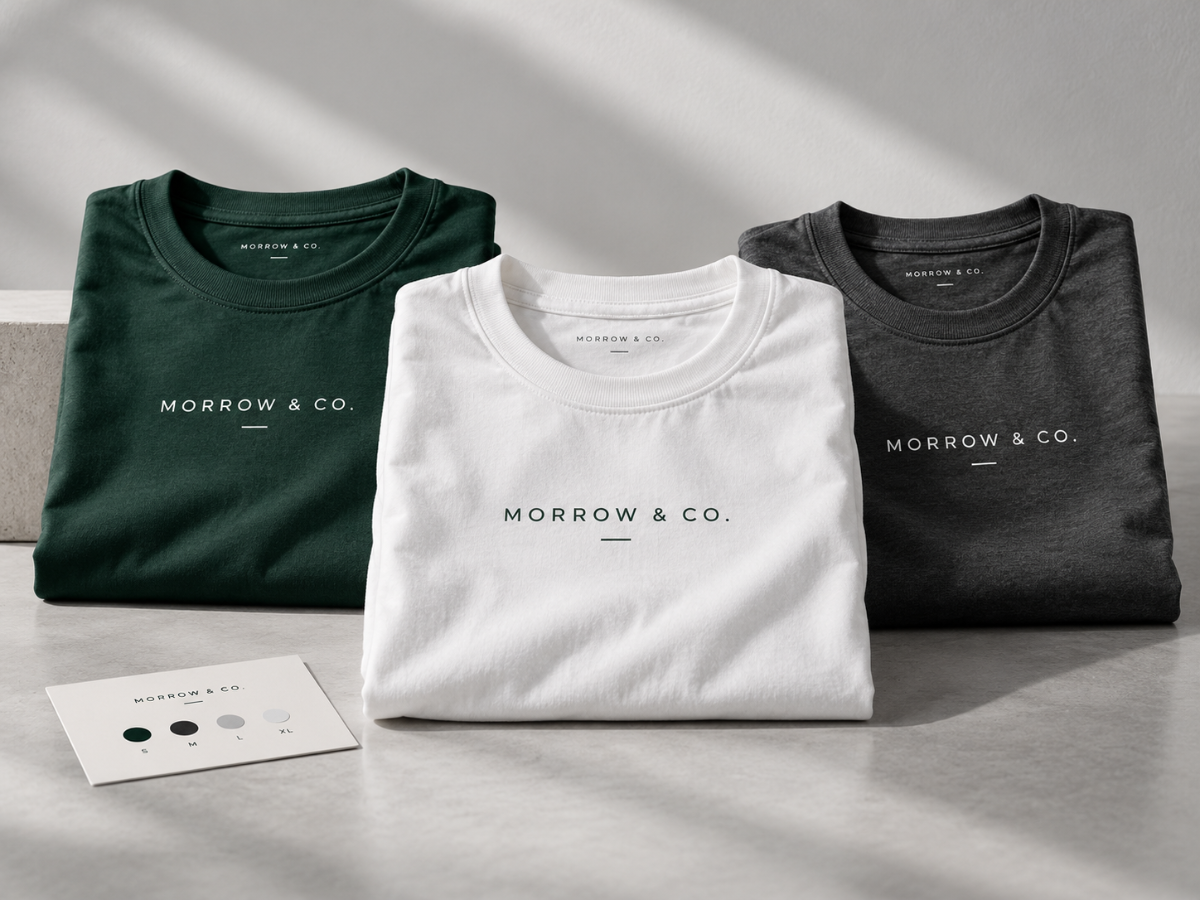
A consistent staff uniform does not require every employee to wear the exact same cut. The logo, colours and overall presentation can stay consistent while people choose from approved garments that fit them more comfortably.
Ordering shirts for one person is easy.
Ordering them for twenty, fifty or one hundred different people is where the real planning begins.
One employee may prefer a traditional men’s cut.
Another may prefer a women’s fitted or relaxed style.
Another may be most comfortable in a unisex shirt.
The temptation is to simplify everything by choosing one garment and ordering every person the same style.
That makes administration easier—but it does not always create the best uniform.
Pryntco’s current apparel range includes dedicated men’s, women’s and unisex T-shirt categories, with women’s options that include fitted and relaxed styles and unisex options ranging from standard tees to tall and specialty styles. :chatgpt-content-reference{index="5"}
The better goal is consistency without forcing identical fit.
1. What Is the Difference Between Men’s, Women’s and Unisex T-Shirts?
The difference is primarily the garment cut and sizing system.
Individual products may vary in:
- Body shape
- Sleeve shape
- Length
- Neckline
- Size range
Do not assume every shirt within one category fits exactly the same.
2. Does the Same Size Fit the Same Across All Three Categories?
No.
A medium in one garment does not guarantee the same physical fit as a medium in another.
Always use the size information for the exact product being ordered.
3. Why Offer More Than One Staff T-Shirt?
Because the team is made up of different bodies and preferences.
Providing a controlled choice can improve comfort while keeping the brand consistent.
The company can still standardize:
- Colours
- Logo
- Artwork placement
- Approved garment list
4. Should Employees Choose Their Own Preferred Fit?
That is often the simplest approach when several approved options are available.
Ask employees to choose from a defined list rather than assigning a garment based on assumptions.
This keeps the program respectful and easier to manage.
5. When Is a Unisex T-Shirt Useful?
A unisex shirt can simplify group orders because one style can cover a broad staff group.
It is especially practical for:
- Event teams
- Large groups
- Volunteer programs
- Promotional apparel
It should still be selected because people like the fit, not simply because it reduces administration.
6. When Is a Women’s T-Shirt Useful?
A women’s category gives employees access to alternative garment shapes rather than forcing everyone into one unisex cut.
Pryntco currently carries women’s cotton, triblend, fitted and relaxed styles. :chatgpt-content-reference{index="6"}
This creates useful choices within one coordinated uniform.
7. When Is a Men’s T-Shirt Useful?
A men’s cut can be a straightforward option for staff who prefer that shape and size structure.
Pryntco’s men’s T-shirt category currently includes several cotton, CVC, triblend and sueded styles through the broader apparel catalogue. :chatgpt-content-reference{index="7"}
8. Can All Three Be Used in the Same Uniform?
Yes.
The uniform can remain visually consistent through:
- Same brand colour
- Same logo
- Same logo placement
- Similar garment weight and appearance
The cut does not need to be identical.
9. Does Offering Different Fits Make the Team Look Inconsistent?
Not when the garments are planned together.
People usually notice:
- Colour
- Logo
- Overall brand treatment
before they notice subtle differences in garment cut.
10. Should Every Fit Use the Same Colour?
Ideally, use colours that coordinate closely.
However, colour names and actual shades may vary between products.
Review the selected garments together when exact visual consistency is important.
11. What If the Same Colour Is Not Available in Every Fit?
You have several options:
- Choose another shared colour
- Use two approved coordinating colours
- Select different garment models
Do not force an unsuitable garment simply to preserve one shade.
12. How Important Is the Size Chart?
Very important.
Use the size chart or measurement guidance connected to the exact garment.
Do not create a universal company conversion chart unless it has been tested against each approved product.
13. Should You Convert Sizes Between Men’s and Women’s Shirts?
Avoid casual conversions.
Instead of saying:
“A women’s large equals this men’s size.”
use the measurements and product information for each garment.
That is more reliable than guessing.
14. Should Staff Try the Garment Before a Large Order?
When practical, evaluating the garment can reduce sizing surprises.
This is especially useful when the shirt will become a recurring uniform.
Check:
- Fit
- Length
- Fabric feel
- Logo scale
15. What About Tall Employees?
Some staff may prefer additional body length rather than simply moving into a wider size.
Pryntco currently carries a dedicated tall T-shirt option in sizes LT through 3XT. :chatgpt-content-reference{index="8"}
That can be more appropriate than trying to solve length by oversizing another garment.
16. What Is the Difference Between Fitted and Relaxed Women’s Styles?
A fitted garment sits closer to the body.
A relaxed style provides a different silhouette.
Pryntco currently carries both types within its women’s T-shirt range. :chatgpt-content-reference{index="9"}
The wearer should decide which approved option is more comfortable.
17. Should the Neckline Be Standardized?
Only when it is important to the uniform.
Some businesses may prefer one consistent crew neckline.
Others may allow multiple approved styles.
The more variations you allow, the more carefully the overall uniform needs to be managed.
18. Should Long Sleeves Be Part of the Same Fit System?
They can.
If the company offers seasonal long sleeves, try to provide a similar range of approved options rather than switching everyone into one completely different cut.
Pryntco currently carries men’s, women’s and unisex long-sleeve apparel. :chatgpt-content-reference{index="10"}
19. What About Polos?
The same principle applies.
Pryntco currently has separate men’s and women’s polo categories for embroidered staff apparel. :chatgpt-content-reference{index="11"}
A mixed uniform can use approved fit options without changing the brand identity.
20. How Many Garment Choices Should Staff Receive?
Enough to create useful options, but not so many that the program becomes impossible to manage.
A practical list might contain:
- One men’s style
- One women’s style
- One unisex style
Additional options can be added when there is a clear need.
21. How Do You Make the Uniform More Inclusive Without Making It Chaotic?
Standardize the brand, not every body shape.
Control:
- Colour family
- Logo
- Placement
- General garment category
Then allow employees to select from approved fits.
22. Should Employees Have to Explain Why They Want a Particular Fit?
Usually not.
If the garment is already on the approved list, asking for the preferred product and size is generally enough.
This also keeps the ordering process simpler.
23. How Should Size Information Be Collected?
Use a simple order sheet containing:
- Employee name
- Approved garment
- Colour
- Size
- Quantity
Avoid collecting unnecessary personal information.
24. How Should Remote Employees Be Included?
Send the exact garment choices and size information rather than asking remote employees for a generic shirt size.
That prevents mismatches between products.
25. Which Fit Is Best for Event Teams?
Unisex shirts can simplify event distribution.
However, if the event team is known in advance, offering approved fit choices may produce better results.
Operational convenience and wearer comfort should be balanced.
26. Which Fit Is Best for Merchandise?
Merchandise is different from uniforms.
Customers may want several cuts and styles.
A retail program can offer multiple options when inventory and demand justify them.
27. Will Different Fits Look Different in Team Photos?
Slightly, but consistent colour and artwork usually create the stronger visual connection.
If photography matters, avoid mixing completely different:
- Colours
- Logo scales
- Graphic styles
28. Should the Logo Placement Stay the Same Across Fits?
Usually, yes.
A consistent chest or front placement helps connect the garments.
The exact scale may need small adjustments depending on the cut.
29. Should the Logo Be the Exact Same Physical Size?
Not always.
A design may need slight scaling so it feels proportionate across different garment shapes.
Consistency should be visual, not mechanical.
30. Should Different Fits Use Different Decoration Methods?
Only when the products require it.
If all approved T-shirts use the same custom-printing workflow, keeping the decoration method consistent is simpler.
Polos or headwear may use embroidery as a separate apparel category.
31. How Many Shirts Should Each Employee Receive?
Base the number on:
- Frequency of wear
- Work schedule
- Laundry cycle
- Season
Do not distribute the same quantity automatically to people who use the uniform at very different frequencies.
32. Should the Company Order Extra Sizes?
A small reserve can be useful.
Focus on sizes the team actually uses rather than guessing at a huge range of backups.
33. How Should New Hires Be Added Later?
Keep an approved product list containing:
- Product name or code
- Colour
- Artwork file
- Placement
This allows new staff to join the same apparel system.
34. How Should Replacement Shirts Be Managed?
Use the same approved product where possible.
If the garment is no longer available, choose a replacement that coordinates with the existing uniform instead of selecting the first available substitute.
35. Why Should Product Codes Be Recorded?
Because two shirts can look similar online while fitting differently in real life.
Recording the exact garment makes reorders more reliable.
36. What Should Be Checked Before the Staff Order Is Approved?
Confirm:
- Employee garment choice
- Correct size
- Colour
- Logo
- Placement
- Quantity
37. What Are the Most Common Mixed Staff Order Mistakes?
Common problems include:
- Assigning sizes instead of asking employees.
- Assuming the same size fits every garment.
- Offering too many uncontrolled styles.
- Using colour names without checking how they actually coordinate.
- Forgetting tall or alternative-fit options.
- Failing to record exact products for reorders.
38. How Should You Build a Mixed Staff T-Shirt Order?
Start with one consistent brand system.
Choose the colours, logo and general artwork placement first.
Then select a small group of garments that work together visually.
Give staff the opportunity to choose the approved fit that works best for them and collect the size for that exact garment.
Do not try to make a men’s medium, women’s medium and unisex medium mean the same thing.
They are different products.
The goal is not identical clothing.
The goal is a team that looks coordinated while wearing apparel that fits comfortably enough to use regularly.
Businesses can review current men’s, women’s and unisex options through Pryntco’s Apparel catalogue.
For a mixed-size staff or team order, contact Pryntco or submit a custom quote request.

