
What Should a Home Inspection Company Print? Business Cards, Checklists, Report Folders and Referral Materials
What Should a Home Inspection Company Print? Business Cards, Checklists, Report Folders and Referral Materials
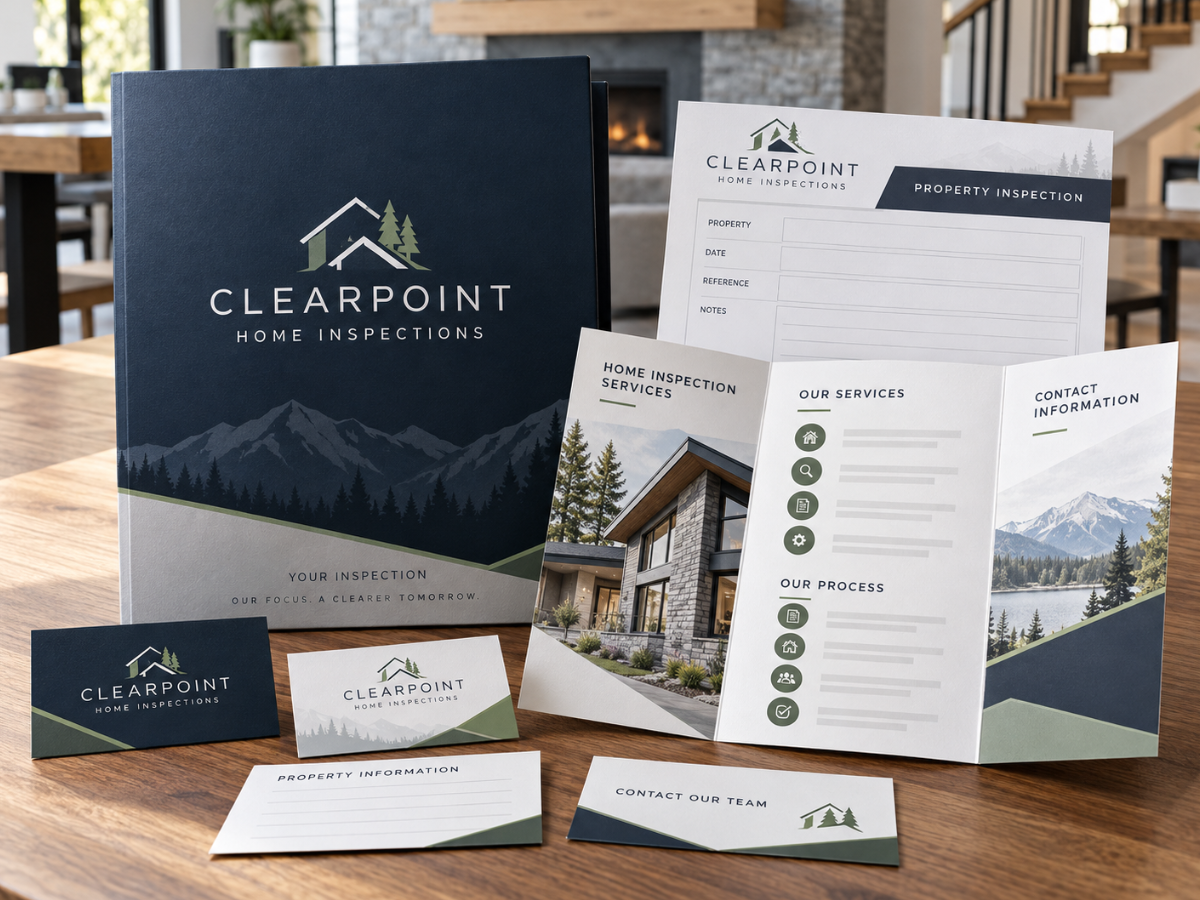
Home inspection companies benefit most from print that supports clear communication before and after an inspection. Professional business cards and referral materials help customers find the inspector, while branded report folders, appointment information and approved client checklists make the service easier to understand. The best print package reinforces the company's professionalism without replacing the detailed inspection report or introducing unapproved technical advice.
A home inspection is a service customers may use only a handful of times in their lives, yet the decisions surrounding it can carry significant financial consequences.
Many clients are buying their first property or preparing to make an important real estate decision. They may not know what the inspection includes, how the appointment works or what to expect from the final report.
The inspector's expertise matters most, but communication contributes to how professionally the service is experienced.
A clear business card makes contact straightforward. A concise service brochure helps clients understand the company's process. A well-organized report folder gives physical documents a proper home. A carefully written follow-up card tells customers how to reach the business with questions.
These pieces do not need elaborate designs. They need accurate information, practical layouts and a consistent identity.
This guide focuses on the printed customer communication and business-development materials that may support a residential home inspection company. Technical inspection procedures, professional obligations and report contents must be established by the inspection business and applicable requirements.
1. What Should a Home Inspection Company Print?
A home inspector's printed materials generally fall into three categories: marketing, appointment communication and customer documentation.
| Category | Possible Materials | Purpose |
|---|---|---|
| Marketing | Business cards, brochures, referral cards | Introduce the inspector and explain how to book |
| Before the appointment | Appointment cards, approved preparation sheets | Help customers understand scheduling and process |
| After the inspection | Report folders, approved information sheets, contact cards | Organize documents and support follow-up |
| Business operations | Letterhead, approved forms, notepads | Support consistent administration |
| Events and partnerships | Presentation materials, concise service flyers | Provide useful information to prospective clients and professional contacts |
Not every inspector needs a complete package. A sole practitioner using digital reports and online bookings may require fewer physical documents than a company with several inspectors and a dedicated office.
2. Business Cards Should Make Contact Simple
Business cards are particularly useful for home inspection businesses because referrals often begin with a brief conversation.
A real estate professional may want the inspector's contact information. A previous customer may recommend the company to someone preparing to purchase a home. An inspector attending a local business event may meet potential referral partners.
The card should make those introductions easy.
Prioritize:
- Inspector or company name.
- Company logo.
- Relevant professional title or approved designation.
- Business telephone number.
- Email or booking information.
- Website.
- Service area when useful.
A card should not attempt to explain the complete inspection process.
Pryntco offers Standard Business Cards for professional service businesses.
3. Should Inspectors Use Premium Business Cards?
A premium finish may be appropriate for a business that wants a more distinctive presentation, but the stock should be chosen for practical reasons as well as appearance.
An inspector who regularly writes appointment details or quick notes on a card may prefer a surface that supports handwriting.
An inspector using the card solely for contact sharing has more flexibility.
Good typography, accurate details and a clear layout are more important than choosing an expensive finish simply to appear established.
Consider where the card will be distributed, how it will be handled and whether employees actually need to write on it.
4. What Should a Home Inspection Brochure Explain?
A brochure can help customers understand the service before they book.
Unlike a general advertising flyer, the brochure has room to explain the process in an organized way.
Useful subjects may include:
- Types of inspection services the company actually offers.
- General service area.
- How appointments are requested.
- What customers can expect from the booking process.
- How the business provides reports.
- Approved information about inspector qualifications.
- Where clients can find current service details.
Every claim must be accurate and approved by the company.
Do not imply that an inspection guarantees a property's condition, identifies every possible issue or replaces specialized professional assessments.
5. How Detailed Should the Service Brochure Be?
Detailed enough to answer common preliminary questions, but not so detailed that the piece becomes a technical inspection manual.
A new client may want to know how long the appointment is expected to take, whether they may attend and when the report will be available.
Those answers depend on the company's actual service process and should not be invented during print design.
The brochure can also direct customers to the company's current website for complete service information.
For a business explaining several service categories, Pryntco offers Custom Brochures with different folding configurations.
6. Should Home Inspectors Print Their Service Prices?
Only when pricing is approved and sufficiently stable for the intended print quantity.
Inspection charges may depend on the property, location, service scope or additional work requested.
If pricing changes frequently or requires individual assessment, a fixed printed price list may become inaccurate.
A brochure can explain how to request an estimate or booking confirmation without inventing a standard price.
Keep changing commercial information separate from reusable company material whenever practical.
7. Can Printed Referral Materials Help?
A home inspection business may develop relationships with real estate professionals, mortgage-related service providers and other local contacts.
A referral card or concise service sheet can make it easier for someone to share the company's contact information.
It should explain what the inspector does and how a prospective customer can inquire.
A referral piece should not make unsupported claims about independence, certifications or inspection results.
Any referral arrangements should comply with applicable professional rules, disclosure obligations and company policies.
The printed piece itself can remain straightforward: recognizable branding, approved services and a reliable contact method.
8. Why a Report Folder Can Be More Useful Than Another Flyer
After an inspection, some clients may receive or retain several documents associated with the service.
Where physical documents are provided, a presentation folder can help keep them organized.
It can hold relevant documents without permanently binding everything together.
This is useful because certain information may be updated, replaced or supplied separately from the principal report.
For example, a company might provide an approved introductory letter, an official inspection document and a customer contact card, depending on its procedures.
Pryntco offers Presentation Folders for professional document packages.
9. Should the Folder Contain the Entire Inspection Report?
Only when the company's reporting process calls for physical documents.
Many inspection businesses deliver reports electronically. Printing every report may be unnecessary when clients receive a complete digital document.
A folder may still be useful for other approved customer information, but it should serve a real purpose.
Do not introduce a printed report package simply because it looks impressive in a marketing photograph.
The correct decision depends on what customers need and how the company maintains its official records.
10. Keep the Report Cover Professional and Restrained
If a company uses printed inspection reports, the cover should make the document identifiable without overwhelming its contents.
Possible identifying information may include:
- Company identity.
- Document type.
- Property or job reference supplied through the approved reporting process.
- Inspection date where applicable.
- Relevant report identification.
Any required confidentiality, professional or legal wording should be provided by the responsible organization.
Do not turn an inspection report cover into a sales advertisement. The reader should immediately recognize the document as a professional record.
11. Should Inspectors Print an Appointment Preparation Sheet?
A concise information sheet can be valuable if customers regularly ask the same questions before an inspection.
However, its contents must come from the company's actual procedures.
For example, the business may have approved instructions about appointment access, scheduling, customer attendance or providing relevant property information.
These instructions should not be copied from an unrelated inspector's website.
A useful preparation sheet explains what the customer needs to know before the appointment, who to contact and where to find current instructions.
Keep the wording specific, practical and easy to scan.
12. How Should Customer Checklists Be Designed?
A checklist should support the customer's actions rather than reproduce an inspector's technical evaluation procedure.
Use clear section headings, sufficient space and a logical order.
For example, a customer-facing checklist might organize company-approved tasks into sections such as:
- Appointment confirmation.
- Access arrangements.
- Relevant information to provide.
- Questions for the inspector.
- Where to find the report afterward.
The actual instructions must be determined by the inspection company.
A customer checklist is not a substitute for professional inspection standards, and it should not contain technical conclusions about the property's condition.
13. What About Forms Used During the Inspection?
Professional inspection forms require more care than ordinary marketing material.
They may support documentation, acknowledgements, internal workflow or other aspects of the company's procedures.
Any content involving inspection findings, contractual limitations or client authorization should be developed and approved by the responsible professionals.
From a print-design perspective, the priority is usability.
Fields should be easy to identify. Writing areas should be large enough. Important instructions should not be hidden in tiny lettering.
Print a sample and have an inspector test the form under realistic working conditions before approving a substantial order.
14. Could Carbonless Forms Be Useful?
Carbonless NCR forms can be appropriate when the business needs multiple physical copies of the same handwritten entry.
That could support certain administrative or acknowledgement processes if the company has established them.
However, NCR forms should not be introduced as a replacement for a comprehensive inspection report or the business's official documentation system.
Pryntco provides NCR Forms for business documentation.
Confirm the required form structure, copy count and other specifications for the particular project.
15. Are Branded Notepads Practical for Inspectors?
Notepads can be useful for general meeting notes, internal reminders and customer conversations.
They should not become an uncontrolled substitute for official inspection records.
A practical notepad uses modest branding while leaving most of the page clear for handwriting.
Large logos, decorative backgrounds and unnecessary contact details can make a working notepad less convenient.
If the business wants structured fields for a recurring process, a dedicated approved form may be more appropriate than a general notepad.
16. Should Inspectors Leave a Follow-Up Card?
A short follow-up card can provide customers with a convenient way to contact the company after the appointment.
For example, it may contain the business's correct telephone number, email address and website, along with a simple message about where to direct questions.
It should not promise additional services, warranties or consultation arrangements that the company does not provide.
The card may be included in an approved document package or handed to the customer when the interaction is complete.
Its value comes from reducing uncertainty, not from making another sales pitch.
17. How Should Review Request Cards Be Used?
Home inspection businesses may use a neutral review request to make it easier for customers to share genuine feedback.
The card should link to the correct review destination and invite an honest account of the customer's experience.
Avoid language that pressures customers to leave a positive rating or suggests that reviews will influence the inspector's professional conclusions.
Review requests should follow the relevant platform's policies and the business's professional obligations.
The most valuable feedback process is straightforward and voluntary.
18. Are Printed Flyers Useful for Local Marketing?
They can be, but the message and distribution should be carefully considered.
A home inspection company is not necessarily trying to reach every household in a neighbourhood. Its most relevant prospective customers may be people actively involved in a property transaction or considering a particular inspection service.
That means broad, untargeted distribution is not always the best use of a printing budget.
Printed flyers may support a legitimate local business event, approved referral partnership or service introduction.
Pryntco offers Custom Flyers for focused business marketing.
Keep the message grounded in the services actually provided.
19. Should Inspectors Use QR Codes?
A QR code can make a printed piece more useful when it leads directly to information the customer needs.
Possible destinations include:
- Official booking page.
- Current service information.
- Company contact page.
- Approved preparation instructions.
- A neutral review destination.
Label the code so readers understand its purpose.
Do not place private client reports or account information behind an unprotected public QR code.
Test every link before printing and provide a readable website address when appropriate.
20. What Should a Multi-Inspector Company Standardize?
As a business grows, inconsistent documents can become a problem.
Different inspectors may use different business cards, old versions of appointment sheets or conflicting service descriptions.
Establish approved templates for:
- Company branding.
- Individual contact cards.
- General service information.
- Customer preparation materials.
- Authorized administrative forms.
- Report presentation where applicable.
Keep personal and location-specific details separate from the shared design template.
This allows the business to update information without rebuilding every document from scratch.
21. How Many Pieces Should Be Ordered?
Use real activity rather than ordering every material in the same quantity.
For example, a fictional inspection company completing 30 appointments each month may choose to provide one printed customer information card per appointment.
That would suggest approximately 90 cards for a three-month period before adding an appropriate reserve.
But the same company may distribute only 20 referral brochures in an average month.
Those products need separate quantity forecasts.
Printed material containing changing service information should generally be ordered with more caution than evergreen branding.
22. What Should Be Checked Before Printing?
Have the business owner or designated professional review the complete package.
- Company name and contact information.
- Accurate professional titles and designations.
- Approved service descriptions.
- Correct booking instructions.
- Current office or service locations.
- Accurate website and QR destinations.
- Appropriate wording for forms and acknowledgements.
- Usable writing space.
- Correct print dimensions and orientation.
- Approved logo and colours.
- Required bleed and safe areas.
- Clear identification of document versions.
- Suitable handling of private client information.
Do not approve technical or contractual content solely because the layout looks good.
23. The Most Common Print Mistakes in Home Inspection Businesses
Problems often begin when materials are designed without understanding the inspection workflow.
- Using vague claims that imply every possible defect will be identified.
- Printing professional credentials that have not been verified.
- Making business cards difficult to read.
- Providing too much generic information in a brochure.
- Printing reports that are already managed effectively online.
- Creating customer instructions that do not match actual procedures.
- Using forms with inadequate writing space.
- Mixing confidential customer information with public handouts.
- Distributing outdated service or booking details.
- Printing excessive quantities of documents that change frequently.
- Allowing several inspectors to use conflicting artwork versions.
24. Building a Print Package That Supports the Inspection Experience
The right materials should reflect the way a home inspection company actually serves its clients.
Before the inspection, business cards, approved service information and appointment instructions can help customers understand how to get started.
During the process, professional forms and practical internal stationery may support the company's established procedures.
After the inspection, a well-organized document package and clear contact information can help clients keep the relevant materials together and know where to direct questions.
Marketing pieces should be professional and accurate. Operational documents should be easy to use. Neither should make claims that extend beyond the inspector's actual services or obligations.
That distinction is what makes the overall system useful.
Pryntco offers business cards, brochures, presentation folders, printed forms and other materials suitable for coordinating a professional service brand.
For custom document packages, specialized forms or several related products, request a quote from Pryntco with the approved artwork, required quantities and intended uses.

