
What Should a Food Truck Print? Menus, Signs, Stickers and Local Marketing
What Should a Food Truck Print? Menus, Signs, Stickers and Local Marketing
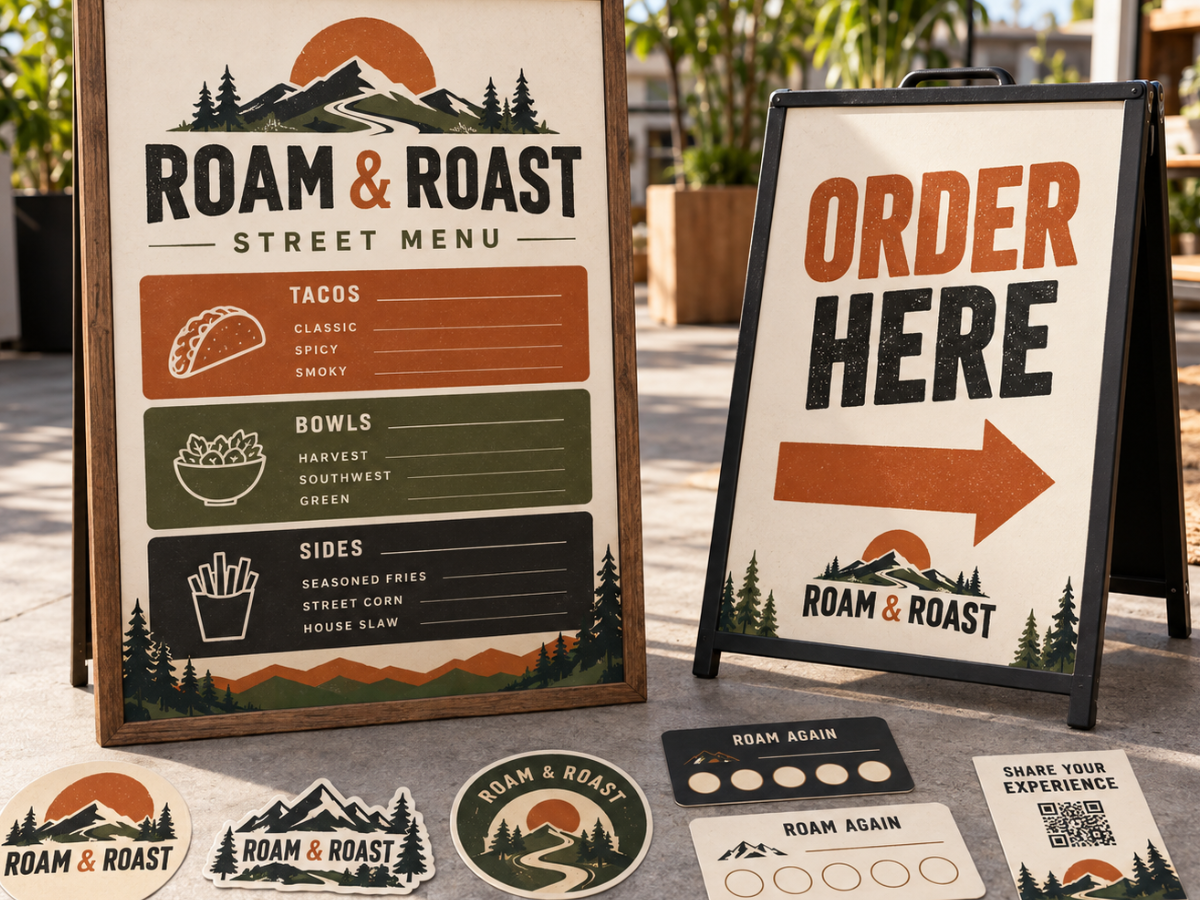
A food truck needs print that works quickly. Customers should be able to identify the brand, understand the menu, see prices, know how to order and find the business again after the truck moves to another location. The strongest print system separates permanent branding from information that changes every day or every event.
A food truck has many of the same marketing needs as a restaurant, but the physical environment is completely different.
The business moves.
The customer may see it for the first time at a festival, office complex, brewery, market or private event.
There may be a line forming while new customers are still trying to understand the menu.
Products can sell out during service.
Prices, specials and locations can change.
That means the printed materials need to communicate quickly and remain flexible.
Pryntco’s existing Restaurant Menu Printing Guide covers menu size, finish and layout in depth. This guide focuses specifically on how those menus and other printed pieces work together around a mobile food-truck operation.
1. What Printed Materials Does a Food Truck Commonly Need?
A practical food-truck setup may include:
- Main menu
- Secondary or seasonal menu
- A-frame sign
- Product or special cards
- Branded stickers
- Business cards
- Loyalty cards
- Review cards
- Event signage
The truck does not need every format. Start with the pieces that reduce customer confusion.
2. What Should Customers Understand Before They Reach the Window?
Ideally, they should already know:
- Business name
- Type of food
- Approximate menu structure
- Where to order
That makes the service window more efficient and reduces the amount staff need to explain repeatedly.
3. What Should the Main Food Truck Menu Do?
The main menu should help customers make a decision quickly.
Prioritize:
- Categories
- Item names
- Short descriptions where needed
- Accurate prices
Do not turn the main ordering area into a long brand story.
4. Should a Food Truck Use a Single-Sided or Double-Sided Menu?
Either can work.
A single-sided menu can be effective when the offering is short.
A double-sided menu provides more room without increasing the physical footprint.
Pryntco’s current Menu Printing supports both single- and double-sided configurations.
5. Should the Menu Show Every Item the Truck Has Ever Sold?
No.
Print the menu that reflects the real current offering.
Old or occasional items create unnecessary questions when customers cannot actually order them.
6. How Should Menu Categories Be Organized?
Use categories customers understand immediately.
For example:
- Mains
- Sides
- Drinks
- Combos
The exact categories should match the business rather than a generic restaurant template.
7. How Should Food Truck Prices Be Displayed?
Place the price close to the correct item and use one consistent format.
Before printing, confirm:
- Item price
- Size differences
- Add-ons
- Combo pricing
One incorrect price can make an otherwise reusable menu difficult to keep in service.
8. What If Prices Change Frequently?
Separate changing prices from long-lived branding when possible.
A truck with frequent price changes may use:
- Replaceable price panel
- Small menu insert
- Current QR-linked online menu
Do not rebuild an expensive permanent display every time one item changes.
9. How Should Sold-Out Items Be Handled?
Prepare a clean system before service begins.
Options may include:
- Removable SOLD OUT card
- Replaceable menu panel
- Small magnetic or mounted indicator where suitable
A crossed-out marker correction may be acceptable in an emergency, but it should not become the normal presentation.
10. Should Food Photography Be Used on the Menu?
It can be useful when one strong image helps customers understand the product.
Use original high-quality photography.
Avoid filling the menu with many small photos that compete with:
- Item names
- Descriptions
- Prices
11. Should the Menu Include Long Food Descriptions?
Usually not.
Customers in line need enough information to understand the item, not a paragraph about it.
Use concise descriptions where the name alone is unclear.
12. How Should Dietary or Allergen Information Be Handled?
The food business should supply and approve all ingredient, allergen, dietary and regulated information.
Do not invent or assume claims such as:
- Gluten-free
- Vegan
- Nut-free
- Allergen-free
unless the responsible business has verified that wording.
13. Should a Food Truck Use an A-Frame Sign?
An A-frame can be useful when customers approach from a walkway or event path.
Possible messages include:
- ORDER HERE
- TODAY’S SPECIAL
- FOOD TRUCK AHEAD
- PICKUP THIS WAY
Pryntco’s A-Frame Sign Guide covers readable temporary signage in more detail.
14. Should the A-Frame Repeat the Full Menu?
Usually not.
The A-frame works better as a traffic or promotional sign.
Use it for one message rather than turning it into a second menu that customers need to stop and study.
15. When Is a Small Poster Useful?
A poster can highlight:
- Featured item
- New product
- Special event menu
- Catering availability
Keep temporary offers on pieces that are easy to replace.
16. Should the Truck Use Branded Stickers?
Stickers can be useful for:
- Takeout packaging
- Sealing bags
- Brand giveaways
- Event promotion
The sticker material should be chosen for the actual surface and intended use.
17. When Are Custom Shape Stickers Worth Using?
A custom shape can make sense when the logo, mascot or food icon has a recognizable silhouette.
Pryntco’s Custom Shape Sticker Guide explains cut paths, borders and artwork preparation.
18. Should Packaging Stickers Carry the Full Menu?
No.
Packaging stickers work best with concise branding or product identification.
A simple sticker may contain:
- Logo
- Product name
- Short QR destination
19. Should a Food Truck Have Business Cards?
They can be extremely useful because the truck moves.
A business card can help customers find:
- Website
- Social account
- Catering inquiry
- Private-event booking
20. Should the Card List the Truck’s Daily Location?
Usually not if the schedule changes.
Use a stable website, social profile or QR-linked schedule instead.
Do not print a location that may become incorrect next month.
21. Should a Food Truck Use Loyalty Cards?
They can work well when customers regularly encounter the truck in the same neighbourhoods or recurring events.
A physical loyalty card is especially practical when the program is simple.
Pryntco’s Loyalty Card Guide covers stamp and punch-card planning.
22. What Should the Loyalty Card Explain?
Customers should understand:
- What earns a mark
- How many marks are needed
- What the genuine reward is
Do not make the program difficult to explain during a busy lunch rush.
23. Should a Food Truck Use Review Cards?
Yes, when used appropriately after a genuine customer experience.
A small card can make the correct review page easier to find.
Pryntco’s Google Review Card Guide recommends neutral review requests and tested QR codes.
24. Should a Discount Be Offered for a Positive Review?
No.
Review requests should invite genuine feedback rather than attempt to influence the rating or content.
Keep loyalty promotions and review requests separate.
25. Where Should a Review Card Be Given?
Possible moments include:
- With the completed order
- Inside a takeout bag
- At the pickup counter
Do not create unnecessary pressure while the customer is still ordering.
26. How Should QR Codes Be Used on a Food Truck?
A QR code can connect customers to information that changes more frequently than the printed pieces.
Possible destinations include:
- Current menu
- Location schedule
- Online ordering
- Catering inquiry
27. Should Every Sign Have the Same QR Code?
No.
Use the destination appropriate to the context.
A menu may link to online ordering while a business card may link to the current truck schedule.
Label the action clearly.
28. How Should the Truck Promote Catering?
Use a separate piece if catering is an important revenue stream.
A small flyer or card may explain:
- Types of events served
- Inquiry method
- Website
- QR code
Do not overload the ordering menu with catering details.
29. What Print Is Useful at Festivals and Special Events?
The truck may need:
- Event-specific menu
- A-frame
- Pickup sign
- Sold-out indicators
- Temporary special card
Keep dated event information separate from permanent branding.
30. How Should Event-Specific Pricing Be Handled?
If prices or packages genuinely differ for an event, create an event-specific menu rather than manually altering the standard menu.
Confirm every price before printing.
31. Should the Truck Use Vehicle Magnets?
Potentially, when the vehicle has a suitable magnetic surface and the use case calls for removable graphics.
Pryntco’s current Car Magnets are removable magnetic signs offered in two current sizes.
Confirm material compatibility with the actual vehicle before relying on magnets.
32. What About Window Decals?
Window decals may support branding or information where the truck or service setup has appropriate glass.
Pryntco’s current Window Decals are custom-sized.
Do not obstruct legally required visibility or operating areas.
33. How Should Changing Locations Be Communicated?
Keep the location schedule digital when it changes frequently.
Printed pieces can direct customers to:
- Current web schedule
- Social profile
- Event calendar
This keeps business cards and loyalty cards useful even when the route changes.
34. Which Printed Materials Should Stay Evergreen?
Good evergreen candidates include:
- Logo stickers
- Business cards
- Loyalty cards
- Main brand signs
Avoid putting short-lived event dates or daily locations on pieces intended for long-term reuse.
35. Which Pieces Should Be Easy to Replace?
Keep changing information on replaceable materials such as:
- Menu
- Special card
- Event sign
- Price list
That protects the useful life of the larger brand assets.
36. What Should Be Checked Before Each Service Day?
Confirm:
- Current menu
- Correct prices
- Available items
- Working QR codes
- Correct event-specific signs
- Enough loyalty and review cards
37. What Are the Most Common Food Truck Print Mistakes?
Common problems include:
- Menus that are too difficult to read from the line.
- Old prices remaining in circulation.
- Permanent graphics carrying temporary locations.
- Too many small promotional signs.
- QR codes with no explanation.
- Review requests mixed with incentives.
- No take-away contact method for customers who want the truck again.
38. What Should a Food Truck Print First?
Start with the ordering experience.
Create a clear menu with current items and prices that customers can understand before they reach the service window.
Add one portable sign when people need help finding the truck, seeing a special or understanding where to order.
Use stickers and packaging pieces to reinforce the brand after purchase without adding unnecessary clutter.
Then make the mobile business easy to find again.
A business card, loyalty card or clearly labelled QR code can connect customers to the current schedule, online ordering or catering inquiries.
Keep permanent branding separate from changing locations, prices and event information.
That distinction is especially important for a business that physically moves.
A strong food-truck print system should make the line easier to navigate, the menu easier to order from and the business easier to remember after the truck leaves.
Food businesses can explore Pryntco’s Menu Printing, A-Frame Signs and other Print Marketing Materials.
For a coordinated food-truck marketing package, contact Pryntco or submit a custom quote request.

