
Print Marketing for Fitness Studios: Schedules, Signage and Member Information
Print Marketing for Fitness Studios: Schedules, Signage and Member Information
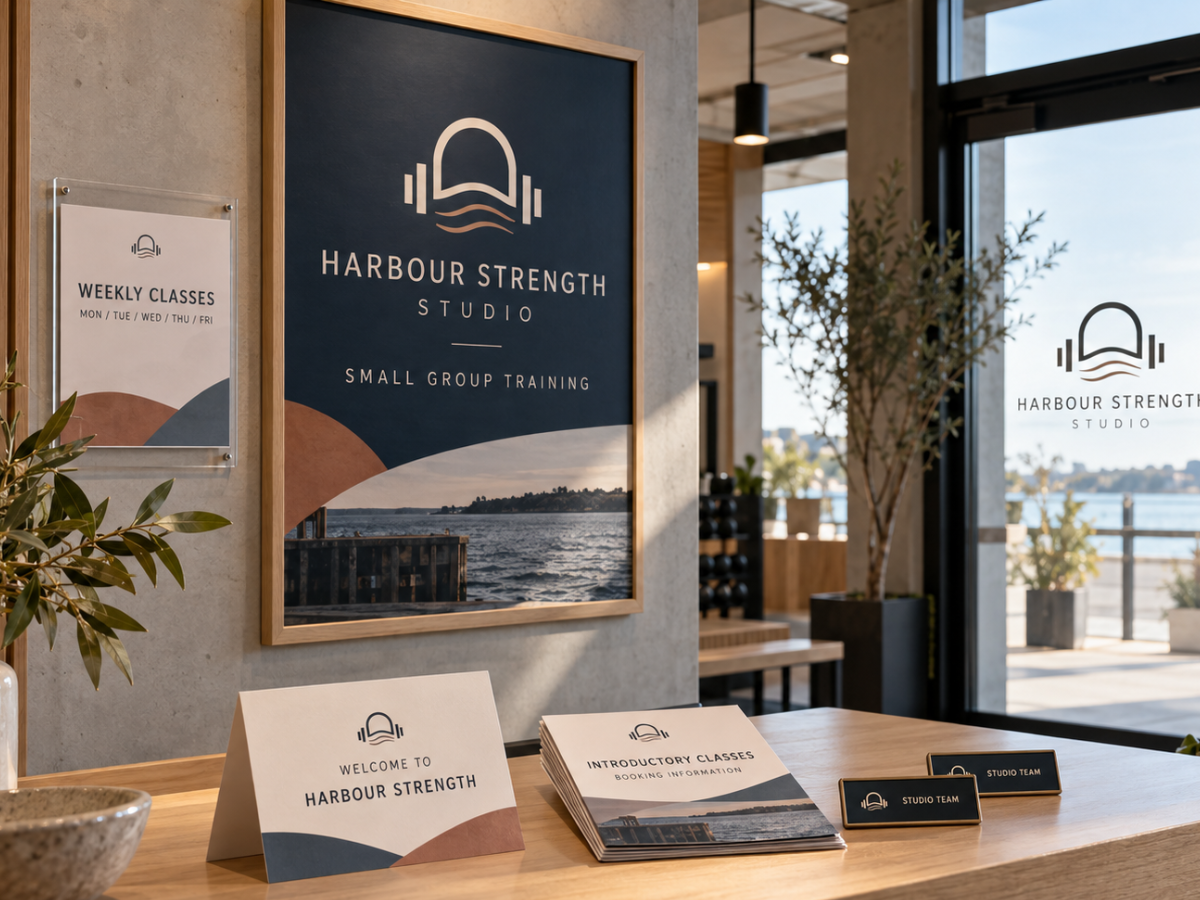
A fitness studio's print materials should help prospective members understand the business and existing members find accurate information. Keep permanent branding separate from changing schedules, instructors, membership offers and booking details. Use printed signs and handouts where they make the studio easier to navigate or the service easier to understand, rather than duplicating information already managed more reliably online.
A new customer walks past a fitness studio and notices an introductory class advertised in the window. They stop, read the details and decide to visit.
Inside, the reception desk has a printed timetable, but the class they wanted isn't listed. An employee explains that the timetable was printed several weeks ago and the schedule has since changed.
The marketing worked well enough to bring someone through the door. The information inside the studio made the next step unnecessarily difficult.
Fitness businesses have a particular communication challenge. Their identity, location and general services may remain stable for years, while class times, instructors, capacity, promotions and membership arrangements can change frequently.
Printed materials are useful when they're designed around that distinction.
A permanent sign can establish the studio's identity. A poster can introduce a new class. A welcome card can explain where to find booking information. But a large printed schedule that becomes inaccurate every fortnight may create more work than it saves.
The aim is to build a practical set of materials that supports the way the studio operates.
Start With What Members Actually Need to Know
Before ordering anything, follow the experience of three different visitors: someone who has never entered the studio, a new member attending their first class and an established member returning for a regular session.
Each person needs different information.
A prospective customer may want to identify the types of classes available, find the entrance and understand how to make an inquiry.
A first-time visitor may need directions to reception, information about booking or checking in and guidance on where to obtain studio policies.
An existing member may only need an updated timetable or notice about a class change.
Once those needs are identified, the appropriate print products become clearer.
| Information | Suggested Format | Expected Change Frequency |
|---|---|---|
| Studio name and identity | Window graphic or permanent sign | Infrequent |
| General class categories | Service poster or brochure | Occasional |
| Weekly timetable | Replaceable poster or handout | Potentially frequent |
| Current introductory promotion | Temporary poster or flyer | Campaign-specific |
| Booking and membership guidance | Welcome card or information sheet | When procedures change |
| Room identification | Appropriate directional or door sign | Usually infrequent |
The printed format should match the useful life of the information.
Window Graphics Should Explain the Studio, Not Everything About It
Window graphics can introduce a business to people walking past, particularly when the studio operates behind large glass panels.
The message should be understandable within a short glance.
A studio offering Pilates, yoga and small-group strength training could use its name, those three service categories and one clear booking destination.
It generally doesn't need the complete weekly timetable, instructor biographies and every membership package printed across the glass.
Those details are better communicated inside the studio or through an appropriate online page.
Consider how the windows are used before selecting a graphic. Covering an entire window may interfere with natural light or visibility, and certain locations have building or safety requirements that limit where graphics may be applied.
Pryntco's Window Decals can support studio branding and approved promotional messages. Measurements and installation requirements should be confirmed for the specific glass surfaces.
When an A-Frame Sign Makes Sense
A studio located on a busy commercial street may benefit from a sidewalk sign that tells pedestrians what is available inside.
This can be useful for a specific introductory class, open-house event or time-limited promotion.
The message should be simple enough to read while walking.
For example:
INTRO TO PILATES
New Student Sessions
Ask Inside About Booking
This is illustrative wording, not a claim that any particular studio offers these sessions.
The sign should not attempt to reproduce the studio's full programme.
Placement requires particular care. A sidewalk display must not obstruct pedestrians, accessible routes or entrances, and the business should confirm local requirements before installing one.
Pryntco offers A-Frame Signs for suitable business and promotional applications.
Should a Studio Print Its Weekly Class Schedule?
Yes, when members genuinely benefit from seeing it in a fixed location. But the format needs to allow for changes.
A printed timetable may work well near reception, beside the relevant studio room or on an information wall.
Start by deciding which details belong on it.
Members commonly need the day, class name, start time and any relevant booking instruction. Additional information should be included only when it helps them make a decision.
A dense timetable becomes difficult to use when every class is accompanied by lengthy descriptions and several symbols.
Make the important information readable from the intended viewing position.
Where schedules change regularly, use an easily replaceable printed sheet or poster rather than an expensive permanent board.
Pryntco provides Small Posters for indoor notices and promotional displays. The correct size should reflect the amount of schedule information and where it will be displayed.
How to Keep Printed Schedules From Becoming Outdated
The most important part of a timetable isn't its design. It's the process for keeping it accurate.
Assign responsibility for updating the printed version whenever the official schedule changes.
Put an effective date or revision date on the document so employees know which version belongs on the wall.
Maintain one approved master timetable rather than allowing different instructors to create their own versions.
If the studio relies on a booking platform that reflects capacity and cancellations, make that system the authoritative source for live availability.
The printed schedule can then direct members to the current booking page without pretending that its own information is updated in real time.
A QR code may help, provided its destination is clearly identified and it is tested at its printed size.
For studios with frequent schedule adjustments, a broad class overview and a direct link to current availability may be more reliable than a detailed permanent timetable.
What About Last-Minute Class Changes?
An instructor absence, room change or cancelled session should not require the studio to redesign its main branding.
Temporary notices belong in a separate communication system.
A consistent notice template can make changes easy to recognize, with space for the affected class, date, revised arrangement and approved contact or booking instructions.
Remove the notice once it is no longer relevant.
Do not assume a paper notice is sufficient for customers who are already travelling to the studio. The business should use its established booking and customer communication methods for time-sensitive updates.
Print helps people who are physically on site; it cannot replace timely direct communication.
Membership Information Needs Careful Version Control
Membership prices, introductory offers, billing arrangements and cancellation conditions should not be treated as casual promotional copy.
These details can materially affect a customer's decision and may be subject to applicable consumer-protection requirements.
If the studio provides printed membership information, it should come from approved current terms.
A simple service flyer may describe available membership categories and explain how to obtain complete details. It should not summarize complicated conditions in a way that misleads customers.
Keep promotional offers separate from evergreen branding when their conditions are likely to change.
For instance, a temporary introductory offer should be printed as a campaign-specific piece rather than permanently incorporated into the studio's general service brochure.
Pryntco's Flyers can be used for approved promotional and service information.
A Useful Welcome Card for New Members
The first visit can involve several unfamiliar steps: locating reception, checking in, finding the right room and understanding how the business communicates schedule changes.
A welcome card or concise information sheet can make the process easier.
It might explain where to find:
- Current class schedules.
- Official booking and cancellation instructions.
- Studio contact details.
- Approved arrival guidance.
- Membership support.
- Relevant facility information.
Keep private account details, access credentials and sensitive information out of general printed handouts.
A welcome card should guide members toward the appropriate information rather than reproduce every operational policy in tiny print.
If the studio's procedures differ between locations, provide location-specific versions with clear identification.
Room Identification and Internal Wayfinding
Not every studio consists of one open exercise space.
Some facilities contain several rooms, reception areas, consultation spaces and changing facilities. Members may arrive just before a scheduled class and need to identify the correct room quickly.
Simple room labels and directional signs can reduce confusion.
Use names that match the booking system. If a class is booked in "Studio B", the physical entrance should not be labelled "Training Room 2" unless that relationship is clearly explained.
Don't place non-essential decorative information above the room name if it interferes with readability.
Required safety, accessibility and emergency signage must follow applicable rules and should not be replaced by ordinary custom promotional signs.
For non-regulatory information boards and compatible indoor displays, Pryntco has Foamcore Signs. Permanent mounting and regulated identification requirements need separate evaluation.
Should Trainers and Reception Staff Have Name Tags?
Staff identification is useful when members interact with several instructors or employees.
A new visitor may find it easier to ask for help when the person behind reception is clearly identified. At an introductory event, a name tag can also distinguish instructors from attendees.
The business can choose whether to display individual first names, approved roles or another identifier consistent with its policies.
Keep the lettering readable and avoid printing unnecessary personal information.
Pryntco offers Name Tags for business and event settings.
Marketing for Workshops and New Programmes
Fitness studios often introduce a new class, workshop or short series to a particular audience.
These campaigns benefit from a printed message that stays focused on one offer.
A workshop poster should normally establish the programme name, intended audience, confirmed date and location, and booking method.
A flyer may carry more detail when staff distribute it after classes or at an approved community event.
Don't order the same quantity for every format. A poster displayed at the studio entrance may need one or two copies, while a handout depends on actual distribution.
Be cautious about printing unapproved statements concerning fitness outcomes, health improvements or guarantees. Programme descriptions should accurately reflect the instructor's services.
Do Branded Shirts Help the Studio?
Branded clothing can help identify staff, particularly when several instructors work in the same space or the studio participates in off-site events.
It may also be suitable for optional member merchandise.
However, staff identification and retail merchandise have different requirements.
Staff garments should be selected for the actual work and dress expectations. Merchandise needs a design that members would want to wear independently of the studio.
Pryntco's Custom Apparel collection includes shirts, polos, tanks and other branded clothing. Garment suitability, available sizes and decoration options depend on the selected product.
Avoid ordering large quantities of a new design before confirming the intended users, sizes and actual demand.
Quantity Planning Without Unnecessary Waste
Different printed materials need different quantity forecasts.
Permanent signage should be counted by approved display location.
Member welcome cards can be estimated using expected new memberships over a defined period.
Workshop flyers should reflect realistic distribution plans, not the studio's entire membership count.
For a fictional example, a studio expecting 35 new memberships over a two-month period might plan for 35 welcome cards plus a reasonable reserve. That doesn't justify ordering 500 cards if the policies printed on them may change.
Keep a record of which documents are distributed and which remain unused. A small amount of tracking can substantially improve future orders.
Before You Send the Files to Print
Review every piece against the current studio information rather than checking the artwork only for appearance.
- Confirm the business name, location and contact details.
- Verify all class names, dates and times.
- Check that booking and QR-code destinations work.
- Use approved membership and promotional wording.
- Distinguish permanent branding from temporary information.
- Confirm final dimensions and display locations.
- Check text at its actual printed size.
- Use the correct product artwork templates.
- Identify who is responsible for replacing outdated materials.
Print That Works With the Studio's Operations
A fitness studio's printed materials should make the business easier to understand and the space easier to use.
Permanent window branding can help people recognize the studio. Replaceable posters can communicate current schedules or programmes. Welcome cards can direct members toward reliable booking information, while signs and staff identification help visitors find their way.
The most important decision is what not to print permanently.
Class availability, instructor schedules and short-lived offers need a system that accommodates changes. Keeping those details separate from the studio's long-term branding protects the printing budget and reduces confusion.
For signage, flyers, posters, name tags and coordinated studio materials, review Pryntco's relevant print products. Businesses planning several items together can request a custom quote with their approved artwork, dimensions and quantities.

