
How to Turn a Photo Into a Custom Puzzle Without Losing the Details
How to Turn a Photo Into a Custom Puzzle Without Losing the Details
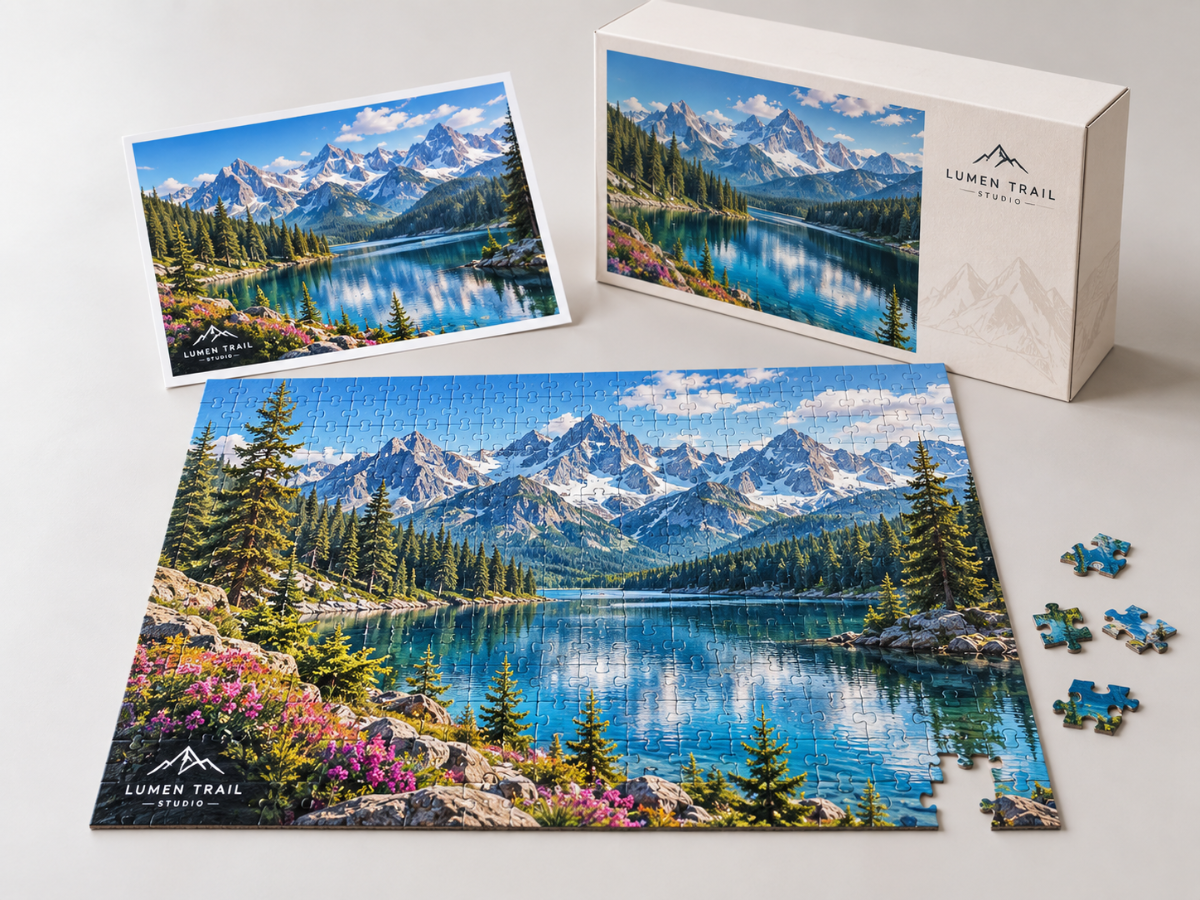
A good photo does not automatically make a good puzzle. The image also needs enough detail, contrast and composition to remain interesting after it has been divided into pieces. Choose the photo with the finished puzzle in mind, not just the original screen image.
A custom puzzle turns a photograph or piece of artwork into something people interact with instead of simply looking at.
That makes it different from a canvas print, framed photo or promotional card.
The image is broken apart, handled, studied and reconstructed piece by piece.
That changes what makes the artwork successful.
A photograph with one face against a blank wall might make a beautiful portrait but an unnecessarily repetitive puzzle.
A detailed scene may be much more interesting to assemble.
Small text that looks perfectly clear on a computer screen may become distracting once puzzle cuts pass through it.
Pryntco’s current Custom Photo Puzzles are available in 110-piece and 252-piece formats and can use photos, artwork or branded designs.
The key is preparing the image for the product rather than simply uploading the first photograph available.
1. What Is a Custom Photo Puzzle?
A custom photo puzzle is a jigsaw puzzle created from a customer-supplied photograph, illustration or branded design.
It can be used for:
- Personal gifts
- Corporate gifts
- Merchandise
- Events
- Creative promotions
2. What Makes a Photo Puzzle Different From a Photo Print?
A normal print is meant to be viewed as one complete image.
A puzzle is meant to be disassembled and rebuilt.
That means the image needs visual clues throughout the composition.
Variation in colour, shapes, subjects and detail can make the assembly experience easier to follow.
3. What Kinds of Photos Work Well as Puzzles?
Images with visual variety usually translate well.
Examples include:
- Travel photography
- City scenes
- Group photographs
- Architecture
- Illustration
- Detailed landscapes
The image does not need to be busy, but it should provide enough variation to remain interesting across the puzzle.
4. What Photos Can Be Difficult to Turn Into a Puzzle?
Large areas containing very similar colour or texture can create sections with few obvious visual clues.
Examples may include:
- Large blank sky
- Plain white wall
- Single dark background
- Large area of one flat colour
This is not necessarily wrong, but it changes the experience of assembling the puzzle.
5. Can a Family or Group Photo Become a Puzzle?
Yes.
A group photograph can work particularly well because different:
- Faces
- Clothing
- Background elements
- Colours
create useful visual variation.
6. Can Businesses Use Custom Photo Puzzles?
Yes.
Business uses may include:
- Client gifts
- Employee gifts
- Event merchandise
- Branded artwork
- Team activities
The concept should fit the audience rather than being used simply because the product is unusual.
7. Can a Puzzle Be Used as Branded Merchandise?
Yes when the artwork itself has enough appeal.
For example:
- Local illustration
- Landmark photography
- Original artwork
- Brand character
can create merchandise that works even when the logo is not the main feature.
8. Can a Puzzle Be Used as an Employee Gift?
It can.
Possible concepts include:
- Team photograph
- Company milestone
- Office illustration
- Custom artwork connected to the business
A generic oversized logo may be less interesting to assemble than artwork designed specifically for the puzzle.
9. What Resolution Should the Photo Have?
Start with the highest-quality original file available.
The required image quality depends on the final print dimensions.
Do not rely on:
- Screenshot
- Social-media download
- Small website thumbnail
when the original image is available.
10. Why Can a Photo Look Sharp on a Phone but Weak in Print?
A phone screen displays the image at a relatively small physical size.
Printing exposes the actual amount of image information available.
When a small file is enlarged, missing detail becomes more noticeable.
Pryntco’s Image Resolution Guide explains why pixel dimensions and final print size matter.
11. Should You Use the Original Camera File?
Whenever possible, yes.
The original file normally provides more image information than a screenshot or image downloaded after being resized by another platform.
Return to the original phone, camera, cloud folder or photographer delivery when possible.
12. How Should the Photo Be Cropped?
Crop according to the exact puzzle dimensions.
Do not assume every photograph naturally fits the product shape.
Before approving the crop:
- Check important faces.
- Check the main subject.
- Check the edges.
- Check the overall balance.
13. Should Faces Be Kept Away From the Edge?
Yes.
Important faces and subjects should have enough breathing room so they are not awkwardly cut by the outer trim or compressed against the edge.
Give the composition some space.
14. Will Puzzle Cuts Go Through Faces or Text?
They can.
The image is physically divided into puzzle pieces.
Do not build the artwork as though every important feature will remain untouched by a cut line.
The overall image needs to remain understandable even when separated.
15. Should You Add Text to a Photo Puzzle?
You can, but keep it large and simple.
Possible uses include:
- Short event name
- Family name
- Year
- Short message
Long paragraphs do not belong on a puzzle.
16. How Large Should Puzzle Text Be?
Large enough to remain readable when piece cuts cross through letters.
Avoid:
- Tiny captions
- Fine script
- Long URLs
- Small disclaimers
A short headline will usually work better.
17. Can a Business Logo Be Added?
Yes.
However, the logo does not need to dominate the entire image.
A subtle brand mark can identify the company while allowing the photograph or artwork to remain the reason someone wants to assemble the puzzle.
18. Where Should the Logo Be Placed?
Choose an area where it remains visible without covering the main subject.
Possible locations include:
- Lower corner
- Integrated sign within the artwork
- Simple border area
Keep enough contrast around the logo.
19. Should the Puzzle Have a Border?
It can.
A border can provide space for:
- Logo
- Short message
- Date
But a very narrow border can be visually awkward when cut into puzzle pieces.
Use a border only when it adds to the design.
20. Is High Contrast Helpful?
Yes.
Contrast can make different areas easier to recognize during assembly.
This may come from:
- Colour changes
- Objects
- Lighting
- Patterns
The image does not need artificial contrast, but clear visual differences can improve the experience.
21. Is a Very Busy Photo Better?
Not automatically.
Too much visual noise can make the final image feel confusing.
The best photograph usually has a clear subject plus enough supporting detail to create variation.
22. Can You Make a Puzzle From a Photo Collage?
Yes.
A collage can create strong variation between puzzle areas.
Keep the number of images reasonable so individual photographs remain large enough to recognize.
23. How Many Photos Should Go Into a Collage Puzzle?
There is no universal number.
Use enough images to tell the story without turning every photo into a tiny thumbnail.
For a group, event or anniversary puzzle, a small set of strong photographs is usually easier to appreciate than dozens of miniature images.
24. Can Artwork Be Used Instead of Photography?
Yes.
Pryntco’s current Photo Puzzle product can use photos, artwork and branded designs.
Good artwork options include:
- Illustration
- Pattern
- Poster-style art
- Original digital art
25. Can a Map or City Illustration Become a Puzzle?
Yes, provided the artwork is high quality and the details remain readable at the final size.
Maps and city scenes can work especially well because they naturally contain:
- Shapes
- Landmarks
- Colours
- Distinct sections
26. How Do 110 Pieces and 252 Pieces Change the Experience?
The current Pryntco Photo Puzzle is offered in both 110-piece and 252-piece formats.
The 252-piece version contains more individual pieces to assemble, while the 110-piece format uses fewer pieces.
Choose according to:
- Audience
- Desired assembly experience
- Artwork
27. Which Piece Count Is Better for a Promotional Gift?
That depends on how much time you expect the recipient to spend with it.
A lower piece count may feel more approachable for a broad promotional audience.
A higher count may suit someone who enjoys puzzles and wants a longer activity.
Do not choose purely because a larger number sounds more premium.
28. Should the Box Show the Finished Image?
A reference image can help the person understand what they are assembling.
Pryntco’s current Photo Puzzle product is supplied in a presentation box.
The packaging and finished artwork should be reviewed together when planning the gift experience.
29. Should a Business Add a Separate Card to the Puzzle?
It can be useful when the business wants to explain:
- Why the gift was sent
- Event context
- Short thank-you message
That allows the puzzle artwork itself to remain clean.
30. Should a QR Code Be Printed on the Puzzle?
Usually, a separate insert or package card is the safer place for a functional QR code.
Puzzle cuts can interfere with a code printed directly across the artwork.
If a QR code is essential, test it carefully at final size and in the actual production layout.
31. Can Customer Photos Be Used in a Commercial Puzzle?
Only when the business has the appropriate permission or rights to use the image.
Do not assume a photograph can be reproduced commercially simply because it was sent to the company.
Clarify the intended use where necessary.
32. Can Employee Photos Be Used?
They can when the business has appropriate permission for the intended use.
Consider whether the puzzle is:
- Internal gift
- Public merchandise
- Promotional item
Those uses are not necessarily the same.
33. Can an Event Photo Become a Follow-Up Gift?
Yes.
A strong group or event photograph can become a memorable post-event piece for:
- Employees
- Speakers
- Clients
- Participants
Make sure the image is high enough quality before building the artwork.
34. How Many Custom Puzzles Should a Business Order?
Base quantity on the actual audience.
Possible groups include:
- Employees
- Clients
- Event guests
- Merchandise inventory
A personalized or dated puzzle may not be useful for another campaign later, so avoid unnecessary surplus.
35. Will Printed Colours Match the Screen Exactly?
Not necessarily.
Screens emit light while printed products reflect it, and production materials can influence appearance.
Prepare the file carefully and avoid expecting exact monitor-to-print colour matching.
Pryntco’s CMYK vs RGB Guide explains the broader difference.
36. What Should Be Checked Before Uploading the Puzzle Artwork?
Confirm:
- Correct puzzle format
- High-quality source image
- Correct crop
- Readable text
- Logo placement
- Spelling
- Image permissions
Review the full composition at the actual finished proportions.
37. What Are the Most Common Custom Photo Puzzle Mistakes?
Common problems include:
- Using a screenshot instead of the original photo.
- Cropping faces too close to the edge.
- Using large areas of nearly identical colour without realizing how they affect assembly.
- Adding text that is too small.
- Making the logo more important than the image.
- Using too many photos in a collage.
- Assuming a screen preview guarantees identical printed colour.
- Using photos without appropriate permission.
38. How Do You Turn a Good Photo Into a Good Custom Puzzle?
Start with the original high-resolution image.
Choose a photograph or artwork with a clear subject and enough visual variation to remain interesting when divided into pieces.
Crop the image for the exact puzzle format rather than forcing the original proportions into the layout.
Keep important faces and objects away from the outer edge.
If you add text, keep it short and large. If you add a logo, treat it as supporting branding rather than covering the image.
Then choose the piece count according to the recipient and the experience you want to create.
The finished puzzle should still be enjoyable when the company logo is ignored.
That is what makes it more than a promotional novelty.
Pryntco’s current Custom Photo Puzzles support both photography and original artwork for gifts, merchandise and promotional projects.
For a custom photo or branded artwork project, contact Pryntco or submit a custom quote request.

