
Canvas Prints or Photo Panels? Choosing the Right Display for Photos, Artwork and Branded Décor
Canvas Prints or Photo Panels? Choosing the Right Display for Photos, Artwork and Branded Décor
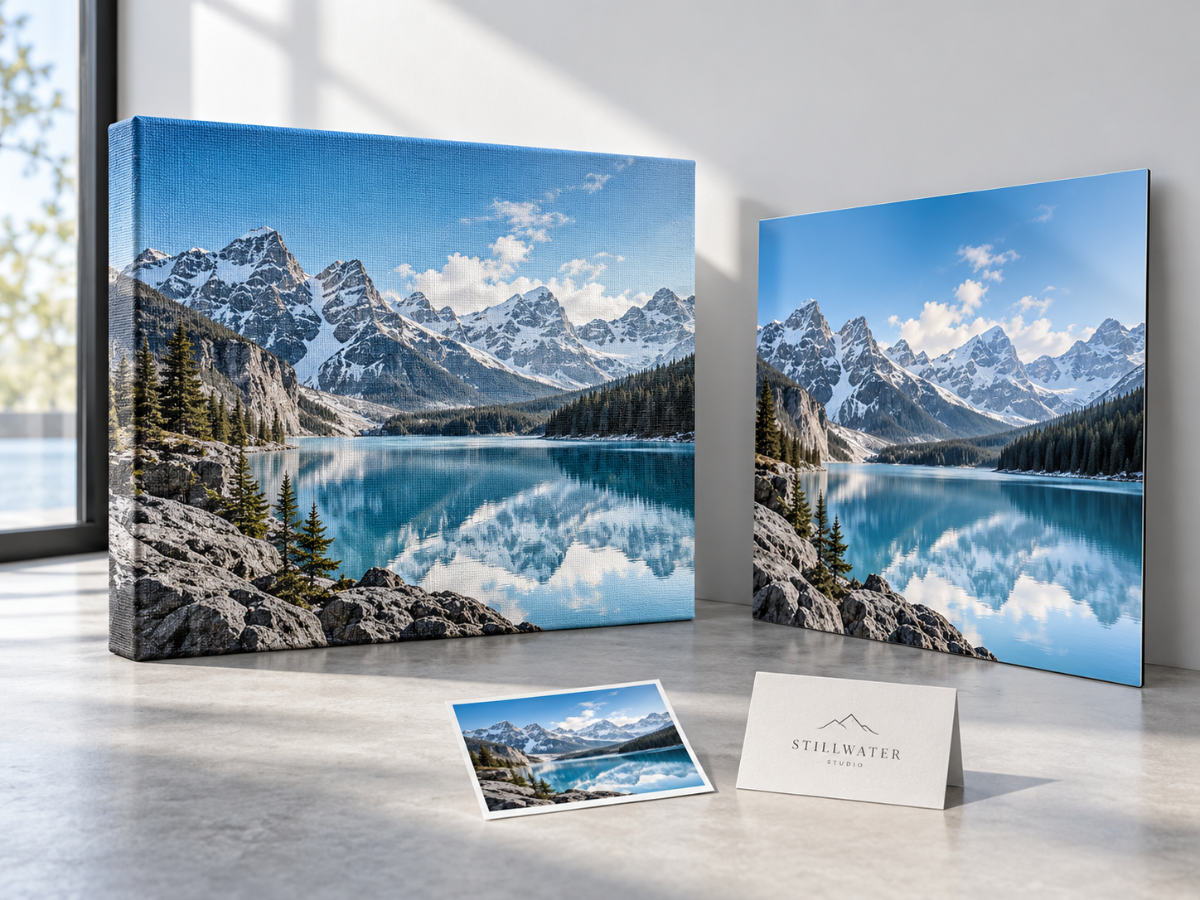
Canvas prints and photo panels can display the same image, but they do not create the same visual result. Canvas has a softer, more traditional wall-art presence, while a photo panel creates a thinner, more modern presentation. The right choice depends on the artwork, the room and how you want the finished display to feel.
Turning a photograph, illustration or branded design into wall décor sounds simple until you have to choose the display format.
Should the image become a stretched canvas?
Would it look better on a smooth photo panel?
Does the piece need to feel like traditional wall art, or should it have a cleaner contemporary appearance?
Pryntco currently offers both Stretched Canvas Prints and HD Photo Panels for custom photography, artwork and branded displays.
The choice is not simply about which product is better.
It is about which format supports the image and the environment more naturally.
1. What Is the Main Difference Between Canvas Prints and Photo Panels?
The biggest difference is the physical presentation.
A stretched canvas uses printed artwork wrapped around a dimensional canvas structure.
An HD photo panel uses a thin aluminum panel with the image printed onto the surface.
That gives each product a noticeably different visual character.
2. What Does a Stretched Canvas Look Like?
Canvas creates a more traditional wall-art appearance.
The visible fabric texture and deeper profile can make the image feel closer to a gallery or decorative art piece.
It works naturally with:
- Photography
- Illustration
- Artwork
- Branded décor
- Personalized displays
3. What Does an HD Photo Panel Look Like?
A photo panel creates a flatter and more contemporary presentation.
Pryntco’s current HD Photo Panel uses a lightweight aluminum panel and dye-sublimation printing for photos and artwork.
The thinner structure can suit modern interiors where a traditional canvas profile may feel too decorative.
4. Which One Looks More Traditional?
Canvas generally creates the more traditional wall-art impression.
The stretched format has depth and a familiar art-display appearance.
This can suit:
- Homes
- Reception areas
- Hospitality spaces
- Creative offices
5. Which One Looks More Modern?
A photo panel generally creates the more modern presentation.
The thin panel and smooth image surface can work well with:
- Contemporary offices
- Retail interiors
- Modern homes
- Photography displays
- Branded wall décor
6. Which Is Better for Photography?
Both can work.
The better choice depends on the photograph.
A portrait, landscape or artistic photograph may feel natural on canvas.
A sharp modern image, product photograph or graphic-style photograph may suit a smooth photo panel.
Think about the visual character of the image rather than assuming one format is universally better for photos.
7. Which Is Better for Artwork?
Again, both are valid.
Canvas may suit:
- Painted artwork
- Illustrative work
- Textured-looking designs
A photo panel may suit:
- Digital art
- Graphic design
- Clean geometric artwork
- Highly detailed imagery
8. Which Is Better for Business Branding?
The environment should drive the decision.
A business may use canvas for:
- Company-history photography
- Office artwork
- Brand storytelling
A photo panel can work for:
- Logo-led wall décor
- Modern photography
- Product imagery
- Reception displays
9. Which Works Better in an Office?
Look at the office itself.
A warm, creative or hospitality-style office may suit canvas.
A clean, modern or technical office may suit photo panels.
The display should feel like part of the space rather than an unrelated promotional sign.
10. Which Works Better in a Reception Area?
Both can be effective in reception.
Canvas can create a softer and more welcoming feel.
A panel can create a cleaner branded presentation.
The image itself is often more important than the format.
11. Can Restaurants or Cafés Use Canvas Prints?
Yes.
Canvas can be used for:
- Food photography
- Local imagery
- Brand artwork
- Decorative illustrations
The piece can support atmosphere without functioning like another menu or poster.
12. Can Retail Stores Use Photo Panels?
Yes.
Photo panels can support:
- Brand photography
- Product imagery
- Collection artwork
- Decorative interior graphics
Keep the imagery relatively evergreen if the panel is intended to stay in use for a long period.
13. Which Product Has More Visual Depth?
Canvas has the more dimensional physical profile because the printed canvas is stretched around a frame structure.
The image therefore projects farther from the wall.
A photo panel has a thinner appearance.
14. Does Canvas Texture Change How an Image Looks?
Yes.
Canvas has visible surface texture.
That texture can complement artwork and photography, but it can also soften very fine graphic detail.
If extremely crisp tiny elements are central to the design, consider whether a smoother surface is more appropriate.
15. Is a Photo Panel Smoother Than Canvas?
Yes.
The panel surface creates a cleaner, smoother visual treatment than woven canvas.
This can be useful for:
- Fine lines
- Graphic artwork
- Sharp photographs
- Clean typography
16. Which Is Better for Small Text?
Neither product should be treated like a document or information sign.
If the artwork includes text, keep it:
- Large enough to read
- High contrast
- Simple
A smoother panel may reproduce fine graphic detail more naturally, but decorative displays should not depend on tiny wording.
17. Which Works Better for a Company Logo?
Both can display a logo.
Use canvas when the logo is integrated into a broader artistic composition.
Use a panel when the goal is a clean, modern logo-led display.
A simple logo should remain the focal point rather than being surrounded by unnecessary text.
18. Can Canvas Prints Be Used as Employee or Client Gifts?
Yes when the artwork has genuine relevance to the recipient.
Examples include:
- Team photography
- Project photography
- Commemorative artwork
- Company milestone imagery
The image should feel personal enough that the recipient would actually want to display it.
19. Can Photo Panels Be Used as Gifts?
Yes.
A compact photo panel can work for:
- Photography gifts
- Recognition
- Personalized displays
- Small branded décor
Pryntco’s current HD Photo Panel is available in several small portrait and landscape formats, making it suitable for compact display projects.
20. Which Is Better for Large Wall Art?
Pryntco’s current stretched-canvas range includes more and larger size options than the current HD Photo Panel range.
That makes canvas the more natural current Pryntco option when the goal is a larger wall-art presentation.
Always check the live size options before finalizing artwork.
21. Which Is Better for a Small Desk or Shelf Display?
The current HD Photo Panel sizes can suit more compact image presentation.
A smaller panel can work well for:
- Recognition pieces
- Personal photographs
- Small office displays
Choose the size according to where the finished piece will actually sit or hang.
22. Should the Same Image Be Cropped Differently for Each Product?
Possibly.
Different sizes and orientations can change the crop.
Before ordering:
- Check the exact product size.
- Review portrait versus landscape orientation.
- Keep important subjects away from edges.
23. What Type of Photo Works Best?
Start with the strongest original image available.
A good source image should have:
- Enough resolution for the chosen size
- Clear focus
- Good lighting
- Composition that fits the final crop
Printing cannot restore detail that is missing from the source file.
24. How Much Resolution Does the Image Need?
Resolution should be evaluated at the final print size.
Pryntco’s current artwork guidance recommends approximately 300 DPI for raster images at final printed size where practical.
Pryntco’s 300 DPI & Image Resolution Guide explains this in more detail.
25. Should Phone Photos Be Used?
They can be when the source file contains enough usable detail.
Do not judge image quality only by how sharp it looks on a phone screen.
Check the actual pixel dimensions and intended final size.
26. Should Artwork Be RGB or CMYK?
Pryntco generally recommends CMYK for print artwork, although some image-based production workflows may involve conversion or process-specific handling.
Do not rely on a monitor to predict the exact printed colour.
Review Pryntco’s CMYK vs RGB Guide when preparing colour-sensitive artwork.
27. Will the Printed Colour Look Exactly Like the Screen?
Not necessarily.
Screens emit light while printed surfaces reflect light.
Different materials and print processes can also affect appearance.
Use calibrated artwork expectations rather than expecting exact screen-to-print replication.
28. Should the Artwork Have Borders?
Borders can work, but they require careful alignment.
A narrow border may make small shifts more noticeable.
When possible, use generous borders or full-bleed artwork rather than extremely thin frames that depend on perfect visual centring.
29. Should a Canvas Design Wrap Around the Edges?
The final canvas construction should be considered during artwork setup.
Important faces, logos or wording should not sit too close to areas that may wrap around the side.
Use the current product template or production guidance when preparing the file.
30. Does a Photo Panel Need Different Artwork Preparation?
Yes.
The panel has its own final dimensions and template requirements.
Do not assume a file built for one canvas size can be uploaded unchanged to a different panel size.
31. Which Product Is Better for a Photo Collage?
Either can work if the individual photos remain large enough to see.
Canvas can create a decorative collage appearance.
A panel can create a cleaner grid-like presentation.
Avoid placing too many photographs into a small format.
32. Can Several Panels Be Used as a Series?
Yes.
A series can work well when several related images share:
- Similar colour treatment
- Consistent orientation
- Consistent visual style
Plan the group together rather than ordering unrelated pieces and hoping they coordinate.
33. Can Several Canvas Prints Be Used Together?
Yes.
A coordinated canvas group can support:
- Company history
- Travel photography
- Product storytelling
- Interior décor
Use consistent spacing and image treatment.
34. How Should Businesses Choose Between Decorative Art and Promotional Messaging?
Think about the room.
A reception wall usually looks stronger with artwork or brand imagery than with a large block of sales copy.
If detailed information is required, use a sign, poster or brochure instead.
35. What Should Be Checked Before Ordering?
Confirm:
- Correct product
- Correct size
- Portrait or landscape orientation
- Image resolution
- Crop
- Spelling
- Logo quality
36. What Are the Most Common Canvas and Photo Panel Mistakes?
Common problems include:
- Using an image that is too small for the final print.
- Cropping important subjects.
- Using tiny text on decorative artwork.
- Choosing the product without considering the room.
- Assuming screen colours will reproduce exactly.
- Using the same file for different aspect ratios without reviewing the crop.
37. When Should You Choose Canvas?
Canvas is a strong choice when you want:
- A traditional wall-art feel
- Visible physical depth
- A softer decorative presentation
- A broader current range of wall-art sizes from Pryntco
It works particularly naturally for artwork, photography and interior décor.
38. When Should You Choose an HD Photo Panel?
Choose a photo panel when you want a thinner, cleaner and more contemporary presentation.
It can work particularly well for sharp photography, digital artwork, branded graphics and compact display pieces.
The decision becomes easier when you stop asking which product is universally better and instead ask how you want the image to feel in the room.
For a traditional decorative presence, start with Pryntco’s Stretched Canvas Prints.
For a thin modern image display, review Pryntco’s HD Photo Panels.
For a custom project or help deciding which format better suits the artwork, contact Pryntco.

