
Booklet or Perfect Bound Book? Choosing the Right Format for Longer Content
Booklet or Perfect Bound Book? Choosing the Right Format for Longer Content
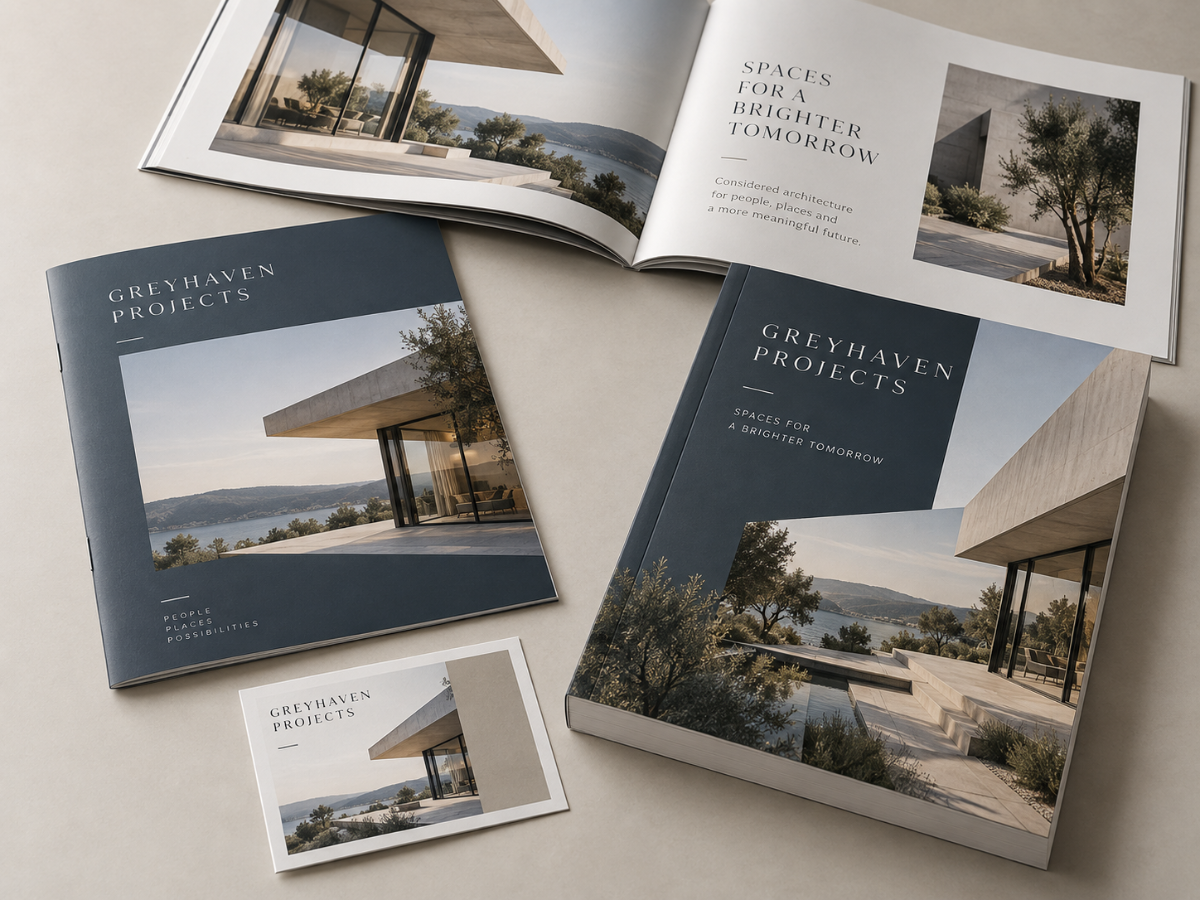
A booklet and a perfect bound book can contain similar content, but they organize the pages in very different physical ways. Saddle stitching is naturally suited to shorter publications built from folded sheets, while perfect binding creates a thicker book-style publication with a defined spine. Choose the binding after you understand the content, page count and how the reader will use it.
A multi-page print project often begins with content, not binding.
The business has a catalogue.
An event has a program.
A company has a training manual.
A designer has a portfolio.
A nonprofit has an annual publication.
Eventually someone asks:
“Should this be a booklet or a book?”
That question is really about construction.
A saddle-stitched booklet is created from folded sheets fastened through the centre.
A perfect bound publication uses individual pages gathered into a book block and attached to a wraparound cover, creating the familiar square spine associated with many softcover books.
Pryntco’s existing Printed Booklet Page Count Guide explains that saddle-stitched publications normally work in page counts divisible by four.
Pryntco’s Perfect Bound Books Guide covers the book-style alternative for publications requiring a defined spine.
This guide focuses on the decision between them.
1. What Is a Saddle-Stitched Booklet?
A saddle-stitched booklet is made from printed sheets folded through the centre and fastened along that fold.
The result is a compact publication commonly used for:
- Programs
- Short catalogues
- Marketing booklets
- Event guides
- Portfolios
- Short reports
2. What Is a Perfect Bound Book?
A perfect bound book creates a softcover publication with a defined spine.
It is commonly associated with:
- Books
- Longer reports
- Training manuals
- Catalogues
- Company profiles
The page block and wraparound cover produce a more book-like structure than a centre-stapled booklet.
3. What Is the Biggest Physical Difference?
The spine.
A saddle-stitched booklet folds through the centre and does not create the same square printed spine.
A perfect bound book has a defined spine that connects the front and back cover.
That affects:
- Appearance
- Page count
- Cover design
- How the publication sits on a shelf
4. Which Format Is Better for a Short Publication?
A saddle-stitched booklet is often the natural starting point for shorter publications.
The format works particularly well when the content can be organized into a relatively compact number of pages.
Do not make the publication longer simply because more pages are possible.
5. Which Format Is Better for a Thick Publication?
As the publication becomes physically thicker, perfect binding may become more appropriate.
Pryntco’s current booklet guidance specifically notes that increasing page count and paper thickness can eventually make another binding method more suitable.
There is no single universal changeover point because stock and finished size both affect the physical thickness.
6. Why Do Saddle-Stitched Booklets Use Page Counts Divisible by Four?
Each folded sheet contributes four page faces to the finished booklet.
That is why common planning counts include:
- 8 pages
- 12 pages
- 16 pages
- 20 pages
- 24 pages
The exact practical range depends on the project.
7. Does Perfect Binding Follow the Same Four-Page Rule?
The physical construction is different.
Do not assume the saddle-stitch page-count rule applies unchanged to a perfect bound project.
Confirm the final page count and production requirements before creating the complete cover.
8. When Does a Booklet Start Feeling Too Thick?
When the nested folded sheets begin creating excessive bulk for the intended format.
Factors include:
- Number of pages
- Paper thickness
- Finished size
Rather than relying on one universal page limit, discuss the actual specification with the printer.
9. Why Does Paper Thickness Affect the Binding Decision?
Every additional sheet contributes physical bulk.
A booklet using thicker interior paper becomes substantial faster than one using lighter paper.
Pryntco’s booklet guidance therefore recommends evaluating paper choice together with page count and binding.
10. Does a Perfect Bound Book Need Enough Thickness for a Spine?
Yes.
A perfect bound publication needs a page block substantial enough to create its book-style spine.
The final spine width depends on the actual:
- Page count
- Interior stock
- Production specification
Do not calculate the spine by guessing.
11. Can Text Be Printed on the Spine?
Potentially, when the spine is wide enough and the project specification supports it.
Common spine content includes:
- Publication title
- Company name
- Volume
Very thin spines may not provide useful space for readable wording.
12. Which Format Looks More Like a Traditional Book?
Perfect binding.
The flat spine and wraparound cover produce the familiar appearance of a softcover book.
This can make sense when the publication needs a stronger library, shelf or reference-book presence.
13. Does That Mean Perfect Binding Always Looks More Professional?
No.
A well-designed saddle-stitched booklet can be completely professional.
The format should match the content.
A twelve-page event program does not become more professional simply because it is forced into a book-style binding.
14. Which Format Opens More Freely?
A saddle-stitched booklet can generally open relatively freely through the centre because the folded sheets are fastened along the middle.
A perfect bound book behaves more like a conventional softcover book and may resist lying completely flat.
This matters when the reader needs to work from the publication while keeping both hands free.
15. Which Is Better for a Training Manual?
It depends on length and how the manual is used.
A shorter training publication may work as a booklet.
A longer reference manual may suit perfect binding.
If the user needs the manual to lie completely flat during a task, discuss other binding options rather than assuming perfect binding is automatically best.
16. Which Is Better for a Product Catalogue?
Both can work.
A short seasonal or promotional catalogue can fit naturally into a booklet.
A longer catalogue with many product sections may benefit from a defined spine and perfect-bound construction.
Choose based on content depth rather than the word “catalogue.”
17. Which Is Better for an Event Program?
A saddle-stitched booklet is often a natural fit because programs commonly contain a moderate amount of information such as:
- Schedule
- Speaker profiles
- Maps
- Sponsor information
A large conference guide with substantially more content may require another binding approach.
18. Which Is Better for an Annual Report?
The answer depends on length and presentation.
A concise annual summary can work as a booklet.
A longer publication containing:
- Financial information
- Photography
- Department sections
- Detailed reporting
may suit a more book-like format.
19. Which Is Better for a Company Profile?
A short company profile can work beautifully as a booklet.
A larger corporate publication with:
- History
- Capabilities
- Projects
- Leadership
- Case studies
may justify perfect binding.
20. Which Is Better for a Portfolio?
Consider both page count and viewing behaviour.
A short creative portfolio can work as a booklet with image-led spreads.
A substantial architecture, photography or project portfolio may benefit from the book-like presence of a perfect bound publication.
21. Which Is Better for a Course Workbook?
If readers need to write heavily, remove pages or keep the publication open while working, neither binding should be selected solely for appearance.
Explain the use case to the printer.
The best binding is the one that supports how students actually interact with the workbook.
22. Can a Client Proposal Be Saddle Stitched?
Yes when it contains enough pages to justify a booklet but remains relatively concise.
A short proposal can also be placed inside a presentation folder instead of being bound permanently.
Pryntco’s Presentation Folder Guide covers that alternative.
23. Can a Client Proposal Be Perfect Bound?
Yes when the proposal is substantial enough to function like a formal publication.
This may suit large:
- Project proposals
- Development packages
- Capabilities documents
Do not add filler just to make the proposal thick enough to look like a book.
24. Should Booklet Pages Be Designed as Spreads?
You can design facing pages visually as spreads, but production files are often supplied in normal reading order rather than manually imposed printer spreads.
Confirm the printer’s requested file setup before export.
Do not rearrange pages yourself unless specifically instructed.
25. Why Does the Centre Spread Matter in a Booklet?
The centre spread is the one place where the publication opens directly across the fold.
It can work well for:
- Large photograph
- Map
- Schedule
- Illustration
Keep critical fine detail away from the exact fastening and fold area.
26. How Should Perfect Bound Inside Margins Be Planned?
Perfect bound pages need enough space near the spine so the reader can comfortably see the content.
Dense text or small details placed too close to the binding edge can become difficult to view.
Plan the inside margin after the binding format is known.
27. Should a Perfect Bound Cover Be Designed Before the Page Count Is Final?
No.
The spine width depends on the final page block.
Finish:
- Page count
- Interior stock
- Binding specification
before finalizing a wraparound cover containing spine artwork.
28. Does a Saddle-Stitched Booklet Need a Spine Design?
No flat book-style spine is created in the same way.
Design attention should instead go toward:
- Front cover
- Back cover
- Centre fold
- Page sequence
29. Should the Cover Use Heavier Paper Than the Interior?
It can.
A heavier cover can create more separation between the outside and inside pages.
However, paper thickness affects the complete physical publication.
Confirm the cover and interior stock together with the binding method instead of selecting them independently.
30. Should the Inside Pages Be Glossy or Matte?
Choose according to the content.
A lower-glare surface can suit:
- Long text
- Reports
- Educational material
A glossier surface may complement image-heavy content.
The project does not need the same finish simply because another publication used it.
31. How Should Page Numbers Be Planned?
Use consistent placement and enough room from:
- Trim edge
- Centre fold
- Perfect-bound spine area
Update numbering after the page structure is final.
32. Should a Long Publication Have a Table of Contents?
Usually, when readers need to find sections later.
A table of contents is especially useful for:
- Manuals
- Reports
- Catalogues
- Reference publications
Do not finalize it before pagination is locked.
33. How Should Photography Be Prepared?
Use original high-quality images.
Pryntco generally recommends approximately 300 DPI at final printed size for many photographs and raster images.
Large full-page photographs therefore require significantly more image information than small thumbnails.
34. How Should Bleed Be Handled?
Any image or background intended to reach the final page edge should extend through the required bleed area.
Important wording and logos should remain inside the safe area.
Check the complete publication, not only the cover.
35. What Should Be Checked in the Final PDF?
Review:
- Page size
- Total page count
- Page order
- Page numbers
- Table of contents
- Inside margins
- Image resolution
- Bleed
- Fonts
Long documents deserve a complete page-by-page proof.
36. What Are the Most Common Saddle-Stitched Booklet Mistakes?
Common problems include:
- Ignoring the four-page structure.
- Adding filler pages simply to reach a page count.
- Using overly thick paper without considering bulk.
- Putting important content directly on the centre fold.
- Manually rearranging pages without being asked.
37. What Are the Most Common Perfect Bound Book Mistakes?
Common problems include:
- Designing the spine before the page count is final.
- Putting text too close to the inside binding edge.
- Assuming the book will lie completely flat.
- Creating a perfect bound format for content that is too short to need it.
- Failing to proof every page of the final PDF.
38. Should You Choose a Saddle-Stitched Booklet or a Perfect Bound Book?
Start with the content.
If the publication is relatively short, benefits from an easy centre opening and naturally works in the folded-sheet structure of a booklet, saddle stitching is often the better starting point.
Plan the page count in workable increments and avoid adding filler simply to make the publication feel more substantial.
If the content becomes significantly thicker and the project benefits from a defined spine, wraparound cover and traditional softcover-book appearance, perfect binding may be more appropriate.
Then consider how the reader will use it.
A short event program and a long training manual do not need the same construction.
A compact sales booklet and a substantial company catalogue do not need the same spine.
Binding should solve the physical needs of the publication rather than become a design trend.
Pryntco’s Booklet Page Count Guide provides deeper saddle-stitch planning guidance, while the Perfect Bound Books Guide covers book-style construction.
For reports and manuals, Pryntco’s Business Report, Proposal & Training Manual Guide provides additional document-planning guidance.
Because Pryntco does not currently list a fixed online Booklets product with universal sizes and binding specifications, confirm the proposed size, page count, paper and binding before building production artwork.
For a custom booklet or perfect bound publication, request a custom quote or contact Pryntco.

