B2B Direct Mail Marketing Guide: How to Reach Local Businesses With Postcards, Letters and Envelopes
B2B Direct Mail Marketing Guide: How to Reach Local Businesses With Postcards, Letters and Envelopes
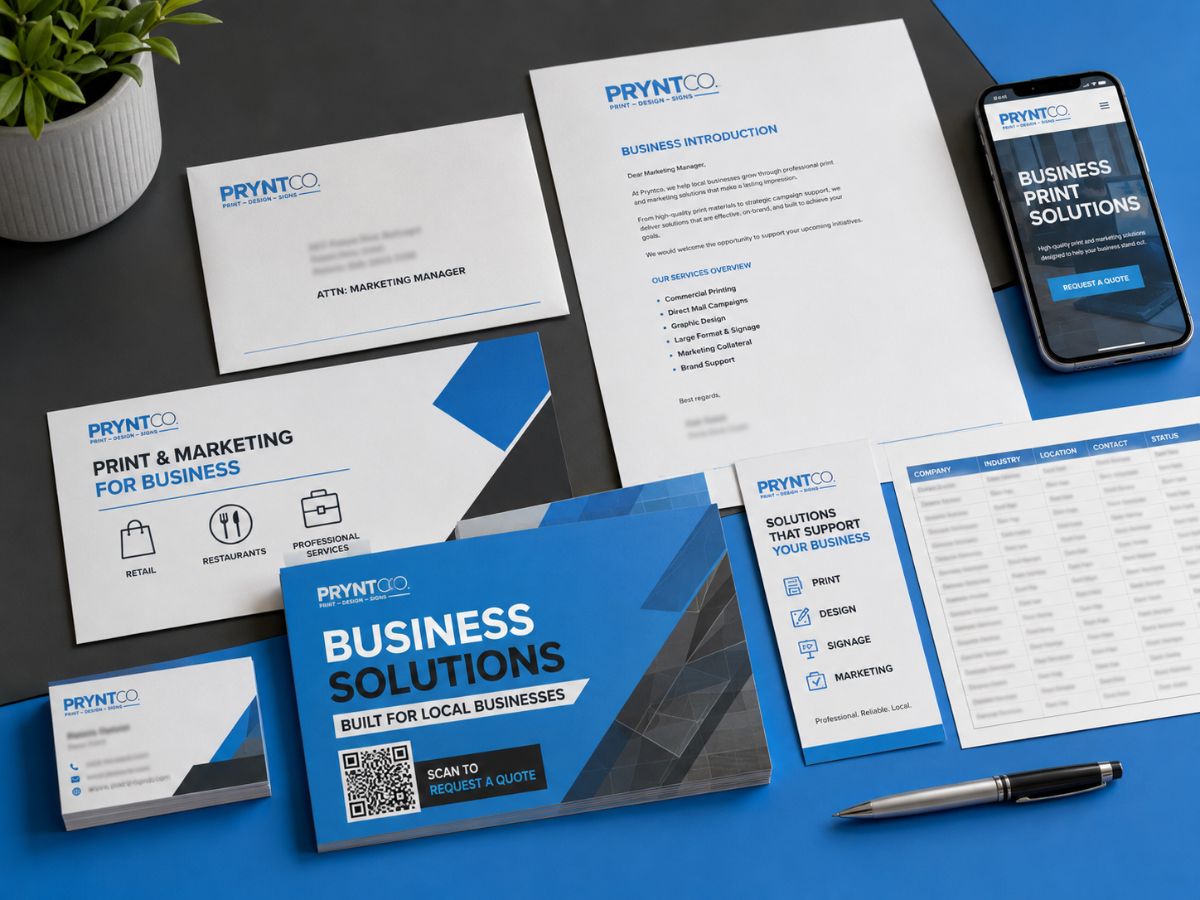
B2B direct mail works best when the recipient list, message and offer are built around a specific type of business. A generic postcard sent to every company in a city is still generic advertising. A focused campaign should explain why the offer is relevant to that industry, location or business need and give the recipient one clear way to respond.
Direct mail is often associated with household advertising, but businesses can also use printed campaigns to reach other businesses.
A commercial printer might target restaurants. A cleaning company may contact property managers. A software consultant may mail professional-service firms. A commercial contractor may introduce its services to local retailers or office managers.
The campaign becomes B2B direct mail when one business intentionally mails marketing materials to another business.
The audience behaves differently from a typical consumer household.
The mail may first be seen by:
- Receptionist
- Office administrator
- Store manager
- Operations manager
- Purchasing employee
- Business owner
That means the piece needs to look credible, explain its relevance quickly and make it easy for the right decision-maker to take the next step.
Pryntco’s current Postcards support 4" × 6" and 5" × 7" layouts, while Pryntco’s Custom Envelopes are currently offered in standard sizes on white wove stock, with custom quote options for window envelopes and other stock requirements.
This article focuses specifically on business-to-business prospecting rather than repeating Pryntco’s broader Direct Mail Marketing Guide.
1. What Is B2B Direct Mail?
B2B direct mail is printed marketing sent from one business to another business with the goal of starting or strengthening a commercial relationship.
Possible formats include:
- Postcards
- Sales letters
- Branded envelopes
- Flyers
- Brochures
- Sample packages
2. How Is B2B Direct Mail Different From Consumer Direct Mail?
B2B campaigns often involve:
- Smaller target lists
- Higher-value potential customers
- Longer buying cycles
- Multiple decision-makers
- More detailed service information
The campaign may therefore prioritize credibility and relevance over mass reach.
3. Which Businesses Can Use B2B Direct Mail?
Examples include:
- Commercial printers
- Marketing agencies
- Accountants
- Commercial cleaning companies
- Contractors
- IT companies
- Wholesalers
- Business consultants
- Property services
The method is especially useful when the business can define a clear commercial audience.
4. Who Should a B2B Campaign Target?
Start with the type of business most likely to need the service.
Possible segments include:
- Restaurants
- Medical offices
- Retailers
- Property managers
- Construction companies
- Professional firms
Do not start with “every business in the city” unless the service truly applies equally to all of them.
5. Should You Target by Industry?
Yes, when the offer can be made more relevant.
For example, a printer could send different campaigns to:
- Restaurants about menus and signage
- Real estate offices about feature sheets and signs
- Retail stores about posters and window graphics
The printed piece can then speak directly to the recipient’s needs.
6. Should You Target by Location?
Location can be especially valuable for local service businesses.
A campaign may focus on:
- Downtown businesses
- Industrial areas
- Specific neighbourhoods
- Office districts
- Retail corridors
The geographic strategy should reflect the real service area.
7. Should B2B Mail Be Addressed to the Company or a Person?
A named decision-maker can make the piece more targeted when the information is accurate.
Possible recipients include:
- Owner
- General Manager
- Marketing Manager
- Operations Manager
- Office Manager
If the individual is unknown, a functional title may be more appropriate than guessing a name.
8. What Happens if the Decision-Maker Is Unknown?
The piece should still communicate enough value that another employee understands where it belongs.
A clear envelope or headline can help indicate:
FOR THE MARKETING MANAGER
or:
FOR THE BUSINESS OWNER
9. Should B2B Direct Mail Use a Postcard?
Postcards work well for a concise commercial introduction.
They can communicate:
- Core service
- Main business benefit
- Offer
- QR code
- Contact information
The message is visible immediately without opening an envelope.
10. When Should You Use a 4 × 6 Postcard?
A 4" × 6" format is suitable when the campaign is simple.
It can work for:
- Short service introduction
- Single offer
- Event invitation
- Simple QR campaign
Pryntco’s current postcard artwork supports this size.
11. When Should You Use a 5 × 7 Postcard?
The 5" × 7" format provides more room for:
- Several service points
- Photographs
- Case-study summary
- QR code
- Supporting proof
It can be useful when the recipient needs slightly more context before responding.
12. When Should B2B Direct Mail Use a Letter?
A letter is useful when the message requires explanation.
Examples include:
- Commercial-service introduction
- Partnership proposal
- Vendor introduction
- Account outreach
- Complex service offer
The letter should still be concise enough for a busy business reader.
13. Why Use a Branded Envelope?
A branded envelope can help the mailing look intentional and professional.
It may include:
- Logo
- Return address
- Short exterior message
Pryntco’s current Custom Envelopes are positioned for business mail and direct campaigns.
14. What Should a B2B Envelope Say?
Keep exterior messaging restrained.
Possible directions include:
- Business logo
- Professional return address
- Simple campaign line
Avoid exaggerated claims designed only to trick someone into opening the mail.
15. Should B2B Direct Mail Include a Flyer?
Yes when the mailing needs a broad overview of services.
A flyer can support:
- Service lists
- Project photography
- Benefits
- Contact details
Keep the information structured rather than filling every available space.
16. Should a Brochure Be Included?
A brochure may work when the recipient needs more detailed information about several related services.
For a cold prospecting campaign, however, do not overload the envelope simply because more material is available.
17. What Should the Main B2B Headline Say?
The headline should explain the commercial relevance.
Instead of:
WE’RE THE BEST
consider a message focused on:
- Problem
- Industry
- Business outcome
The recipient should quickly understand why the mailing was sent.
18. Should the Campaign Mention the Recipient’s Industry?
When accurate, yes.
Industry-specific messaging can make the campaign feel more deliberate.
For example:
PRINT & SIGNAGE FOR RESTAURANTS
is more relevant to a restaurant owner than:
WE PRINT EVERYTHING.
19. Should B2B Direct Mail Include Pricing?
Only when pricing is simple, confirmed and important to the offer.
For custom commercial services, a quote or consultation may be a more practical call to action.
20. Should the Campaign Include an Offer?
It can.
B2B offers may include:
- Consultation
- Quote
- Sample
- Introductory promotion
- Project review
Only advertise something the business actually provides.
21. Should B2B Direct Mail Use a QR Code?
Yes, especially when the printed piece introduces a service but the website contains more detail.
The QR code can lead to:
- Industry landing page
- Portfolio
- Quote form
- Meeting booking page
- Case study
22. What Should the QR Code Label Say?
Use a clear action.
Examples include:
- SCAN FOR A QUOTE
- SCAN TO VIEW OUR WORK
- SCAN TO BOOK A CALL
The recipient should know what to expect before scanning.
23. Should B2B Direct Mail Use a Dedicated Landing Page?
Often, yes.
A restaurant campaign should not necessarily send prospects to the same generic homepage as every other industry.
A dedicated page can continue the same:
- Headline
- Industry message
- Offer
- Call to action
24. Should a Campaign Use Case Studies?
A short example can improve credibility.
Include only real, approved information.
A simple case-study structure can be:
- Problem
- Solution
- Result where verified
Do not invent performance statistics.
25. Should Testimonials Be Included?
They can be useful when the testimonial is genuine and approved for marketing use.
Keep the quote short enough that the main message remains clear.
26. Should You Include a Business Card?
A business card can be useful inside a letter or brochure package when a specific sales representative will follow up.
The contact information should match the campaign.
27. How Many B2B Prospects Should You Mail?
Start with the quality of the list.
Consider:
- Number of relevant businesses
- Service area
- Sales capacity
- Campaign budget
- Follow-up capacity
A smaller focused list can be more useful than thousands of irrelevant businesses.
28. Should You Test a Small B2B Campaign First?
Yes when practical.
A test can reveal:
- Weak targeting
- Unclear offer
- QR-code problems
- Landing-page issues
- Follow-up gaps
29. Should B2B Direct Mail Be Followed by a Phone Call?
Potentially.
A coordinated sales process can use the printed piece as an introduction before another contact method.
The follow-up should respect applicable communication and privacy requirements.
30. Should B2B Mail Be Followed by Email?
It can be part of a multi-channel campaign where appropriate.
The email should continue the same message rather than introducing a completely unrelated offer.
31. How Should B2B Direct Mail Be Tracked?
Possible methods include:
- Campaign QR code
- Unique landing page
- Promo code
- Quote form
- Dedicated extension
- CRM campaign source
32. What Should You Measure?
Useful outcomes include:
- Website visits
- Quote requests
- Calls
- Meetings
- New accounts
- Sales
The most important metric should relate to the commercial goal.
33. Should Different Industries Receive Different Versions?
Yes when the businesses have different needs.
For example:
- Restaurant version
- Retail version
- Professional-office version
Name the artwork carefully so versions are not mixed during production or mailing.
34. Should Hamilton and Toronto Prospects Receive Different Versions?
Potentially, particularly when:
- Contact information differs.
- Sales representatives differ.
- Location-specific services differ.
Pryntco currently serves businesses from Hamilton and Toronto locations, so local campaign versions can be structured when appropriate.
35. How Should B2B Direct Mail Artwork Be Prepared?
Before production:
- Confirm final product size.
- Use the required bleed.
- Keep important content inside safe areas.
- Use high-resolution images.
- Prepare CMYK colour where appropriate.
- Leave required mailing space.
- Test QR codes.
- Verify names and addresses.
Pryntco’s Artwork Preparation Guide provides broader prepress guidance.
36. What Should You Check Before Mailing?
Proof:
- Company names
- Decision-maker names
- Addresses
- Industry-specific copy
- Offer
- QR destination
- Phone number
- Landing page
37. What Are the Most Common B2B Direct Mail Mistakes?
Common problems include:
- Targeting every business instead of a relevant segment.
- Using generic consumer-style advertising.
- Sending the mail to an outdated contact.
- Including too many services.
- Using a vague headline.
- Sending QR traffic to a generic homepage.
- Failing to track sales outcomes.
- Having no follow-up plan.
38. How Should a Business Plan a B2B Direct Mail Campaign?
Start with the target business, not the postcard.
Choose a specific industry, geographic area or commercial need. Build a prospect list containing businesses that genuinely match the offer.
Then define the decision-maker whenever possible. A postcard addressed generally to a company can still work, but a campaign directed to an owner, marketing manager or operations manager can feel more deliberate when the information is accurate.
Choose the format according to the amount of explanation required. A 4" × 6" or 5" × 7" postcard can provide a quick commercial introduction. A letter inside a branded envelope can support a more detailed service or partnership message.
Use one primary value proposition. Do not try to explain every service your company offers simply because a larger sheet provides more space.
Add a measurable call to action such as a quote form, portfolio page, meeting request or campaign-specific landing page. Label QR codes clearly and test them before production.
Plan the sales follow-up at the same time as the print campaign. Direct mail can open the conversation, but commercial sales often require additional contact before a decision is made.
Pryntco’s current Postcards support 4" × 6" and 5" × 7" artwork, while Custom Envelopes provide a professional format for business correspondence and direct campaigns.
For the broader fundamentals of direct mail, review Pryntco’s Direct Mail Marketing Guide for Small Businesses.
Businesses planning a custom B2B campaign can use Pryntco’s custom quote request or contact Pryntco.