
A-Frame or Lawn Sign? Choosing the Right Temporary Outdoor Sign
A-Frame or Lawn Sign? Choosing the Right Temporary Outdoor Sign
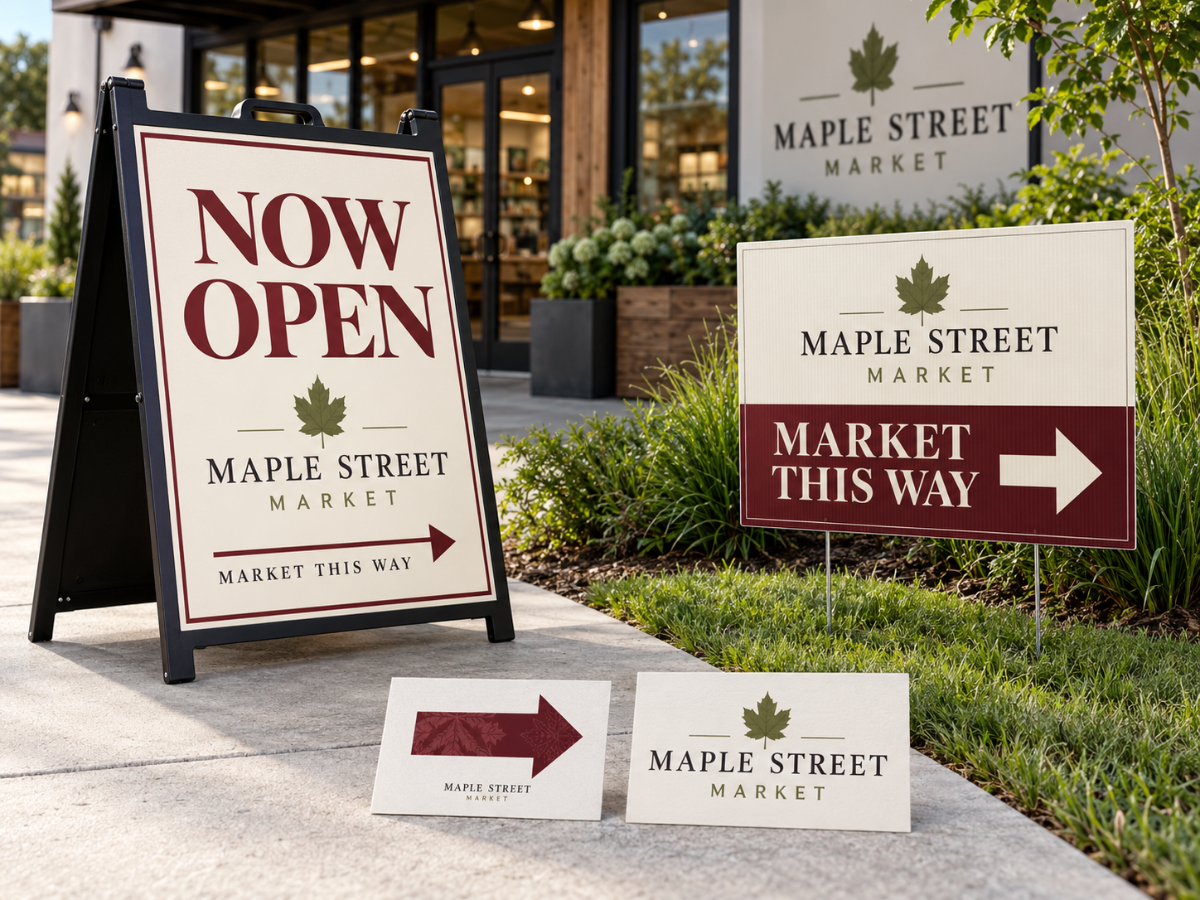
An A-frame belongs where people move past an entrance, sidewalk or event path. A lawn sign belongs where the message needs to stand in an approved ground area and be seen from farther away. The right sign starts with placement, not with which product has more room for text.
A-frame signs and lawn signs are both common temporary outdoor advertising formats.
They are also easy to confuse because businesses often use them for similar messages:
- OPEN HOUSE
- NOW OPEN
- EVENT THIS WAY
- BOOK TODAY
- LOCAL SERVICE
The difference is not simply the shape.
An A-frame is a portable freestanding display commonly used near storefronts, sidewalks, entrances and event pathways.
A lawn sign is a rigid sign designed to stand in an appropriate ground area, commonly using stakes.
Pryntco currently offers both A-Frame Signs and Lawn Signs within its rigid-sign collection.
The location should decide the product.
1. What Is the Main Difference Between an A-Frame and a Lawn Sign?
The biggest difference is how each sign stands.
An A-frame uses a freestanding frame.
A lawn sign is installed into or supported within an appropriate ground area, commonly using an H-stake or another supported mounting method.
That affects:
- Placement
- Portability
- Viewing direction
- Storage
- Campaign use
2. When Is an A-Frame the Better Choice?
An A-frame makes sense when the message needs to sit close to pedestrian traffic or an entrance.
Common locations include:
- Storefront
- Sidewalk
- Lobby entrance
- Event registration area
- Pickup point
Placement must follow property and local requirements.
3. When Is a Lawn Sign the Better Choice?
A lawn sign is useful when the message needs to stand in an approved lawn or ground area.
Typical uses include:
- Real estate
- Contractor job sites
- Event direction
- Neighbourhood promotion
- Grand opening
4. Which Sign Is Better for a Storefront?
An A-frame is usually the more natural choice when the sign needs to sit near the entrance and speak to people walking past.
Possible messages include:
- NOW OPEN
- WALK INS WELCOME
- TODAY’S SPECIAL
- ENTRANCE THIS WAY
5. Which Sign Is Better Along a Road?
A lawn sign may make more sense when an appropriate approved ground area is visible from passing traffic.
The message needs to be extremely simple because drivers have very little time to read it.
Do not treat a roadside lawn sign like a small flyer.
6. Which Sign Is Better for Pedestrians?
An A-frame is often the better fit because pedestrians may pass close to the sign and have slightly more time to read it.
That still does not justify long paragraphs.
Use one clear message.
7. Which Sign Is Better for Drivers?
A lawn sign can work when positioned appropriately for vehicle visibility.
The design should prioritize:
- Large headline
- Strong contrast
- Simple brand
- One contact action
Tiny websites and long service lists are ineffective at driving speed.
8. Which Sign Is Better for an Entrance?
An A-frame is often ideal for temporary entrance communication.
Examples include:
- CHECK IN HERE
- PICKUP ENTRANCE
- EVENT REGISTRATION
- PLEASE USE SIDE DOOR
The sign can be positioned directly where the visitor needs the instruction.
9. Which Sign Is Better for Event Wayfinding?
Both can work.
Use lawn signs where approved ground areas allow directional signs along an arrival route.
Use A-frames where guests reach:
- Entrance
- Registration
- Indoor transition area
The two formats can work together.
10. Which Sign Is Better for Real Estate?
Lawn signs are naturally connected to properties and open-house routes.
An A-frame can support the entrance itself or another temporary pedestrian-facing location.
Use the format that matches the physical property.
11. Which Sign Is Better for Contractors?
A lawn sign can provide visibility at an active job site with permission.
An A-frame may suit:
- Showroom
- Temporary consultation event
- Retail-style contractor location
The service environment determines the choice.
12. Which Sign Is Better for Restaurants and Cafés?
An A-frame often makes more sense near a storefront because customers are approaching on foot.
It can promote:
- Featured item
- Opening message
- Patio direction
- Pickup instructions
Keep changing daily information off long-lived inserts when possible.
13. Which Sign Is Better for Retail?
A-frame signs work naturally for:
- Sale message
- New arrival
- Store entrance
- Temporary event
Lawn signs may be useful when the retail property includes an appropriate outdoor ground area farther from the entrance.
14. Which Sign Is Better for Clinics or Offices?
An A-frame can help visitors find an entrance, registration area or temporary clinic location.
A lawn sign may be useful on a larger property where drivers need an early directional cue.
Permanent regulatory or accessibility signage should be handled separately.
15. Which Sign Is More Portable?
Pryntco’s current A-frame product is specifically positioned as a portable freestanding sign.
It can be opened, positioned and moved between suitable locations.
A lawn sign is lighter in concept but requires an appropriate ground mounting setup rather than standing on its own.
16. Which Sign Is Easier to Move During the Day?
An A-frame is generally designed around that kind of temporary repositioning.
Businesses may move it:
- Outside during opening hours
- Inside after closing
- Between event areas
Follow the frame’s handling requirements and local placement rules.
17. Which Sign Is Better for Multiple Locations?
Lawn signs can be practical when the campaign needs several separate points across a neighbourhood or event route.
A-frame signs make more sense when each location needs a more substantial freestanding display.
The quantity requirement can influence the format.
18. Can Lawn Signs Be Used as Directional Signs?
Yes.
A simple lawn sign may say:
OPEN HOUSE →
or:
EVENT PARKING →
Directional signs should be readable instantly.
19. Can A-Frames Be Used as Directional Signs?
Yes.
They are especially useful where visitors are already close to the destination.
An A-frame can mark:
- Registration desk
- Entrance
- Pickup area
- Temporary route change
20. Which Sign Can Carry More Information?
An A-frame may be viewed from closer range, which gives the designer slightly more flexibility.
That does not mean it should carry a paragraph.
A lawn sign is often seen from farther away and therefore needs an even simpler message.
21. What Should an A-Frame Sign Say?
A strong A-frame usually contains:
- One headline
- Short supporting line
- Brand
- One call to action
Pryntco’s A-Frame Sign Guide recommends one clear purpose.
22. What Should a Lawn Sign Say?
Even less.
Useful structures include:
ROOFING PROJECT
OPEN HOUSE
NOW OPEN
plus a logo or short contact method.
23. Should Either Sign List Several Services?
No.
The viewer does not have enough time.
Use the sign to create recognition or one action.
Detailed service information belongs on:
- Website
- Brochure
- Flyer
24. Should a QR Code Go on an A-Frame?
It can when pedestrians can stop close enough to scan it.
Place it in an accessible area and label the destination.
For example:
SCAN TO BOOK
25. Should a QR Code Go on a Lawn Sign?
Only when the audience can safely approach the sign.
A QR code intended for passing drivers is not useful.
If the sign is beside a walkable property entrance, it may make more sense.
26. Should a Phone Number Go on Both?
It can, but it must remain readable.
A short memorable website or brand name may be more useful than several contact methods.
Choose one primary response action.
27. Should the Sign Be Double-Sided?
Consider where viewers approach from.
An A-frame often benefits from visibility from both directions.
A lawn sign may also need two-sided visibility depending on placement.
Confirm the current product configuration before preparing artwork.
28. How Important Is Viewing Direction?
Very important.
A perfectly designed sign facing away from traffic has little value.
Before installation, observe:
- Pedestrian path
- Vehicle direction
- Entrance approach
- Nearby visual obstructions
29. How Important Is Contrast?
High contrast makes the message easier to identify quickly.
Examples include:
- Dark text on light background
- Light text on dark background
Avoid placing thin lettering over a busy photograph.
30. Should Outdoor Signs Use Photographs?
Only when the image remains clear at the expected viewing distance.
A large simple property or product image may work.
Several small photographs usually become visual clutter.
31. How Should Temporary Offers Be Handled?
If the sign is intended for repeated use, avoid building a short-lived date or price permanently into the main artwork.
Use replaceable or campaign-specific inserts where the product setup supports that workflow.
32. Can the Same Sign Be Reused?
Potentially, when the message remains relevant and the product is handled appropriately.
Evergreen messages include:
- NOW OPEN
- ENTRANCE
- BOOK A CONSULTATION
Highly specific events and promotions naturally have shorter useful lives.
33. What About Wind and Weather?
Outdoor conditions matter.
Do not assume every temporary sign is suitable for every weather condition.
Use the current product information and discuss unusually exposed placements with Pryntco before ordering.
34. What About Local Sign Rules?
Check them before placement.
Requirements may vary by:
- Municipality
- Property
- Landlord
- Event venue
- Road authority
A printed sign does not automatically create permission to install it anywhere.
35. What Should Be Checked Before Ordering?
Confirm:
- Placement
- Viewing audience
- Viewing distance
- Message
- Sign size
- Mounting or frame
- Local permission
36. What Are the Most Common A-Frame Mistakes?
Common problems include:
- Putting too much information on the sign.
- Using tiny promotional details.
- Blocking pedestrian movement.
- Using several competing calls to action.
- Forgetting that people may approach from both directions.
37. What Are the Most Common Lawn-Sign Mistakes?
Common problems include:
- Using text too small for roadside viewing.
- Putting too many services on one sign.
- Facing the sign away from the intended audience.
- Installing signs without permission.
- Leaving expired campaign signs in place.
- Expecting drivers to scan a QR code.
38. Should You Choose an A-Frame or a Lawn Sign?
Choose an A-frame when the message belongs close to an entrance, sidewalk, storefront or event pathway.
It is a strong option for:
- Walk-in businesses
- Restaurants
- Retail
- Registration areas
- Temporary wayfinding
Choose a lawn sign when the message belongs in an approved lawn or ground area and needs to reach people earlier in their approach.
It works naturally for:
- Real estate
- Contractor sites
- Neighbourhood campaigns
- Event routes
- Local awareness
The two formats can also work together.
A lawn sign may guide a visitor onto the property, while an A-frame gives the final instruction at the entrance.
Start with the location, viewing distance and audience movement.
Then choose the sign.
Pryntco currently offers A-Frame Signs and Lawn Signs within its Rigid Signs collection.
For help selecting the right temporary sign for a property, event or storefront, contact Pryntco or submit a custom quote request.

